

Latest News
Find our archive of news distributions below. To request a media interview or statement from one of our members, visit our press inquiries page here.
Search Our Press Release Archive
Sort by Rep. or Topic
- Economy
- Education
- IBLC
- Internship
- Leadership
- Mental Health
- Public Safety
- Rep. Alex Burton
- Rep. Blake Johnson
- Rep. Carey Hamilton
- Rep. Carolyn Jackson
- Rep. Cherrish Pryor
- Rep. Chris Campbell
- Rep. Chuck Moseley
- Rep. Dant Chesser
- Rep. Earl Harris Jr.
- Rep. Ed DeLaney
- Rep. Gregory W. Porter
- Rep. John Bartlett
- Rep. Justin Moed
- Rep. Kyle Miller
- Rep. Matt Pierce
- Rep. Maureen Bauer
- Rep. Mike Andrade
- Rep. Mitch Gore
- Rep. Pat Boy
- Rep. Phil GiaQuinta
- Rep. Ragen Hatcher
- Rep. Randy Novak
- Rep. Renee Pack
- Rep. Robin Shackleford
- Rep. Ryan Dvorak
- Rep. Sheila Klinker
- Rep. Sue Errington
- Rep. Tonya Pfaff
- Rep. Vanessa Summers
- Rep. Vernon Smith
- Rep. Victoria Garcia Wilburn
- Rep. Wendy Dant Chesser
- cherrish
Op-Ed: Utility bills are going up for the sake of scoring political points
When I talk to Hoosiers about the issues they face every day, skyrocketing energy costs are always near the top of the list. A federal order forcing outdated, expensive coal plants to continue running is only sending bills higher.
When I talk to Hoosiers about the issues they face every day, skyrocketing energy costs are always near the top of the list. A federal order forcing outdated, expensive coal plants to continue running is only sending bills higher.
Recently, the Northern Indiana Public Service Company (NIPSCO) asked state regulators for approval to recover $38 million from ratepayers, which is the cost of complying with a federal order requiring the utility to keep the aging Schahfer coal plant running in Jasper County. Estimates suggest this order could cost NIPSCO customers as much as $174,000 every day. This request also only covers three months of operations, so more will come. Nobody in Indiana voted for this.
Hoosiers are already stretched thin. Worse, many of the same residents being asked to pay more spent weeks without power due to severe weather in August. They aren't being asked to pay extra for more reliability, but to prop up an outdated plant. Keeping an old coal plant on life support does nothing to strengthen the lines that fail in a storm.
Before this federal order, Schahfer was already costing customers money. One report found that from 2021 to 2023, running the plant when cheaper power was available cost ratepayers over $100 million. Hoosiers were already overpaying for coal power that cleaner, cheaper sources could have supplied. This mandate makes it worse.
Southern Indiana ratepayers face the same problem with a CenterPoint plant. Recently, CenterPoint's Indiana region president asked the Department of Energy to let the initial order on its unit expire, calling it an "inefficient and increasingly unreliable asset." When the utility itself doesn't want to keep a plant running, it’s hard to justify these federal orders.
Neighboring Michigan could provide a path forward. In early September, the U.S. Court of Appeals for the D.C. Circuit issued a ruling allowing the closure of a Michigan coal plant that a federal order had forced to remain open. In Indiana, environmental and consumer groups have already challenged the mandates in the same court. This is a promising sign that these orders can be challenged and ratepayers don't have to simply absorb the cost.
The financial burden on Hoosier families demands action from the state's leaders – not celebrating higher bills as Gov. Mike Braun has, or lawsuits to keep other coal plants open, as Attorney General Todd Rokita has. When even the utility wants a plant shut down and the numbers show it's costing customers money, the only thing left keeping it open is politics. For some politicians, propping up coal has become a loyalty test, and what that does to your utility bill simply doesn't factor in.
Fighting for clean, affordable energy isn't new to me. I've spent most of my adult life working to protect the things that keep Hoosier families healthy: the air our kids breathe, the water that comes out of our taps, and the soil where we grow our food. I know what's at stake when we cling to the dirtiest, most expensive ways of making electricity. I want Hoosiers to have a healthy environment and affordable power bills. Those goals aren't at odds.
Every available data point shows Hoosiers and other Americans are most worried about the cost of living. On energy, the cold, hard economic facts are on our side, and leading with them is how we build a coalition broad enough to win. That's what makes these coal mandates so telling. When the cheaper option is also the cleaner one and some leaders still fight for the expensive one, affordability clearly isn't their priority, no matter how often our governor claims it is.
If an aging coal plant is worth keeping open, its backers should be able to prove it's cheaper and more reliable than the alternatives. They can't make that case for Schahfer or the CenterPoint plant, and households that had no say are footing the bill. Hoosiers deserve energy that is dependable, affordable and clean, and leaders who care more about their constituents' bills than their party's talking points.
Charging Hoosiers an extra $174,000 a day to keep an outdated plant running isn't the answer.
Hamilton: Coal plants an unnecessary, inefficient energy option for Indiana
On Sept. 11, a ruling was handed down by the U.S. Court of Appeals for the District of Columbia that effectively allows for the closure of a coal plant in Michigan that had previously been forced to stay open by a federal order. The case was brought to the Court of Appeals after the order was challenged by the Michigan attorney general's office. The full ruling can be found here.
On Sept. 11, a ruling was handed down by the U.S. Court of Appeals for the District of Columbia that effectively allows for the closure of a coal plant in Michigan that had previously been forced to stay open by a federal order. The case was brought to the Court of Appeals after the order was challenged by the Michigan attorney general's office. The full ruling can be found here.
Two coal plants in Indiana are currently being forced to stay open under similar federal orders.
On. Sept. 14, the Environmental Protection Agency announced they would be rolling back regulations that required coal and gas power plants to capture 90% of climate-altering pollution by 2032. These regulations were projected to save thousands of lives in the coming years and save Americans $120 billion in health-related costs through 2047.
State Rep. Carey Hamilton (D-Indianapolis) issued the following statement:
"Hoosier families are already stretched thin, and now they're being asked to foot the bill for a decision they had no say in. Last month, NIPSCO requested approval from state regulators to recover $38 million from ratepayers – the cost of complying with a federal order that forces the utility to keep the aging Schahfer coal plant running. Estimates suggest this order could cost NIPSCO customers as much as $174,000 every day.
"Just last month, Northwest Indiana residents spent weeks without power due to severe weather, something I'll be discussing Sept. 29 as part of the Interim Study Committee on Energy, Utilities and Telecommunications. Families who had just endured that kind of hardship are now being asked to pay more, not for better reliability, but to prop up an outdated coal plant.
"I'm calling on the attorney general to challenge this order. This isn't a partisan issue, it's about standing up for the people who see the consequences of these decisions on their monthly power bill.
"Simultaneously, the Braun administration is following President Trump's lead in pushing deregulations that let utility companies cut corners on public health protections to save money. We should be demanding more accountability from utility companies, especially after a summer that showed us just how fragile our grid is."
Hamilton calls on FSSA, Braun to pause Medicaid disenrollments for Hoosiers in disaster zones
State Rep. Carey Hamilton (D-Indianapolis) is echoing calls from fellow House Democrats for the FSSA and Gov. Mike Braun to ensure Hoosiers in disaster-affected areas of the state can keep their Medicaid coverage and in-home care in the wake of severe weather.
State Rep. Carey Hamilton (D-Indianapolis) is echoing calls from fellow House Democrats for the FSSA and Gov. Mike Braun to ensure Hoosiers in disaster-affected areas of the state can keep their Medicaid coverage and in-home care in the wake of severe weather.
On Aug. 11, multiple parts of the state were hit by a derecho and historic flooding, killing at least seven Hoosiers and displacing more than 1,000. President Trump declared a federal major disaster declaration for 21 counties on Aug. 25. In Northwest Indiana, the storms caused the largest power outage in NIPSCO's history. Tens of thousands of residents in that area remained without power for nearly two weeks. Indianapolis residents also faced significant flood damage.
Hamilton is joining other House Democrats in calling on the state to take three specific actions for residents in the affected counties.
Pause procedural Medicaid terminations. Direct FSSA to suspend disenrollments for beneficiaries in disaster-declared counties who cannot complete a renewal or return requested paperwork because of the storm, so no eligible Hoosier loses coverage over a form that was washed away, a notice that never arrived or lack of access to the virtual FSSA Benefits Portal.
Extend deadlines for waiver level-of-care assessments. Extend the deadlines for level-of-care assessments and reassessments under Indiana's Home- and Community-Based Services (HCBS) waivers, and allow them to be completed by phone or video, so seniors, people with disabilities and medically fragile Hoosiers do not lose in-home service.
Use every available tool to do it. Move now on the steps the state can take on its own, and pursue federal flexibilities, including an 1135 waiver and a disaster relief state plan amendment, that make these protections airtight.
"Throughout the state, many Hoosiers are rebuilding their homes, replacing the groceries – and maybe medication – they lost during the power outage, and settling back into their normal routines," Hamilton said. "In the wake of historic flooding and severe storms, it's not shocking that paperwork might get lost, or that a person simply trying to survive in their home might miss a deadline for returning paperwork. We need to be looking out for one another, and these action items are just a few steps to ensure that vulnerable Hoosiers don't lose vital care because of these storms and flooding."
Hamilton on CCDF funding diversion: ‘Statehouse Republicans cleaning up a crisis they alone created’
Today, Gov. Mike Braun announced he will ask the State Budget Committee to divert $200 million from the General Fund to reopen admissions for the Child Care and Development Fund (CCDF). The CCDF is a critical social service program that provides child care vouchers to over 40,000 low-income working families throughout the state. Due to Statehouse Republican budget priorities, the CCDF had to stop taking new applicants over a year ago.
Today, Gov. Mike Braun announced he will ask the State Budget Committee to divert $200 million from the General Fund to reopen admissions for the Child Care and Development Fund (CCDF). The CCDF is a critical social service program that provides child care vouchers to over 40,000 low-income working families throughout the state. Due to Statehouse Republican budget priorities, the CCDF had to stop taking new applicants over a year ago.
State Rep. Carey Hamilton (D-Indianapolis), a long-time champion of child care expansion, issued the following statement:
"Considering that the Braun administration previously said CCDF would not expand until 2027, I'm pleased with today’s announcement. This program is far too important for working families to keep Hoosiers shut out for another year. With the current waitlist hovering at nearly 35,000 families, this new funding will leave over 21,000 children on the waitlist. The Braun supermajority-created CCDF waitlist has delivered a pipeline to welfare for low-income working families. It’s incredibly short-sighted and fiscally irresponsible.
"House Democrats have been calling on Braun and Statehouse Republicans to find a way to fund this program since the waitlist was announced. Instead, they sat back as 320 childcare facilities closed their doors. They had plenty of opportunities to work with us to prevent this crisis from snowballing, but they decided to prioritize partisan redistricting, private school vouchers for the wealthiest folks and hand-outs to Big Tech over the needs of our most vulnerable families.
"To be clear, Indiana had a child care access and affordability crisis before the CCDF cuts were implemented - a crisis that was costing our state $4.2 billion in economic activity every year - so this announcement doesn’t even get us back to that already dire position. I'm happy these funds are being released, but, as with the gas tax announcement last week, this is a prime example of Statehouse Republicans trying to clean up a crisis they alone created."
Hamilton comments on gas tax suspension
Today, Gov. Mike Braun announced a 30-day suspension of Indiana's gas tax, which hit 17.2 cents per gallon in April, amid geopolitical crises leading to gas prices skyrocketing to nearly $4.25 a gallon in Indiana.
Today, Gov. Mike Braun announced a 30-day suspension of Indiana's gas tax, which hit 17.2 cents per gallon in April, amid geopolitical crises leading to gas prices skyrocketing to nearly $4.25 a gallon in Indiana.
State Rep. Carey Hamilton (D-Indianapolis) issued the following statement regarding the suspension:
“Hoosiers are in desperate need of economic relief, and I support any meaningful action that delivers it. If suspending the gas tax will ease a bit of the burden of Washington, D.C.'s actions on Hoosiers coupled with the Republican supermajority's high gas taxes, I'm all for it. But let's be honest about how we got here.
“Gov. Braun and Statehouse Republicans are cleaning up a mess of their own making. Hoosiers are fed up with unfocused foreign entanglements that cost American lives, inflate gas prices and drive up costs for working families.
"What we're seeing is a last-minute reaction from an administration that wants credit for solving a crisis it helped create. That's not the fiscal responsibility Hoosiers were promised."
Hamilton celebrates establishment of Parkinson’s Disease Registry
Last week, House Bill 1358, a bill dealing with the Indiana Department of Health, was signed into law. This bill was amended to include a bill authored by State Rep. Carey Hamilton to add Parkinson’s Disease to the chronic disease registry.
Last week, House Bill 1358, a bill dealing with the Indiana Department of Health, was signed into law. This bill was amended to include a bill authored by State Rep. Carey Hamilton to add Parkinson’s Disease to the chronic disease registry. This will allow the state to collect data regarding to Parkinson’s Disease, the fastest-growing neurological disorder in the world.
Hamilton issued the following statement:
“After three years of working with the Parkinson’s Disease advocacy community and two years of filing legislation, I am thankful to now have Parkinson’s Disease included in the chronic disease registry in Indiana. According to a 2022 study, over 21,000 Hoosiers live with this neurodegenerative disorder, significantly impacting their quality of life and daily function. Adding Parkinson's to the chronic disease registry means Indiana can track cases, strengthen our data, and give researchers the tools they need to develop better treatments and, one day, a cure.
"I'm grateful to Rep. Brad Barrett for welcoming my amendment, and most of all to the Parkinson's Disease community whose tireless advocacy made this possible."
Indiana House awards scholarship to Fort Wayne intern
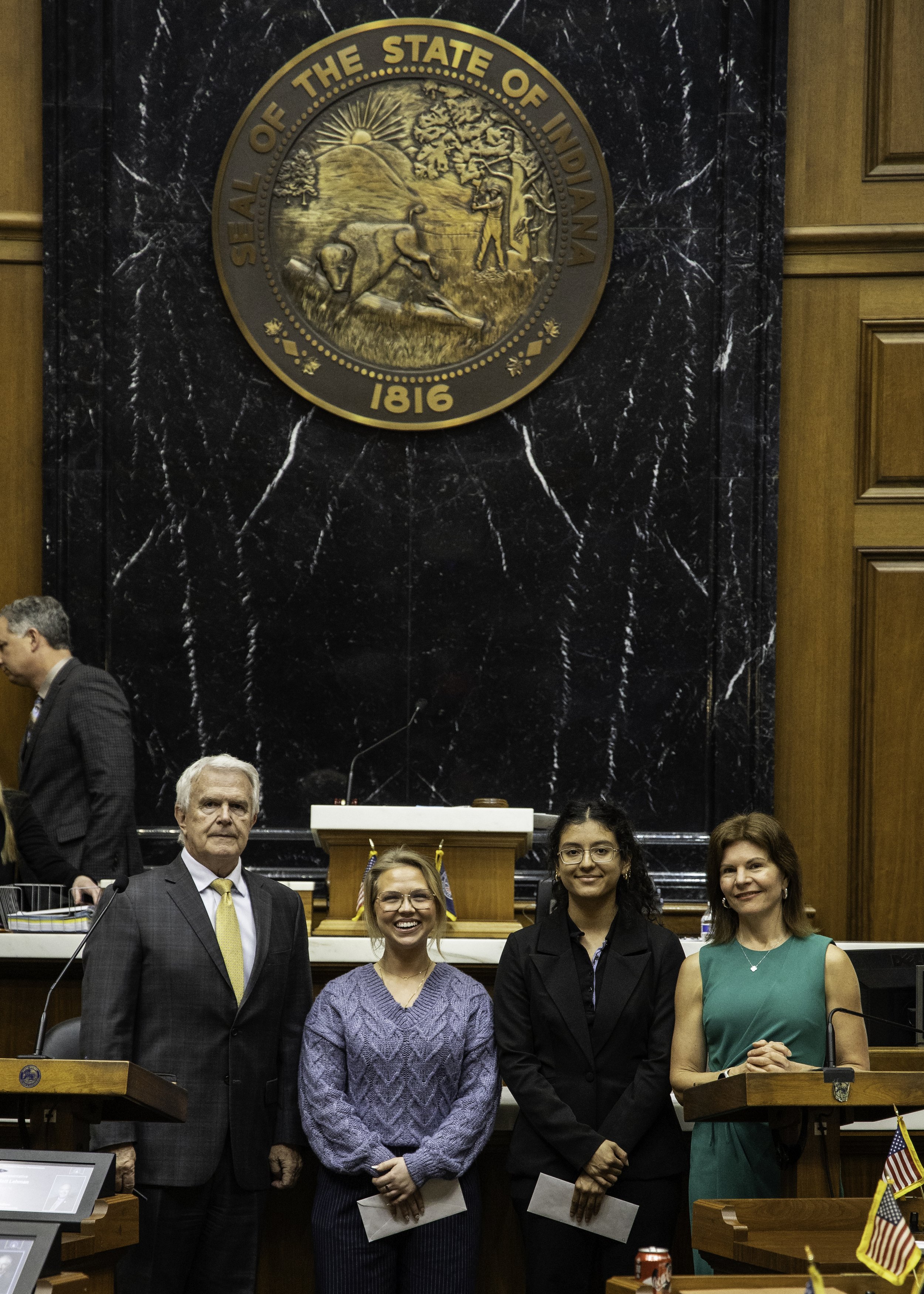
Monday, Feb. 16, the Indiana House Democratic Caucus (IHDC) announced intern Melisa Mendez of Fort Wayne as the 2026 Verizon Scholarship recipient at the Statehouse.
Monday, Feb. 16, the Indiana House Democratic Caucus (IHDC) announced intern Melisa Mendez of Fort Wayne as the 2026 Verizon Scholarship recipient at the Statehouse.
“Melisa has been an integral part of the IHDC team this session,” said State Rep. Kyle Miller (D-Fort Wayne), who represents Melisa's home district. "She’s proven herself to be a diligent worker, a consistent light in the office and a credit to Fort Wayne and Indiana as a whole.”
Melisa, a senior at Indiana University Bloomington, spent this legislative session assisting IHDC Ways and Means staff by interpreting and analyzing legislation, and creating comprehensive reports and summaries of proposed legislation and its fiscal impact.
State Rep. Carey Hamilton (D-Indianapolis), House Democratic Caucus Chair, released the following statement regarding Melisa’s time at the Statehouse:
“Being a Ways and Means intern for the General Assembly is no easy task. The job requires exceptional attention to detail and an acumen for numbers and financial details that can’t be taught. Melisa has exhibited those qualities - and more - flawlessly. Her determination, can-do attitude and positive outlook have been incredible assets this year. Our work wouldn’t be possible without the help of Melisa and our other interns.”
Each year, one intern from each legislative caucus is awarded the $3,000 Version Scholarship for his or her work and overall character during the internship program. The scholarship will go toward graduate and undergraduate expenses such as tuition or books.
To recognize the hard work and dedication of all Statehouse interns, House Resolution 16 was presented and adopted on the House floor. To learn more, visit the Indiana House Democratic Caucus website at IndianaHouseDemocrats.org.
‘Carmen’s Law’ to expand access to advanced DNA testing for cold cases passes the Senate
Yesterday, Feb. 19, House Bill 1248, authored by State Rep. Carey Hamilton (D-Indianapolis), passed the Indiana State Senate unanimously. The bill now heads to the governor's desk to be signed into law.
Yesterday, Feb. 19, House Bill 1248, authored by State Rep. Carey Hamilton (D-Indianapolis), passed the Indiana State Senate unanimously. The bill now heads to the governor's desk to be signed into law.
HB 1248, also known as "Carmen's Law" in honor of Carmen Hope Van Huss, creates a framework for private funding of advanced DNA testing for cold cases. This enables family members of victims and other key stakeholders to submit a request for advanced DNA testing in cases that have gone unsolved for five or more years.
Hamilton released the following statement regarding "Carmen's Law" passing out of the Senate:
“House Bill 1248 would not have been possible without Carmen Hope Van Huss, who finally received justice as her killer was sentenced just last week 30 years after her brutal murder. Carmen's case was solved using advanced DNA testing, and her family has been the driving force behind this bill to help bring more cases like hers to a close. Carmen's Law will help bring justice to the thousands of unsolved homicide victims and their loved ones, as well as get violent offenders off the streets to prevent further tragedies. I am truly honored to have worked with Carmen's family to pass this bill into law.
“I’m grateful to all the stakeholders who have supported this bill, including my co-authors and co-sponsors, Chairwoman Wendy McNamara, State Rep. Garrett Bascom, State Rep. Maureen Bauer, Sen. Cyndi Carrasco, Sen. Rodney Pol and Sen. Sue Glick."
Democrat proposed tax cut for working families defeated by Supermajority
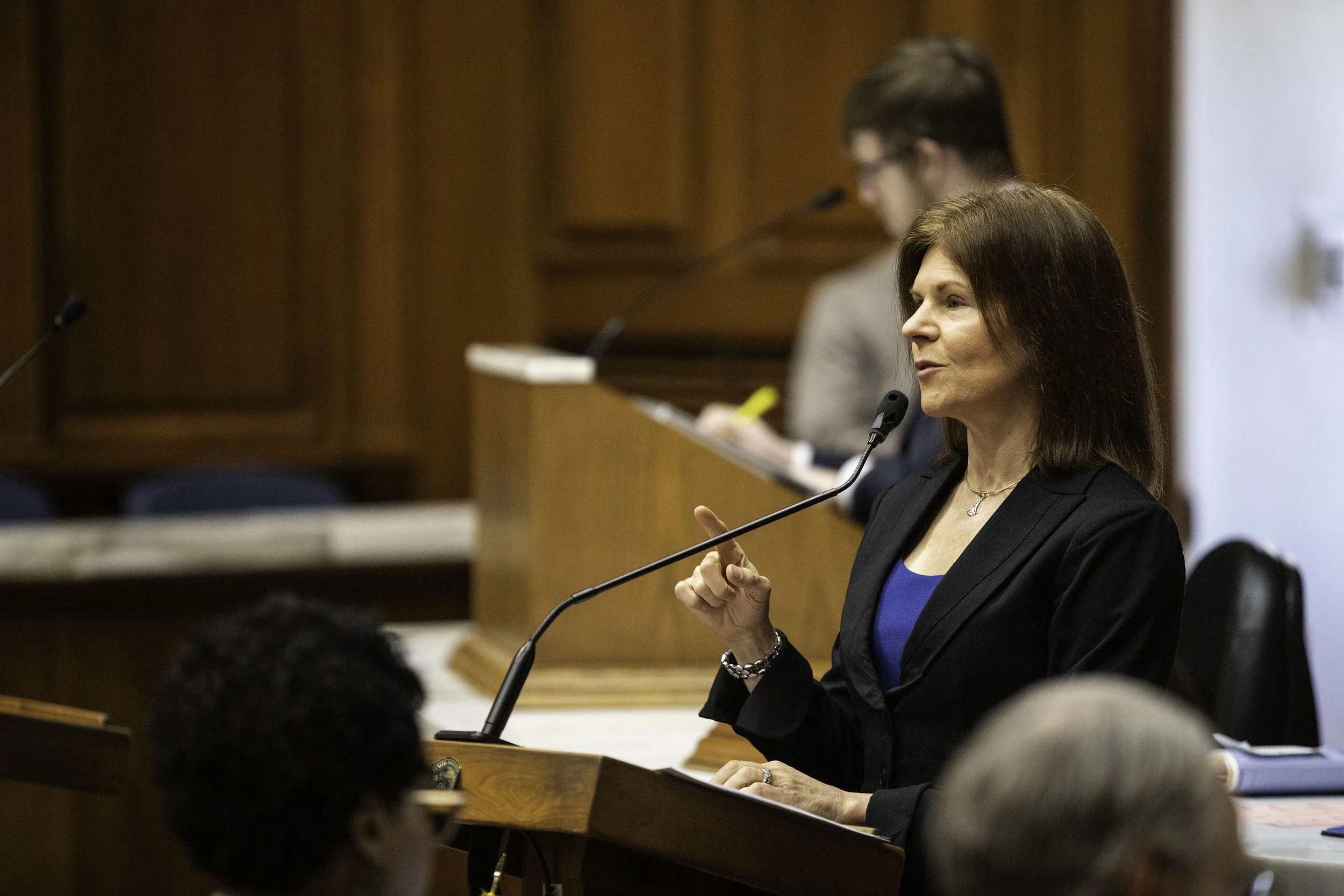
Today, Feb. 19, the House heard amendments to Senate Bill 243, the bill to change Indiana’s tax code to bring it in line with the so-called “One Big Beautiful Bill” Act passed by Congress this summer. State Rep. Carey Hamilton (D-Indianapolis) offered an amendment that would have created a refundable tax credit for child care
Today, Feb. 19, the House heard amendments to Senate Bill 243, the bill to change Indiana’s tax code to bring it in line with the so-called “One Big Beautiful Bill” Act passed by Congress this summer. State Rep. Carey Hamilton (D-Indianapolis) offered an amendment that would have created a refundable tax credit for child care.
Hamilton issued the following statement after the amendment was defeated 38-56:
“When parents can access affordable child care, they stay in the workforce. They contribute. They grow businesses, fill jobs, and pay taxes. When they can't, our entire economy pays the price. The Indiana Chamber of Commerce has put a number on that price: $4.2 billion dollars lost annually to our state's economy because families cannot access affordable child care. That is an unnecessary economic headwind for our state, and it is a crisis for families and many employers. And the crisis is quickly getting worse. As of today, 241 child care centers have closed across Indiana and more are closing every month. Young families across the state in Indiana are delaying having kids because of the economic burden.
“This amendment is one critical step to help stanch the flow — to make child care affordable enough that families can keep their providers in business and stay in the workforce themselves. This amendment is about both supporting economic development and helping families thrive. This working families tax cut would have helped Indiana be a truly family friendly state.”
Hamilton amendment to reduce Hoosier utility bills struck down
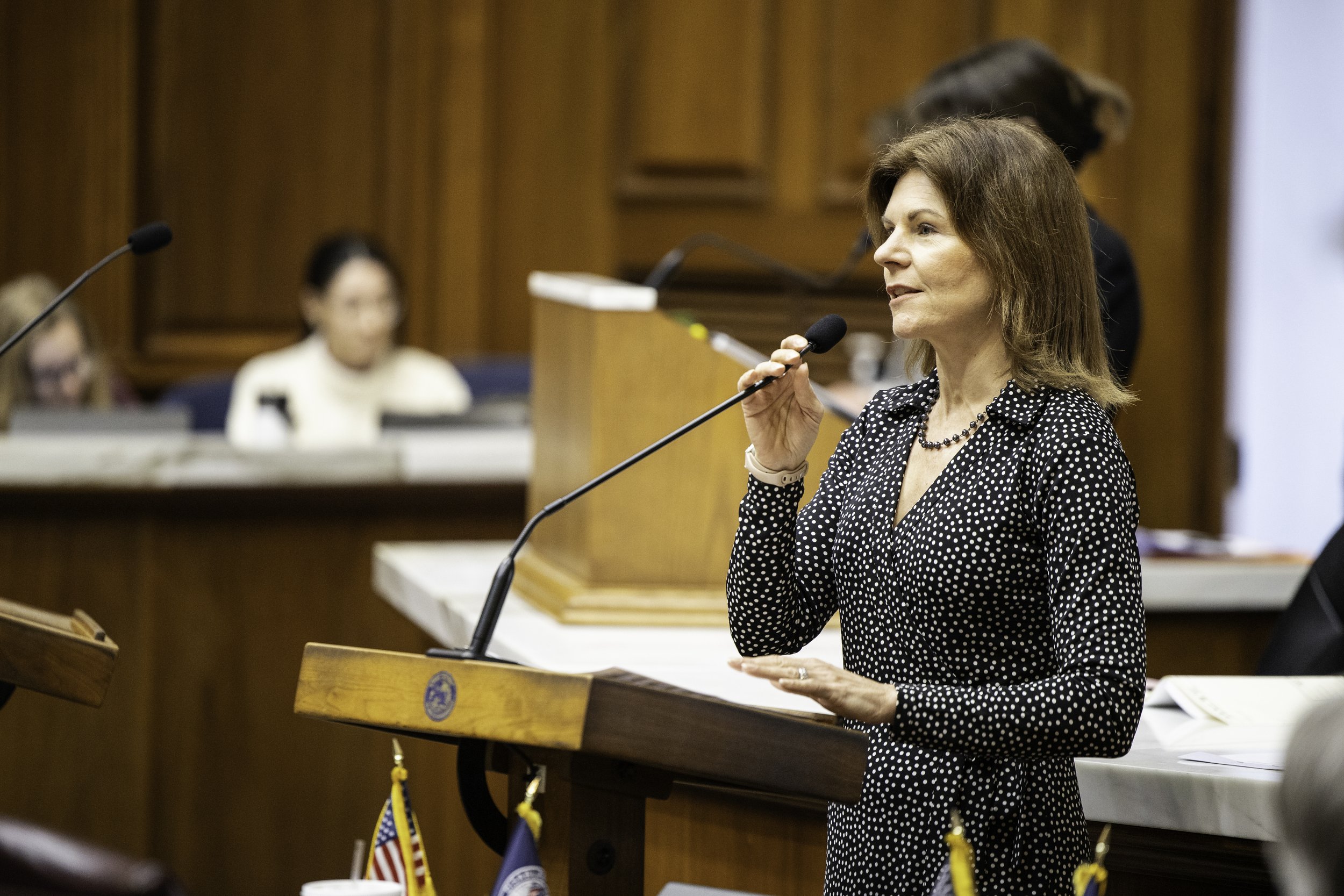
Today, House Democrats offered an array of amendments on House Bill 1002 to give Hoosiers financial relief and expand protections for their utility services. State Rep. Carey Hamilton (D-Indianapolis) offered an amendment that will allow the establishment of Community Energy Facilities that store or generate electricity via solar power, wind power or battery storage. The amendment was defeated on party lines.
Today, House Democrats offered an array of amendments on House Bill 1002 to give Hoosiers financial relief and expand protections for their utility services. State Rep. Carey Hamilton (D-Indianapolis) offered an amendment that will allow the establishment of Community Energy Facilities that store or generate electricity via solar power, wind power or battery storage. The amendment was defeated on party lines.
“Everyone can agree that utility costs in Indiana are too high,” Hamilton said. “Solar and wind energy are amongst the cheapest energy sources available today. This amendment would allow for energy from these sources to be generated from small-scale, local facilities and distributed to local subscribers. Renters and homeowners would be able to participate and see lower bills. By generating electricity closer to where it is consumed, these projects reduce strain on the energy grid, eliminate long-distance transmission and its inherent energy loss and require fewer transmission lines.
“Hoosiers are demanding that the General Assembly take action to address the rising costs of utilities and it is clear the current system is not working. I am glad that the legislature has taken up this critical issue as a priority, and this bill is a small step in the right direction. But we need out of the box solutions to really make a difference in people's monthly bills. Integrating small-scale, low-cost renewable energy and battery storage is a fiscally responsible choice that would result in ratepayers keeping more of their hard-earned money.
“While I am disappointed this amendment was not accepted, I look forward to continued collaboration on bringing down the cost of utilities for all Hoosiers.”
Bill to expand eligibility for advanced DNA testing in cold cases heading to the Senate
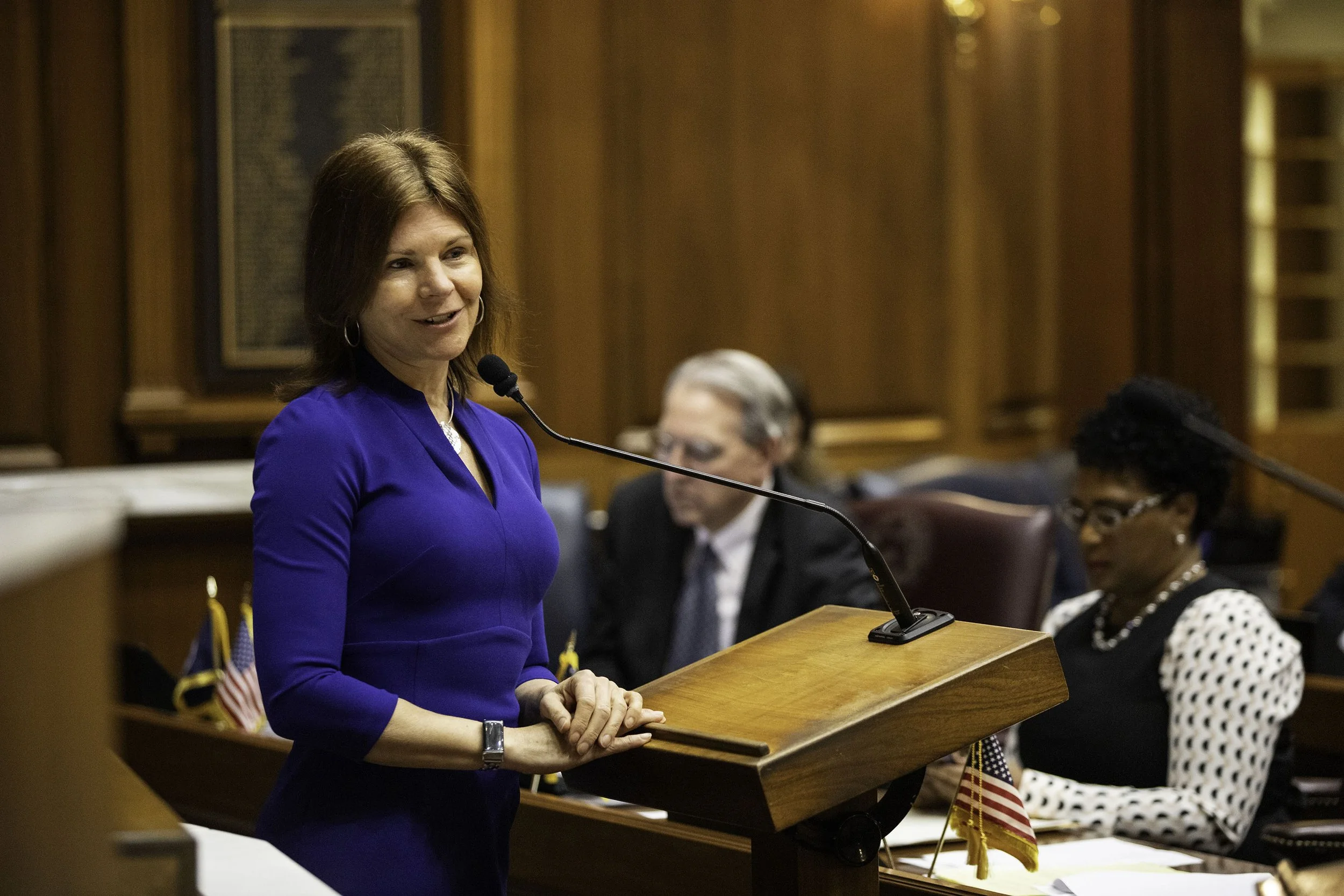
Today, Jan. 22, House Bill 1248, authored by State Rep. Carey Hamilton (D-Indianapolis), passed on third reading in the House of Representatives. The bill now heads to the Senate for further consideration.
Today, Jan. 22, House Bill 1248, authored by State Rep. Carey Hamilton (D-Indianapolis), passed on third reading in the House of Representatives. The bill now heads to the Senate for further consideration.
HB 1248 establishes a legal framework to allow for private funding of advanced DNA testing for cold cases. This enables eligible family members of victims and other key stakeholders to submit a request for advanced DNA testing in cases that have gone unsolved for five or more years.
Hamilton released the following statement regarding HB 1248’s passage out of the House:
“This bill is about getting justice for the thousands of unsolved homicides in Indiana and getting violent perpetrators off the streets. Through advanced technology in DNA testing, many of those cases could be closed. House Bill 1248 will enable law enforcement to locate perpetrators and bring them to justice – granting victims and their families the resolution they deserve as well as making our communities safer.
“I'm grateful all the stakeholders who advocated for HB 1248 – especially the family of Carmen Hope Van Huss, who is the inspiration of the bill – as they advocate on behalf of their sister and all other victims who have not yet seen justice. I’m also thankful for the support of my co-authors, Chairwoman Wendy McNamara, State Rep. Garrett Bascom and State Rep. Maureen Bauer. I am incredibly glad that this bill has passed the House and look forward to seeing its progression through the Senate.”
Bill to expand eligibility for advanced testing in cold cases passes committee
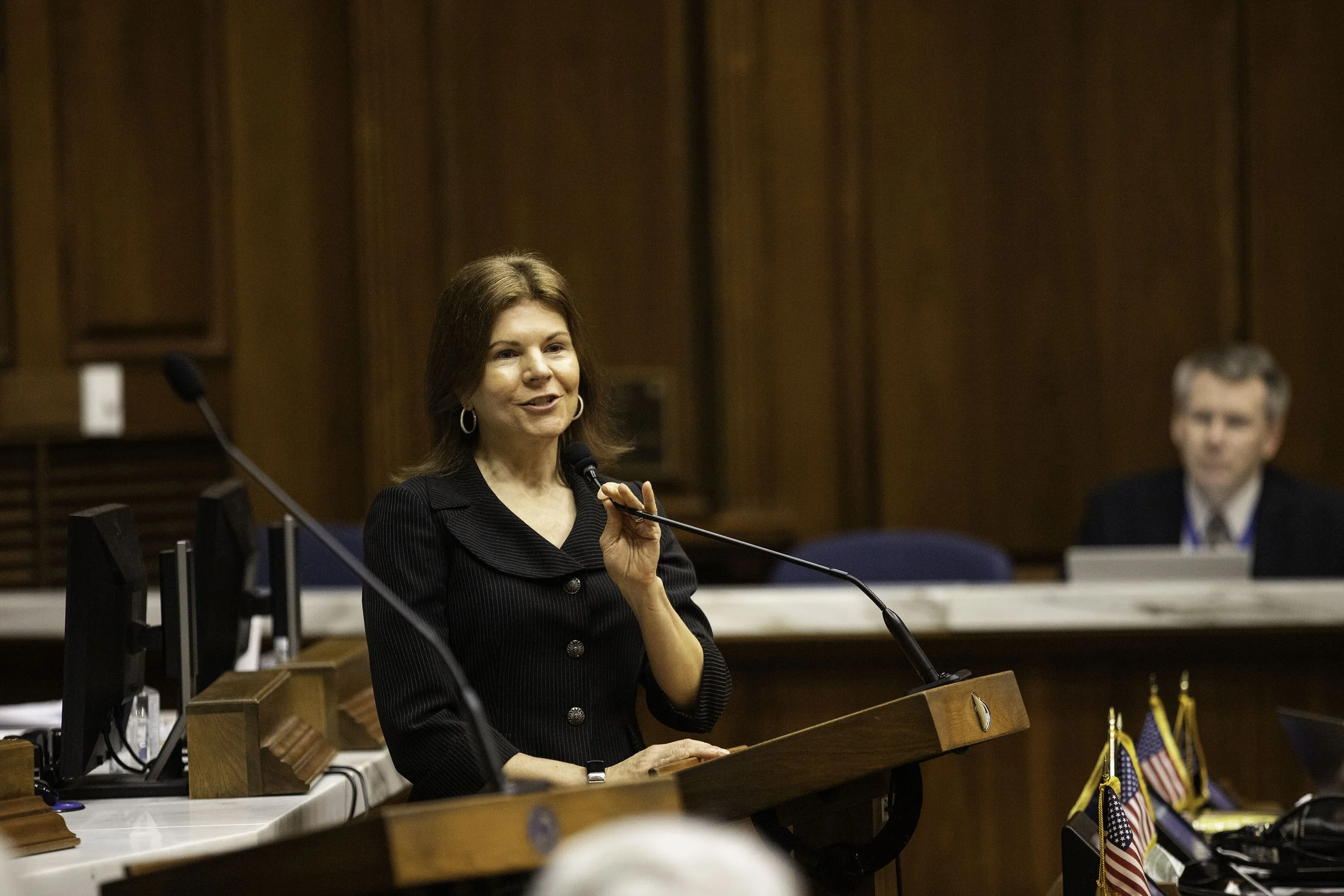
Today, Jan. 14, House Bill 1248, which establishes a legal framework to allow for private funding of advanced DNA testing for cold cases, passed out of the House Committee on Courts and Criminal Code unanimously.
INDIANAPOLIS – Today, Jan. 14, House Bill 1248, which establishes a legal framework to allow for private funding of advanced DNA testing for cold cases, passed out of the House Committee on Courts and Criminal Code unanimously. Authored by State Rep. Carey Hamilton (D-Indianapolis), this bill allows eligible family members of victims and other key stakeholders to submit a request for advanced DNA testing in a case that has been unsolved for five or more years.
Two family members of Carmen Hope Van Huss, Pam Francis and Cindy Hoetmer, were at the committee hearing to support the bill. Pam testified about the experience of her family and described how advanced DNA testing led to an arrest in 2024 for the 1993 brutal murder of their 19-year-old sister. That case is set to go to trial later this month. Between the years of 2013 and 2023, the average rate of cases solved per year was 44% in the state of Indiana.
Hamilton released the following statement after the bill's House committee passage:
“There are over 7200 unsolved homicides in the state of Indiana. With advanced technology in DNA testing, many of these cases have the potential to be closed. Every case solved doesn’t just increase the safety of Hoosiers by getting violent offenders off the street, but also brings answers to traumatized families as well as justice to victims.
“Nothing will bring back a lost loved one. However, this bill will help bring perpetrators of violent crimes to justice – allowing families to focus on honoring their loved ones, not remaining paralyzed in their grief with no resolution.
“I am thankful for the support of my co-authors, Chairwoman Wendy McNamara, State Rep. Garrett Bascom and State Rep. Maureen Bauer, as well as all the stakeholders who helped bring this bill forward. I also want to acknowledge the bravery and determination of the family of Carmen Hope Van Huss as they advocate on behalf of their sister and all other victims who have not yet seen justice. I look forward to continuing to work on this bill with my colleagues as it heads to the House floor.”