

Latest News
Find our archive of news distributions below. To request a media interview or statement from one of our members, visit our press inquiries page here.
Search Our Press Release Archive
Sort by Rep. or Topic
- Economy
- Education
- IBLC
- Leadership
- Mental Health
- Public Safety
- Rep Renee Pack
- Rep. Alex Burton
- Rep. Blake Johnson
- Rep. Carey Hamilton
- Rep. Carolyn Jackson
- Rep. Cherrish Pryor
- Rep. Chris Campbell
- Rep. Chuck Moseley
- Rep. Dant Chesser
- Rep. Earl Harris Jr.
- Rep. Ed DeLaney
- Rep. Gregory W. Porter
- Rep. John Bartlett
- Rep. Justin Moed
- Rep. Kyle Miller
- Rep. Matt Pierce
- Rep. Maureen Bauer
- Rep. Mike Andrade
- Rep. Mitch Gore
- Rep. Pat Boy
- Rep. Phil GiaQuinta
- Rep. Ragen Hatcher
- Rep. Randy Novak
- Rep. Renee Pack
- Rep. Robin Shackleford
- Rep. Ryan Dvorak
- Rep. Sheila Klinker
- Rep. Sue Errington
- Rep. Tonya Pfaff
- Rep. Vanessa Summers
- Rep. Vernon Smith
- Rep. Victoria Garcia Wilburn
- Rep. Wendy Dant Chesser

Pryor files 2025 legislation, continues commitment to Indiana homeowners
With the 2025 legislative session underway, State Rep. Cherrish Pryor (D-Indianapolis) has filed eight pieces of legislation that will improve the lives of residents across the state. Pryor’s legislative agenda includes bills targeted at housing and homeownership, safety and expanding health care access. Pryor’s legislative agenda directly addresses pressing issues deemed detrimental to state residents.
With the 2025 legislative session underway, State Rep. Cherrish Pryor (D-Indianapolis) has filed eight pieces of legislation that will improve the lives of residents across the state. Pryor’s legislative agenda includes bills targeted at housing and homeownership, safety and expanding health care access. Pryor’s legislative agenda directly addresses pressing issues deemed detrimental to state residents.
“In Indiana, 31% of residents rent their homes, and our state ranks 35th in overall health,” Pryor said. “These numbers show the urgent need for us to get back to work and provide legislation that will actually address the issues faced by many residents today. Although there will be a lot to digest in this session, we must remain steadfast in what is ahead of us, and that is improving the lives of residents in the great state of Indiana.”
Continuing her work from last year on breast cancer prevention, House Bill 1061 requires a state employee health plan to cover supplemental breast examinations. This provides additional early detection cancer resources to state employees. HB 1062 prohibits state insurance policies from requiring patients with advanced cancer to try and fail other prescription drugs before covering a prescribed treatment.
HB 1176 will allow an identifying symbol for a medical condition on a driver's license, permit, or identification card to also be used to indicate an autism spectrum disorder. This bill is aimed at providing information vital to interactions between law enforcement and individuals with autism to prevent miscommunications.
Pryor’s legislation also includes protections for tenants as Indiana has some of the worst renter protection laws in the nation. HB 1175 requires a landlord to repair or replace an essential item within 24 hours after of being notified by a tenant that the rental unit is without certain essential services. It would allow the health authority to make the repairs, charge the landlord and impose a fine if the landlord does not make the essential repair. This will provide additional support for tenants that may already be facing an uphill climb.
“These bills will improve lives across the state, whether it's expanding health care coverage, improving interactions with law enforcement, or fighting for tenants' rights,” Pryor said.
Here is a list of Pryor’s legislation this session:
HB 1060 Right to repair
HB 1061 Coverage for cancer screening
HB 1062 Coverage for certain cancer prescriptions
HB 1063 Discriminatory profiling and pretextual stops
HB 1175 Repair of residential rental properties
HB 1176 Health information and BMV records
HB 1177 Home ownership
HB 1664 Due-on-sale clauses

IBLC comments on Gov. Braun’s DEI executive order
Today, Jan. 15, Gov. Mike Braun issued an executive order replacing Diversity, Equity and Inclusion (DEI) practices in state government with "MEI": Merit, Excellence and Innovation. Braun's executive order requires state agencies to examine policies and procedures to ensure compliance, as well as closes the Chief Equity, Inclusion and Opportunity Office created by former Gov. Eric Holcomb in 2020.
Today, Jan. 15, Gov. Mike Braun issued an executive order replacing Diversity, Equity and Inclusion (DEI) practices in state government with "MEI": Merit, Excellence and Innovation. Braun's executive order requires state agencies to examine policies and procedures to ensure compliance, as well as closes the Chief Equity, Inclusion and Opportunity Office created by former Gov. Eric Holcomb in 2020.
State Rep. Earl Harris Jr. (D-Chicago), chair of the Indiana Black Legislative Caucus (IBLC), issued the following statement on behalf of the IBLC regarding the executive order:
"Out of all of the very-real issues Hoosiers are currently facing: poor health outcomes, poverty and a lack of affordable housing, it's extremely troubling that our new governor is starting his tenure by attacking measures to make state agencies reflective of our communities.
"Based on the 2020 Disparity Study conducted for the Indiana Department of Administration, it's clear to me that Indiana is not meeting its goals for equitable hiring and contracts. Let's be clear: DEI practices are not about giving any group of people a handout, it's about helping people who have been historically overlooked a hand up.
"Gov. Braun's pivot to 'Merit, Excellence and Innovation' creates an insidious, false narrative that DEI leads to unqualified individuals getting promoted based only on their race or nationality. This is not and has never been the case, and the insinuation is not only deeply offensive, but harmful to minority workers throughout the state.
"We should all strive to create a talented, diverse workforce that reflects the makeup of our communities. When we have more insights, ideas and voices in our state agencies, all Hoosiers are better off."

Harris, IBLC unveil 2025 legislative agenda: ‘Healthy Bodies, Healthy Minds’
State Rep. Earl Harris Jr. (D-East Chicago), chair of the Indiana Black Legislative Caucus (IBLC), announced that mental and physical health will be the focus of the caucus' 2025 legislative agenda.
State Rep. Earl Harris Jr. (D-East Chicago), chair of the Indiana Black Legislative Caucus (IBLC), announced that mental and physical health will be the focus of the caucus' 2025 legislative agenda.
The "Healthy Bodies, Healthy Minds" agenda aims to increase access to health care, improve health outcomes for Hoosiers, bring more physicians to the state of Indiana and enhance funding for mental health care.
The collection of bills, which includes a "Momnibus" package in honor of the late Sen. Jean Breaux, also includes access to safe housing, maternal health resources for incarcerated women and legislation requiring mental health professionals to assist law enforcement with calls pertaining to a mental health or substance use disorder crises.
"When speaking about public health, we need to be thinking about the many facets of life that have an impact on our overall health and wellbeing," Harris said during a press conference today. "From making schools safer to increasing access to affordable housing, we in the IBLC are hard at work to make Indiana a safer, healthier and more equitable place to live, study, work and raise a family.
"We're not naïve; we know we won’t fix all of Indiana's health problems in one legislative session," Harris said. "But this year, we're committed to doing everything we can to help Hoosiers get access to preventative care, lower health care costs, bring more doctors to the state and to improve mental and physical health outcomes for citizens across the board."
IBLC, Porter honor Marshall “Major” Taylor with Distinguished Hoosier Award
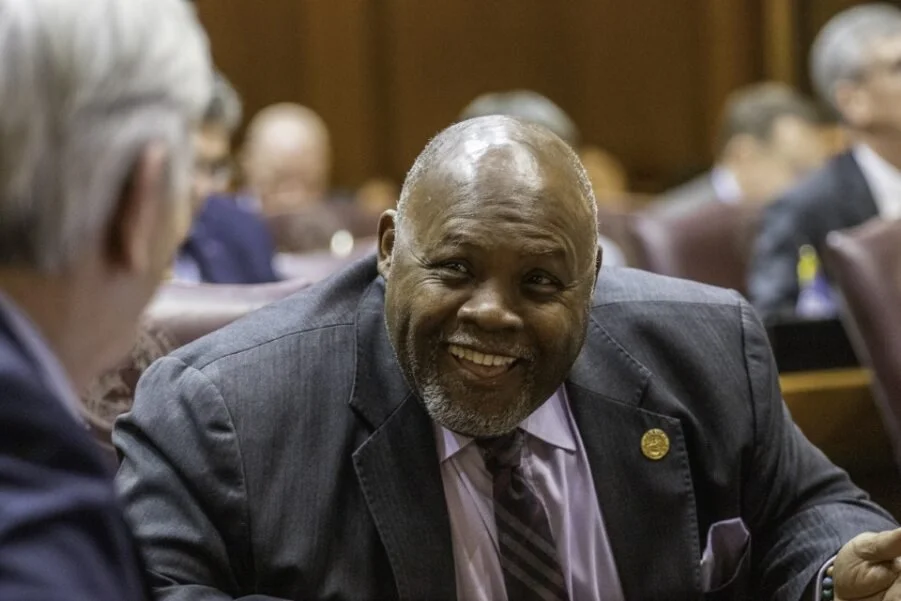
Today, members of the Indiana Black Legislative Caucus (IBLC) honored Marshall “Major” Taylor with the Distinguished Hoosier Award. Born in 1878, Taylor became the first African American world champion in cycling.
Today, members of the Indiana Black Legislative Caucus (IBLC) honored Marshall “Major” Taylor with the Distinguished Hoosier Award. Born in 1878, Taylor became the first African American world champion in cycling.
State Rep. Gregory W. Porter (D-Indianapolis) sponsored the award. Porter serves House District 96, which includes the neighborhood Taylor lived in during his time in Indiana.
“I think Indiana has a lot of unsung Black heroes who deserve to be recognized for the barriers they broke,” Porter said in a statement to Indiana Public Broadcasting earlier this month. “Taylor was only the second Black athlete to win a world championship in any sport, and he was a trailblazer in a non-traditional sport. His sprint times are still considered some of the fastest in the world. Growing up as a Black man in Indianapolis, Taylor was a testament to how far grit and willpower could take you. I am honored to posthumously present this award to Marshall 'Major' Taylor for his legendary impact on Indiana.”
State Rep. Earl Harris Jr. (D-East Chicago) spoke at the award ceremony, praising Taylor's talent and perseverance.
“Taylor's story is not just one of triumph on the racetrack, but of courage in the face of adversity,” Harris said during the event. “He competed during a time when the color of his skin meant he was often excluded from competitions, subjected to harsh discrimination and even faced with threats of violence. Yet, despite the odds, Taylor's will to succeed remained unshaken. He set more than 20 records and became an international superstar. But even more than his victories, it was his refusal to be silenced or sidelined that made him a true champion.”

IBLC, Porter honor Marshall “Major” Taylor with Distinguished Hoosier Award
Today, members of the Indiana Black Legislative Caucus (IBLC) honored Marshall “Major” Taylor with the Distinguished Hoosier Award. Born in 1878, Taylor became the first African American world champion in cycling.
Today, members of the Indiana Black Legislative Caucus (IBLC) honored Marshall “Major” Taylor with the Distinguished Hoosier Award. Born in 1878, Taylor became the first African American world champion in cycling.
State Rep. Gregory W. Porter (D-Indianapolis) sponsored the award. Porter serves House District 96, which includes the neighborhood Taylor lived in during his time in Indiana.
“I think Indiana has a lot of unsung Black heroes who deserve to be recognized for the barriers they broke,” Porter said in a statement to Indiana Public Broadcasting earlier this month. “Taylor was only the second Black athlete to win a world championship in any sport, and he was a trailblazer in a non-traditional sport. His sprint times are still considered some of the fastest in the world. Growing up as a Black man in Indianapolis, Taylor was a testament to how far grit and willpower could take you. I am honored to posthumously present this award to Marshall 'Major' Taylor for his legendary impact on Indiana.”
State Rep. Earl Harris Jr. (D-East Chicago) spoke at the award ceremony, praising Taylor's talent and perseverance.
“Taylor's story is not just one of triumph on the racetrack, but of courage in the face of adversity,” Harris said during the event. “He competed during a time when the color of his skin meant he was often excluded from competitions, subjected to harsh discrimination and even faced with threats of violence. Yet, despite the odds, Taylor's will to succeed remained unshaken. He set more than 20 records and became an international superstar. But even more than his victories, it was his refusal to be silenced or sidelined that made him a true champion.”

Part of economic development is addressing educational inequity
For decades, the ticket to success has been post-grad education. Michael Hicks, a leading economist from Ball State University, sums it up well with the phrase “education is the path to a middle-class life.” This doesn’t mean that those who head straight into the workforce can’t be successful.
For decades, the ticket to success has been post-grad education. Michael Hicks, a leading economist from Ball State University, sums it up well with the phrase “education is the path to a middle-class life.” This doesn’t mean that those who head straight into the workforce can’t be successful. I’m a strong believer in choosing the path that’s best for you. However, I can’t deny that jobs requiring degrees usually offer higher pay, consistent wage growth and more security. There are other ways to achieve middle-class life, but the attainment of a college degree is the most likely path to that outcome.
Unfortunately, Hoosier students are moving away from degrees. Indiana’s college-going rate has plummeted from 65% to only 53% since 2015. COVID-19 has exacerbated the problem, and the cost of schools is another deterrent. We’ve discussed this issue, but we’ve missed a key component: our Black students. College enrollment is dropping across the board, but the decline is more severe among students of color. The college-going rate for Black students has dropped shockingly low to 44%. There’s been some progress through the Indiana Black Legislative Caucus (IBLC) with auto-enrollment for the 21st Century Scholars Program. But more should be done, especially across the aisle, to change the tide.
Looking at Indiana’s education landscape, it’s easy to understand why Black students forgo college. Let’s look at the most recent college equity report: only 17% of Black students received an Honors diploma, only 40% earned AP or dual credit and only 27% met early success benchmarks. To top it off, the U.S. Supreme Court ruled that affirmative action was unconstitutional. These measures encouraged minority students to apply with the promise of equitable admissions. College may not be for everyone, but Black students are clearly underserved.
Post-grad employment opportunities are similarly dismal. The GOP majority has focused on work-based learning, but Black students are underrepresented in these programs. Registered apprenticeships are a moderately successful program with 21,768 active apprentices who make an average wage of $19.50 per hour. But Black Hoosiers only make up 8.5% of Indiana’s active apprentices. A recent report for the Fiscal Policy Committee highlighted that a “participation and achievement gap remains for African Americans and other minority populations.” Even when they do these programs, they still face inequity in the workforce. Black Hoosiers experience racial disparities in their wages, with differences as large as $2,000 after graduating from adult education or technical programs.
It’s a Catch-22. We encourage Black students to join work programs instead of college. Then in these programs, they receive lower pay, struggle to get credentialed and struggle to find lasting employment. How do we address these disparities? How do we keep Indiana from falling further behind other states? We could start by re-examining the tax cuts given to big companies or redirecting the “embarrassment of riches” given to non-transparent development projects. Just think, if we “cut the fat” on corporate tax cuts and non-transparent incentives provided for Indiana Economic Development Corporation’s (IEDC) projects we could fully fund education. College degrees are better for economic development, especially for individual wage growth than the LEAP district.
Let’s redirect our limited resources to human infrastructure which is undoubtedly more important to Indiana’s economic success. Let's begin by funding our universities to the national average. Let’s encourage college attendance since it’s the easiest path to the middle class. Let’s provide support to those pursuing degrees or job training by fully funding child care, transportation and educational grant programs. If we continue following our current path, Indiana will fall further behind with the most adverse effects felt by Black and other marginalized Hoosiers.

Harris testifies on second draft of high school diploma proposal
Today, Nov. 8., the Indiana State Board of Education (SBOE) met to discuss the second draft of proposed changes to the Indiana high school diploma. At this meeting, SBOE accepted public testimony to close out the public comment period.
Today, Nov. 8., the Indiana State Board of Education (SBOE) met to discuss the second draft of proposed changes to the Indiana high school diploma. At this meeting, SBOE accepted public testimony to close out the public comment period.
State Rep. Earl Harris Jr. (D-East Chicago) issued the following statement following his testimony to SBOE:
“It’s concerning that, despite months of public feedback, the second draft still leaves critical issues unresolved. I’ve heard from parents, educators and students in my district about the lack of clarity and support in this proposal, and many of their concerns remain unaddressed.
“One key issue is the impact this proposal will have on students with individualized education plans (IEPs). These students are being overlooked in a system that is rushing to implement changes without proper planning or consideration for the resources they need. It's troubling that companies may not be equipped to understand or implement IEPs, especially considering the widespread counselor shortage and the fact that many people, may not fully understand what an IEP entails until these plans were brought up in SBOE public meetings. The proposal lacks clear guidance on how work-based learning sites will ensure these students receive the necessary accommodations. We need a more thoughtful approach—one that ensures equity for all students, particularly those who require additional support.
“I’m also troubled by the lack of rigor in this draft. This isn’t about a simple name change for diplomas; it’s about maintaining the high academic standards that help prepare our students for the future. Unfortunately, the current proposal fails to address how we will maintain that rigor while providing real, sustainable work-based learning opportunities. Also, what about the background checks required for these work placements? Students' safety is paramount, yet there's no mention of whether employers will be required to conduct these checks to ensure a safe environment. While the proposal includes provisions for these experiences, there is no requirement to ensure that students are actually hired or placed in meaningful jobs, nor is there clarity on how transportation to these sites will be handled.
“Another significant concern is funding. The proposal suggests that schools would need to prepare students for this program in half of the school year, but there is no clear funding mechanism to support the staffing and resources required to make this happen. Schools are already stretched thin, and this proposal doesn’t provide the necessary financial support to implement these changes effectively.
“We must ask: Why the rush to implement this without ensuring we have the right resources and structures in place? We can’t afford to compromise the quality of education for our students. I encourage everyone to continue to provide feedback and raise their voices to ensure that the final version of this proposal meets the needs of all students, not just a select few. The stakes are too high for us to accept anything less than a comprehensive, well-thought-out plan.”
Porter comments on dismal monthly revenue report
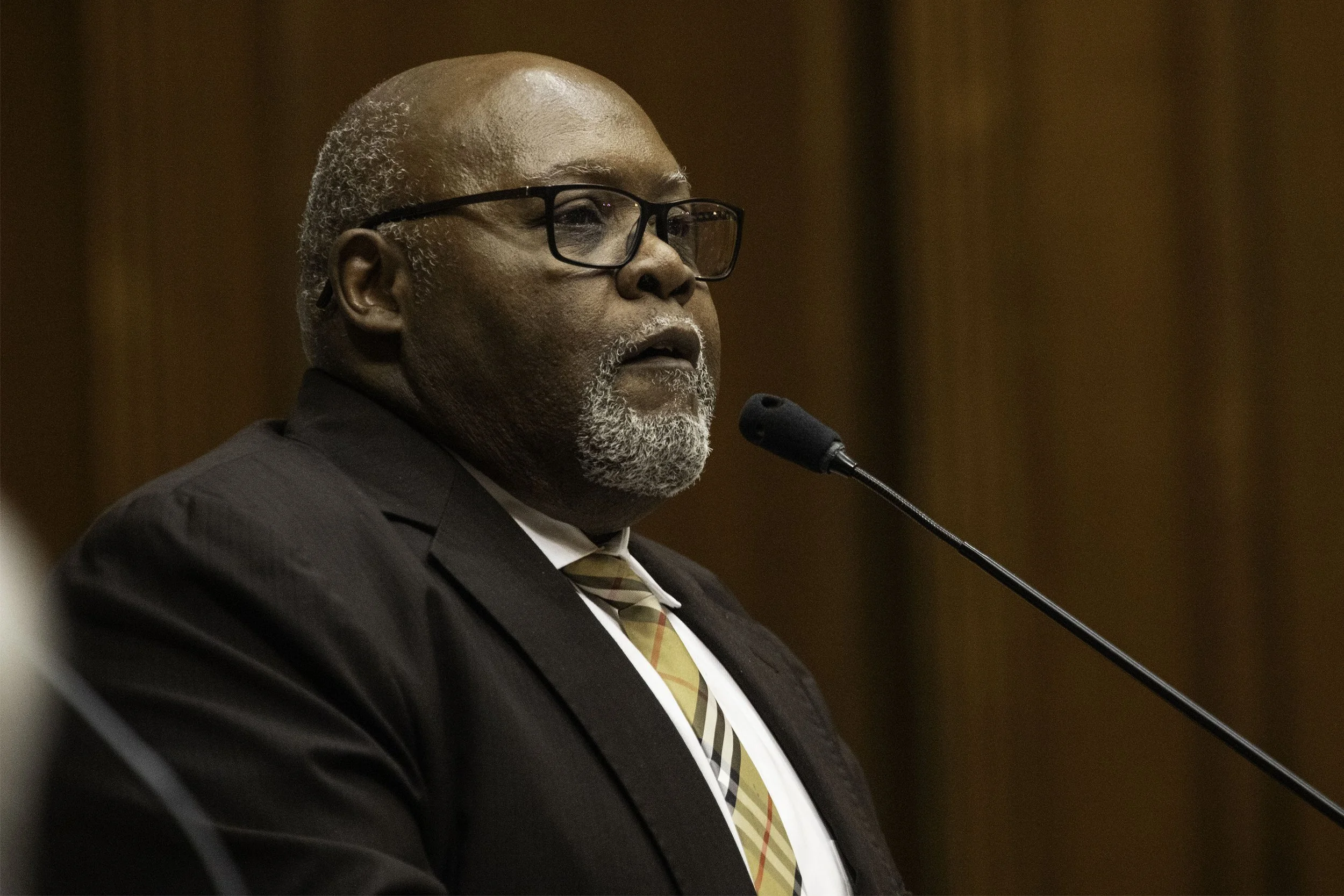
State Rep. Gregory W. Porter (D-Indianapolis) released the following statement regarding today’s revenue report, which is $183.7 million below forecast.
State Rep. Gregory W. Porter (D-Indianapolis) released the following statement regarding today’s revenue report, which is $183.7 million below forecast:
“Unfortunately, this is another dismal revenue report that’s well below forecast. Revenue was down in August, and that trend has continued with our revenues down significantly for September. We’re now collectively $159.4 million under the total forecast for fiscal year 2025.
“These variances in our forecasts may be due to 2023 legislation which changed the timing of payments. In some months, we have higher collections, whereas others have significantly lower payments. Time will tell whether or not the revenue missed this month will be made up over the holidays.
“Even if we do recoup our losses, there’s no denying that we won’t have much wiggle room in 2025. Short-sighted budgetary decisions in the past, like unrestrained voucher spending, diverted funding from public resources. In this next budget cycle, we must prioritize essential long-neglected human infrastructures over unneeded investments.
“We can still fully fund Medicaid, statewide Pre-K, our public schools and provide a property tax credit with diminished revenue. The money is there: The general fund and state surplus exist to cover unexpected deficits. It all comes down to the programs we prioritize, and I will prioritize resources that truly benefit all Hoosiers.”

Pryor celebrates Pike High School teacher, Graciela Miranda, named as 2025 Indiana Teacher of the Year
Friday (Sept. 27), the Indiana Department of Education (IDOE) announced Graciela Miranda as the 2025 Teacher of the Year. Mrs. Miranda teaches English language learners from Freshman to Senior year at Pike High School.
Friday (Sept. 27), the Indiana Department of Education (IDOE) announced Graciela Miranda as the 2025 Teacher of the Year. Mrs. Miranda teaches English language learners from Freshman to Senior year at Pike High School.
State Rep. Cherrish Pryor released the following statement:
“I am unbelievably proud to have the 2025 Teacher of the Year, Graciela Miranda, in my district. When the top three finalists were announced, I had the pleasure of sitting in on Mrs. Miranda’s class while she went through a lesson. It was remarkable to see her passion for education and creating life-long learners shine through as she spoke to her class. In that lesson, Mrs. Miranda used her own upbringing as a first-generation college graduate to impart on her students that there is nothing they cannot achieve if they work hard and dream big.
“What stood out most to me about Mrs. Miranda was how deeply she cares for each and every student. It was clear that her students see that as well. After the announcement on Friday, I was touched to see a group of her students run up to Mrs. Miranda and pull her into a big group hug. The reaction from all the students in the room just shows that Mrs. Miranda is seen as an inspiring figure throughout the school.
“With over 64,000 teachers in our state, it is an honor to have one of Pike High School’s own recognized as the best. Congratulations, Mrs. Miranda! Thank you for all that you do for your students and our community.”
IBLC shares teachers’ concerns over proposed high school diplomas
On June 5, the State Board of Education proposed new requirements for high school diplomas. Though the Indiana Department of Education (IDOE) insists that the changes outlined in the proposal would offer more flexibility for students, teachers and legislators have raised concerns about the proposal.
On June 5, the State Board of Education proposed new requirements for high school diplomas. Though the Indiana Department of Education (IDOE) insists that the changes outlined in the proposal would offer more flexibility for students, teachers and legislators have raised concerns about the proposal. According to the IDOE, students could pursue one of two new degrees: the less-intensive GPS Diploma or the GPS Diploma Plus, which emphasizes a “high-quality work-based learning experience.”
However, neither of these degrees provides students with the skills necessary for a successful transition into higher learning. Instead, these diplomas are made to funnel students directly into the job markets at the cost of important core classes in math, the arts, world languages and more. The IBLC echoes the concerns that have been shared by teachers and recognizes that in its current state, the proposed diplomas do not provide the academic rigor necessary to prepare Hoosier students to become well-rounded, academically curious adults.
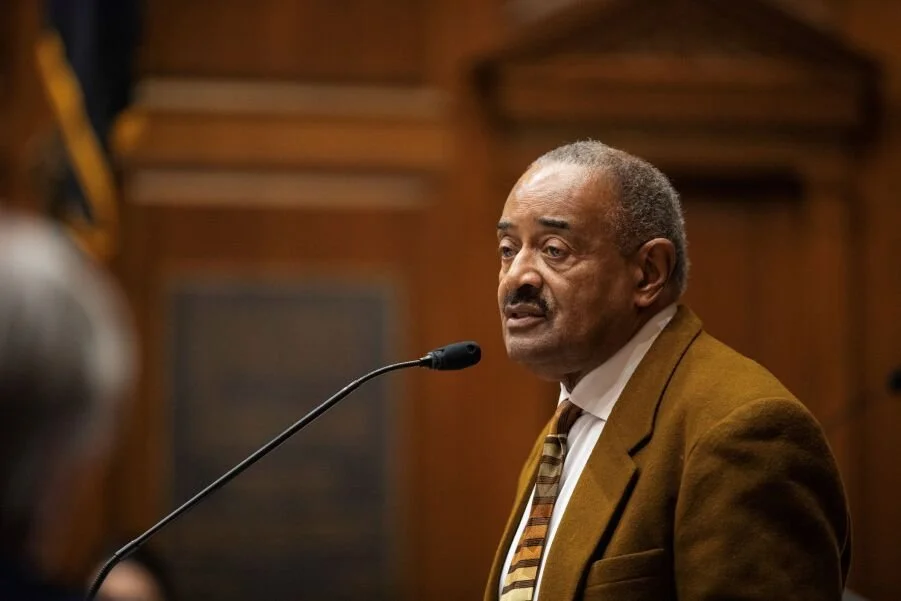
“School is the time when children should be encouraged to broaden their perspectives and explore a diverse assortment of subjects, not only to help students discover their individual passions but to help shape them into capable adults,” IBLC Chair State Rep. Earl Harris Jr. (D-East Chicago) said.
“While college is not the only route to success, we still must give our students the tools and education necessary to succeed in higher education, if that is the path they choose to pursue. If these new diplomas go into effect, Indiana students may not meet the basic requirements to enroll in our state universities, and they will most certainly fall short of the requirements needed for out-of-state enrollment. The proposed high school diplomas require less of our students and would set up Hoosier children for failure.”
“As someone who has spent my entire career as an educator, the proposed changes to our high school diplomas are deeply troubling,” House Education Committee Ranking Democrat State Rep. Vernon G. Smith (D-Gary) said.
“It is important to ensure that our public schools prepare students for whatever path they choose to pursue after graduation but taking away the requirement for essential classes such as foreign languages, economics, fine arts and world history is not the way to achieve that goal. Our chronically underfunded public schools may be forced to cut these classes altogether if they are not required to offer them. This new system takes opportunities away from all Hoosier students and devalues Indiana's education.
“Our goal should be to foster curiosity and create life-long learners with open minds to the experiences around them. How do we expect a student to realize that they could have a real future as a translator or an economist if they are never exposed to those topics? As I always say, the mind is like a parachute: it doesn't work if it isn't open.”
The State Board of Education is accepting feedback on the proposed diplomas. All parents, students, educators and stakeholders are encouraged to share their concerns and can do so via the online form here.

IBLC celebrates 2024 legislative session accomplishments
With the 2024 legislative session at a close, the Indianapolis Black Legislative Caucus (IBLC) reflected on their achievements for the session, including the passage of healthcare, economic security and education legislation.
With the 2024 legislative session at a close, the Indianapolis Black Legislative Caucus (IBLC) reflected on their achievements for the session, including the passage of healthcare, economic security and education legislation.
IBLC Chair State Rep. Earl Harris (D-East Chicago) highlighted the legislative accomplishments of members of the IBLC, including:
House Bill 1004, co-authored by all House IBLC members and voted for by all Senate IBLC members
Delivers a 13th check to public retirees
House Bill 1021, co-authored by Rep. Renee Pack (D-Indianapolis) and co-sponsored by Sen. Andrea Hunley (D-Indianapolis)
WHAT: Establishes a “Green Alert” for missing service members and veteransSenate Bill 5, co-authored by Sen. Andrea Hunley (D-Indianapolis) and co-sponsored by Rep. Carolyn Jackson (D-Hammond)
WHAT: Assists utility providers in replacing lead service lines to prevent health complicationsHouse Bill 1058, co-authored by Rep. Cherrish Pryor (D-Indianapolis) and co-sponsored by Sen. Andrea Hunley (D-Indianapolis) and Sen. Lonnie Randolph (D-East Chicago)
WHAT: Improves the quality of breast cancer screenings by requiring an assessment of a patient's breast tissue density
Additionally, the IBLC worked to defeat harmful pieces of legislation during the eleventh hour of the legislative session, including:
A draft conference committee report of House Bill 1243
WHAT: Would have removed collective bargaining rights for teachersA conference committee report of House Bill 1329
WHAT: A bill resurrected by Republican lawmakers to deregulate PFAS chemicals, synthetic compounds that pose serious health risks
“I am proud of the work that our Indiana Black Legislative Caucus members did this session to champion positive legislation and defeat legislation that would have proven harmful to Hoosiers,” Harris said.
“The IBLC is lucky to have members who have proven time and time again that they are dedicated to tirelessly serving their communities. It is a combination of that very commitment to service and the emphasis on bipartisanship that every IBLC member holds dear that allows us to bring these legislative successes into being.
“Though we have turned the page on this legislative session, the IBLC remains hard at work, crafting impactful policy for next year. As we begin laying the groundwork for next session, we will continue to work for our communities and craft policy that is representative of the issues facing Hoosiers today.”
The IBLC is currently in the process of developing its legislative agenda for the 2025 legislative session. Additionally, the caucus has begun scheduling and planning a series of town halls. Information regarding the 2025 legislative theme, as well as the specific dates and location for upcoming town halls will be unveiled later this year.