

Latest News
Find our archive of news distributions below. To request a media interview or statement from one of our members, visit our press inquiries page here.
Search Our Press Release Archive
Sort by Rep. or Topic
- Economy
- Education
- IBLC
- Internship
- Leadership
- Mental Health
- Public Safety
- Rep. Alex Burton
- Rep. Blake Johnson
- Rep. Carey Hamilton
- Rep. Carolyn Jackson
- Rep. Cherrish Pryor
- Rep. Chris Campbell
- Rep. Chuck Moseley
- Rep. Dant Chesser
- Rep. Earl Harris Jr.
- Rep. Ed DeLaney
- Rep. Gregory W. Porter
- Rep. John Bartlett
- Rep. Justin Moed
- Rep. Kyle Miller
- Rep. Matt Pierce
- Rep. Maureen Bauer
- Rep. Mike Andrade
- Rep. Mitch Gore
- Rep. Pat Boy
- Rep. Phil GiaQuinta
- Rep. Ragen Hatcher
- Rep. Randy Novak
- Rep. Renee Pack
- Rep. Robin Shackleford
- Rep. Ryan Dvorak
- Rep. Sheila Klinker
- Rep. Sue Errington
- Rep. Tonya Pfaff
- Rep. Vanessa Summers
- Rep. Vernon Smith
- Rep. Victoria Garcia Wilburn
- Rep. Wendy Dant Chesser
- cherrish

A landmark step for Hoosier safety: Errington’s HB 1297 heads to the governor’s desk
Today, March 24, State Rep. Sue Errington’s (D-Muncie) House Bill (HB) 1297 is headed to Gov. Braun’s desk for final approval after amendments from the Senate were approved by the House.
Today, March 24, State Rep. Sue Errington’s (D-Muncie) House Bill (HB) 1297 is headed to Gov. Braun’s desk for final approval after amendments from the Senate were approved by the House.
The bill creates a groundbreaking initiative in Indiana: the voluntary Yellow Dot Motor Vehicle Medical Information Program. This program aims to provide life-saving medical information to first responders in the critical moments following an automobile accident, significantly enhancing the safety and well-being of Hoosiers.
HB 1297 establishes a simple yet powerful tool to aid first responders: a yellow decal on the rear window of participating vehicles and a yellow envelope containing essential medical details to be kept in the glove compartment. In the event of an accident, first responders will be able to immediately access vital information about the injured individual’s medical history, allergies and conditions—helping to ensure timely, informed care during emergencies.
Errington shared her thoughts on the bill’s advancement:
“The Yellow Dot Program is a crucial step forward in ensuring Hoosiers receive the immediate care they need following a car accident. This program will enable first responders to act quickly and effectively, ultimately saving lives and enhancing the safety of our communities. HB 1297 is now on its way to Gov. Braun’s desk for final approval.
“I am deeply grateful for the unwavering support of Lt. Gov. Beckwith, whose dedication to this initiative has been invaluable. I also want to express my gratitude to my co-authors—Rep. Pressel, Rep. Harris Jr. and Rep. Karickhoff—as well as my Senate sponsors, Sen. Doriot, Sen. Alexander, Sen. Randolph, Sen. Jackson, Sen. Ford and Sen. Pol. Their continued support has been instrumental in advancing this important initiative.
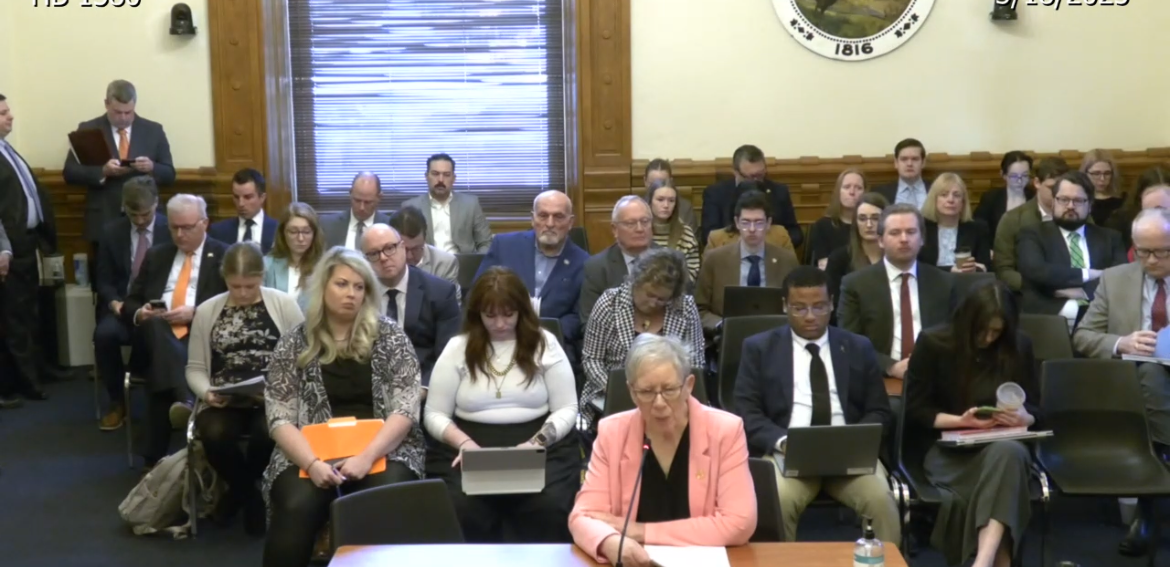
“I’d like to extend a heartfelt thank you to the constituent in my district with Parkinson's disease who brought this critical issue to my attention and inspired this cause. A special thank you also goes to Debby Holcombe, whose passionate testimony illustrated the profound impact this program will have on families across our state. It is for people like her—and others in similar situations—that I have worked tirelessly to bring this bill to fruition, strengthening emergency response protocols and reinforcing our state’s commitment to keeping Hoosiers safe.”
HB 1297 now moves to Gov. Braun’s desk for final approval, bringing Indiana one step closer to providing a more informed and life-saving approach to emergency care.

Burton celebrates passing of SB 178 and opportunity for relief from expensive utility bills
Today, March 24, Senate Bill (SB) 178 passed out of the House and heads to the governor's desk for final approval. SB 178 would recognize natural gas and propane as clean energy sources in Indiana.
Today, March 24, Senate Bill (SB) 178 passed out of the House and heads to the governor's desk for final approval. SB 178 would recognize natural gas and propane as clean energy sources in Indiana.
State Rep. Alex Burton (D-Evansville) released the following statement on the bill’s passage:
“For the past decade, Democrats and Republicans alike have been frustrated with the energy costs in Southwest Indiana and Evansville. We have consistently paid the most expensive utility bills in Indiana, leading some community members to move to neighboring states in the Tristate area – unable to afford the cost of living.
“To be clear, since my swearing-in, my goal in the Statehouse has been to reduce the costs of energy utility bills for Hoosiers by any means necessary. SB 178 creates a pathway of possibility that I’m proud to co-sponsor and support by adding natural gas and propane to the list of clean energy resources. This new policy change may lead to our communities in Southwest Indiana accessing grants and subsidies that ultimately reduce our monthly energy bills.
"While some may question this policy, this piece of legislation is the first this session to offer a clear path to relief for overburdened Hoosiers. I will continue to work with my colleagues in the legislature, the Braun Administration, and the federal government to address unreasonable consumer utility costs.”

Porter bill to protect Hoosiers’ privacy heads to governor’s desk
Today, March 24, State Rep. Gregory W. Porter (D-Indianapolis) signed House Bill 1148 to send the bill to the governor’s desk.
Today, March 24, State Rep. Gregory W. Porter (D-Indianapolis) signed House Bill 1148 to send the bill to the governor’s desk. The bill passed with a 45 to 1 vote in the Senate, and it returned to the House with no amendments. HB 1148 increases the number of years a birth certificate or record for a stillborn child is private from 75 to 99 years.
Porter released the following statement:
“I’m grateful to my House and Senate colleagues for their support of this legislation. This bill will protect Hoosiers’ privacy by ensuring their medical records remain confidential during their lifetimes. It’s important that medical documents remain private, especially for something as traumatic and devastating as a stillbirth.
“This bill increases the number of years a stillbirth record stays private from 75 to 99. With our life expectancies getting longer, many people were outliving that 75-year limit. Their stillbirth records were made public against their wishes. When made public, stillbirth records are often added to online databases and used for health care research. That’s incredibly damaging to these families who then relive their grief and pain as the loss of their child becomes public knowledge.
“My bill keeps medical records confidential unless the patient chooses otherwise. I’m proud to have authored this legislation, and I remain committed to protecting Hoosiers’ privacy.”

Campbell condemns IDOH’s decision to halt gender change requests on birth certificates
On Tuesday, March 18, the Indiana Department of Health (IDOH) halted gender change requests for Indiana birth certificates. This decision follows a recent executive order from Gov. Mike Braun which requires Indiana's executive branch to “enforce the biological binary of man and woman.”
On Tuesday, March 18, the Indiana Department of Health (IDOH) halted gender change requests for Indiana birth certificates. This decision follows a recent executive order from Gov. Mike Braun which requires Indiana's executive branch to “enforce the biological binary of man and woman.”
State Rep. Chris Campbell (D-West Lafayette) released the following statement:
“I’m disappointed by the IDOH decision to halt gender changes on birth certificates. This will have severe repercussions on the livelihoods of transgender Hoosiers. The Bureau of Motor Vehicles (BMV) requires a birth certificate and Social Security card that reflects an individual’s preferred name and gender to issue an ID. The Trump administration stopped processing gender change requests for Social Security cards, and now Gov. Braun has implemented the same restriction for birth certificates.
"This means their IDs could be affected as well. What happens if they get pulled over and their ID doesn’t match their appearance? It will also affect their health care, work and housing. Since your insurance plan doesn’t align with the gender on your birth certificate, it can lead to denials for care deemed inconsistent with your assigned sex at birth. Landlords can request birth certificates as part of the application process, and job applications may require an ID or birth certificate.
“Transgender Hoosiers will have to constantly explain their gender identity during processes where gender shouldn’t even be a part of the conversation. I will continue to fight to protect the rights of transgender individuals in Indiana.”

Shackleford’s HB 1065 advances to governor’s desk
On March 18, State Rep. Robin Shackleford’s (D-Indianapolis) House Bill (HB) 1065 passed the Indiana Senate with a unanimous vote of 49-0. The bill is a significant step forward in providing financial relief to individuals and families participating in cancer clinical trials, helping to alleviate the burdens of travel, lodging, and other incidental costs associated with participation.
On March 18, State Rep. Robin Shackleford’s (D-Indianapolis) House Bill (HB) 1065 passed the Indiana Senate with a unanimous vote of 49-0. The bill is a significant step forward in providing financial relief to individuals and families participating in cancer clinical trials, helping to alleviate the burdens of travel, lodging, and other incidental costs associated with participation.
Shackleford released the following statement on the bill’s advancement:
“I am incredibly grateful to all my Senate sponsors for their support for this critical legislation, and to State Sen. Charbonneau and State Sen. Jackson for presenting it before the Senate. Their partnership has been instrumental in advancing this important cause.
“This bill creates a tangible solution to the financial challenges faced by many individuals and families engaged in cancer clinical trials. These trials are vital for advancing medical research and developing more effective treatments. However, the associated costs—such as travel, lodging, and other out-of-pocket expenses—often create additional barriers for patients, potentially preventing them from accessing life-saving care and participating in critical research.
“No one should have to worry about how they will pay for a hotel room or gas money while they’re fighting cancer. Their sole focus should be on their health, on healing, and on overcoming this disease. This legislation ensures that financial strain does not become an additional burden during such a challenging time.
“I am proud to have authored this legislation, and I can only imagine how much it will help those who need it most. This is a win not just for patients, but for the future of cancer treatment in Indiana.”
HB 1065 now moves to Governor Braun’s desk for final approval. Once signed into law, the bill will provide much-needed support to those participating in cancer clinical trials, allowing them to focus on what matters most: their health and their future.

Garcia Wilburn celebrates harm reduction bill passing key hurdle
House Bill 1167, which would reduce opioid overdoses by decriminalizing fentanyl test strips, passed a key hurdle yesterday in passing out of the Senate Committee on Corrections and Criminal Law.
During the 2024 legislative session, State Rep. Victoria Garcia Wilburn (D-Fishers), HB 1167's co-author, advanced HB 1053 (2024) out of the Indiana House of Representatives. HB 1053 would have accomplished the same policy objective as HB 1167 (2025), but the bill did not receive a Senate committee hearing, thus killing it.
House Bill 1167, which would reduce opioid overdoses by decriminalizing fentanyl test strips, passed a key hurdle yesterday in passing out of the Senate Committee on Corrections and Criminal Law.
During the 2024 legislative session, State Rep. Victoria Garcia Wilburn (D-Fishers), HB 1167's co-author, advanced HB 1053 (2024) out of the Indiana House of Representatives. HB 1053 would have accomplished the same policy objective as HB 1167 (2025), but the bill did not receive a Senate committee hearing, thus killing it.
As HB 1167's co-author, Garcia Wilburn celebrated this year's harm reduction effort clearing the hurdle that kept last year's bill from becoming law:
"Make no mistake, House Bill 1167 will save lives. While Indiana has reduced our overdose death rates in the past few years, we are still losing beloved Hoosier lives to fatal overdoses, and we can do better.
"Many in the district have shared their heartbreaking stories of losing their loved ones. I am proud to champion this legislation and am thrilled we are one step closer than last year to making this policy change become law. I urge the Indiana State Senate to finish the job so we can support the behavioral health and public safety professionals working to keep Hoosiers safe from the tragedy of overdoses."
Now that HB 1167 has passed out of Senate committee, it is eligible for amendments and final passage before the full state Senate.

House Public Health Committee Democrats vote against bill growing wasteful government bureaucracy
Today, March 18, Democrats on the House Committee on Public Health stood against Senate Bill 2. The bill increases restrictions to qualify for the Healthy Indiana Plan (HIP) by implementing a 20-hour-a-week work and/or volunteer service requirement and prohibits advertising of Medicaid programs. Now that the bill has passed the Public Health Committee, it will head to the House Ways and Means Committee for further consideration.
Today, March 18, Democrats on the House Committee on Public Health stood against Senate Bill 2. The bill increases restrictions to qualify for the Healthy Indiana Plan (HIP) by implementing a 20-hour-a-week work and/or volunteer service requirement and prohibits advertising of Medicaid programs. Now that the bill has passed the Public Health Committee, it will head to the House Ways and Means Committee for further consideration.
Ranking Minority Member Rep. Robin Shackleford (D-Indianapolis), Rep. Maureen Bauer (D-South Bend), Rep. Victoria Garcia Wilburn (D-Fishers) and Rep. Gregory W. Porter (D-Indianapolis), who serve on the Public Health Committee, released the following statement after hearing testimony on SB 2 and voting against it:
“Hoosiers work hard, and that's exactly what we heard today in committee from Hoosiers who rely on Medicaid for health care. Senate Bill 2 would only spend more money on Medicaid, rather than saving money as claimed by the bill authors, by creating more administrative hurdles and unintended coverage disruptions for eligible individuals.
“HIP is funded 90% by federal dollars and is an investment in our state’s economy and wellbeing. This ‘Big Brother’ monitoring of Hoosiers will cost more money than it will save, and it will make health care less accessible to Hoosier families by making applications harder and lengthier. In fact, Georgia's efforts to institute work requirements for Medicaid utterly failed, with administrative spending costing more than actual health care services for enrollees. These mandates have historically led to coverage losses, particularly among individuals facing barriers to employment, such as those with chronic health conditions or caregiving responsibilities.
“SB 2's complete ban on marketing and advertising for Medicaid would hinder working Hoosiers from understanding their health care options. This bill would cause unimaginable harm to our communities and disenfranchise thousands of families in our state.
“Indiana already ranks 45 out of 50 states in public health funding. We have the highest maternal mortality rate among our neighbors with 41% of births in our state being covered by Medicaid. 1 in 4 Indiana counties are maternity care deserts. Instead of tackling these health care disparities, the House today advanced a bill once again restricting these essential services.”

Op-ed: A targeted attack on public schools: HB 1001, SB 1 and SB 518
This session, Republicans filed three bills that form a targeted, devastating attack on our public schools: House Bill 1001, Senate Bill 1, and SB 518. Together, these bills drain public schools of their financial resources.
This session, Republicans filed three bills that form a targeted, devastating attack on our public schools: House Bill 1001, Senate Bill 1, and SB 518. Together, these bills drain public schools of their financial resources.
Let’s start with HB 1001, the Republicans’ proposed budget that inadequately funds public schools. The House majority has touted a “2% funding increase” by providing $18.9 billion for K-12 education, but this is a bait and switch. Some public schools will receive a cut while others receive less than a 2% increase. HB 1001 continues to siphon taxpayer dollars to charters and private schools with $200 million for vouchers for the wealthiest 3% of Hoosier families. Indiana’s universal voucher program will cost nearly $1.3 billion over the next two years. For 2026 and 2027, Republicans also provide $744 million for virtual and brick-and-mortar charter schools, plus access to an additional $281 million in grants.
20 years of chronic underfunding from the Indiana GOP has left public schools with limited options to keep teachers in the classroom, the lights on and the buses running. Paired with the budget, SB 1 and SB 518 will only rub salt in their wounds.
Centered on their campaign promises, SB 1 is a Republican priority bill to lower property taxes. It’s a moving target that's failed to provide relief to homeowners in each of its versions. House Republicans are considering swapping the current language for HB 1402, which still fails to achieve their promise. Homeowners’ property tax bills would go up in 2027 and 2028, and schools would lose close to $518 million over three years. Each proposal has failed to address a key component of Indiana’s dilemma: Years of underfunding public education has shifted the burden to our homeowners. Instead of state dollars bolstering their local schools, homeowners' property taxes have risen to keep them afloat. Local property tax referenda are the only way some schools are covering costs.
Public schools will be inadequately funded and will lose property tax revenue, but the majority decided that’s not enough. If passed, SB 518 would require public schools to share property tax revenue with charters. Indianapolis Public Schools (IPS) estimated that under SB 518, they would be forced to close at least 20 schools and let go of hundreds of staff. SB 518 would cost our schools a total of $124.4 million over three years. Our public schools do well, and I’m a proud alumnus of IPS. The majority has continued to push charters, ignoring their problems. In late February, another charter school CEO admitted to embezzling over $900,000. Every stream of revenue our public schools receive is undercut by the majority.
In his SB 1 testimony, Terry Spradlin, the Executive Director of the Indiana School Boards Association (ISBA), said school districts are “being squeezed on all sides.” Let’s ease the pressure on our school districts rather than squeezing them until they burst. House Democrats are committed to supporting the more than 90% of students who attend traditional public schools. We believe in public education, and we’re committed to real property tax relief that doesn’t harm our students. I ask my colleagues on the other side of the aisle to support public education and stop the targeted attacks on IPS and our state’s other public school corporations.

Andrade amendment to SB 464 strengthens consumer protections and saves taxpayer dollars
Today, March 18, State Rep. Mike Andrade (D-Munster) successfully amended Senate Bill (SB) 464, which would enhance consumer protections for state and local law enforcement agencies in Indiana.
Today, March 18, State Rep. Mike Andrade (D-Munster) successfully amended Senate Bill (SB) 464, which would enhance consumer protections for state and local law enforcement agencies in Indiana.
Andrade’s amendment updates the Deceptive Consumer Practices Act to include transactions between law enforcement agencies and suppliers. It also designates the Attorney General’s Consumer Protection Division to enforce remedies when issues arise, holding suppliers accountable and protecting public safety resources.
Andrade released the following statement on the amendment:
“This amendment is a crucial step in ensuring that taxpayers' dollars are spent wisely and that consumers, including law enforcement agencies, are protected from deceptive business practices. We must hold suppliers to the highest standard. As a co-sponsor, I’m proud to see SB 464 advance with bipartisan support and will continue to work to strengthen consumer protections in our state.”
SB 464 has passed out of committee and will now be considered by the full House of Representatives.
Boy’s HB 1380 passes unanimously out of Senate Committee
Today, March 18, State Rep. Pat Boy’s (D-Michigan City) House Bill 1380 passed unanimously out of the Senate Homeland Security and Transportation Committee. The bill would exempt motor driven cycles and lightweight electric vehicles from the electric vehicle supplement fee.
Today, March 18, State Rep. Pat Boy’s (D-Michigan City) House Bill 1380 passed unanimously out of the Senate Homeland Security and Transportation Committee. The bill would exempt motor driven cycles and lightweight electric vehicles from the electric vehicle supplement fee.
Boy released the following statement on the passage of the bill through the committee:
“I am deeply grateful to see this bill garner bipartisan support in the effort to build a more sustainable and eco-friendlier Indiana. This collaborative approach is a testament to our shared commitment to the future of our state. As the bill progresses, I am optimistic that it will continue to gain momentum and that its positive impact will be felt across our communities, ultimately improving the quality of life for Hoosiers and preserving our natural resources for generations to come."

Harris public safety legislation heads to governor’s desk
House Bill 1095, authored by State Rep. Earl Harris Jr. (D-East Chicago), passed through the Indiana State Senate unanimously today. The bill extends the Indiana Crime Guns Task Force into Lake County to help prevent gun violence in The Region.
House Bill 1095, authored by State Rep. Earl Harris Jr. (D-East Chicago), passed through the Indiana State Senate unanimously today. The bill extends the Indiana Crime Guns Task Force into Lake County to help prevent gun violence in The Region.
The task force was created during the 2021 legislative session and seized more than 270 illegal firearms and over 75,000 grams of illegal narcotics in 2024 alone.
Harris issued the following statement after the vote:
"While homicides in Lake County have dropped in recent years, it's still imperative that we find ways to mitigate gun violence and enhance public safety in our community. This bill will help us get illegal guns and dangerous narcotics off our streets and make Lake County a safer place to live and raise a family.
"I'd like to thank my sponsors in the Senate for their work to get this across the finish line, and I now look forward to working with Gov. Braun to get this legislation signed into law."

Burton: ‘SB 178 creates a pathway of possibility’
Today, March 17, Senate Bill (SB) 178 passed the House without amendments and is now advancing toward a final vote in the House. SB 178 would recognize natural gas and propane as clean energy sources in Indiana.
Today, March 17, Senate Bill (SB) 178 passed the House without amendments and is now advancing toward a final vote in the House. SB 178 would recognize natural gas and propane as clean energy sources in Indiana.
State Rep. Alex Burton (D-Evansville) released the following statement on the bill’s passage:
“By recognizing natural gas and propane as clean energy sources, we are opening a path of possibility that must be pursued. In Evansville and much of Southwest Indiana, residents have faced the highest utility bills in the nation for the past 16 years. With these new definitions in place, I will advocate for the Environmental Protection Agency (EPA) to consider the Evansville area as a recipient of funding, particularly from the $20 billion in project funding that was recently canceled.
“Reducing utility costs for Hoosiers is a top priority, and this legislation could provide the framework needed for Southwest Indiana to finally see some relief. It's time to move beyond discussion and take steps—like this one—to offer real utility bill relief to our communities.”