

Latest News
Find our archive of news distributions below. To request a media interview or statement from one of our members, visit our press inquiries page here.
Search Our Press Release Archive
Sort by Rep. or Topic
- Economy
- Education
- IBLC
- Internship
- Leadership
- Mental Health
- Public Safety
- Rep. Alex Burton
- Rep. Blake Johnson
- Rep. Carey Hamilton
- Rep. Carolyn Jackson
- Rep. Cherrish Pryor
- Rep. Chris Campbell
- Rep. Chuck Moseley
- Rep. Dant Chesser
- Rep. Earl Harris Jr.
- Rep. Ed DeLaney
- Rep. Gregory W. Porter
- Rep. John Bartlett
- Rep. Justin Moed
- Rep. Kyle Miller
- Rep. Matt Pierce
- Rep. Maureen Bauer
- Rep. Mike Andrade
- Rep. Mitch Gore
- Rep. Pat Boy
- Rep. Phil GiaQuinta
- Rep. Ragen Hatcher
- Rep. Randy Novak
- Rep. Renee Pack
- Rep. Robin Shackleford
- Rep. Ryan Dvorak
- Rep. Sheila Klinker
- Rep. Sue Errington
- Rep. Tonya Pfaff
- Rep. Vanessa Summers
- Rep. Vernon Smith
- Rep. Victoria Garcia Wilburn
- Rep. Wendy Dant Chesser
- cherrish
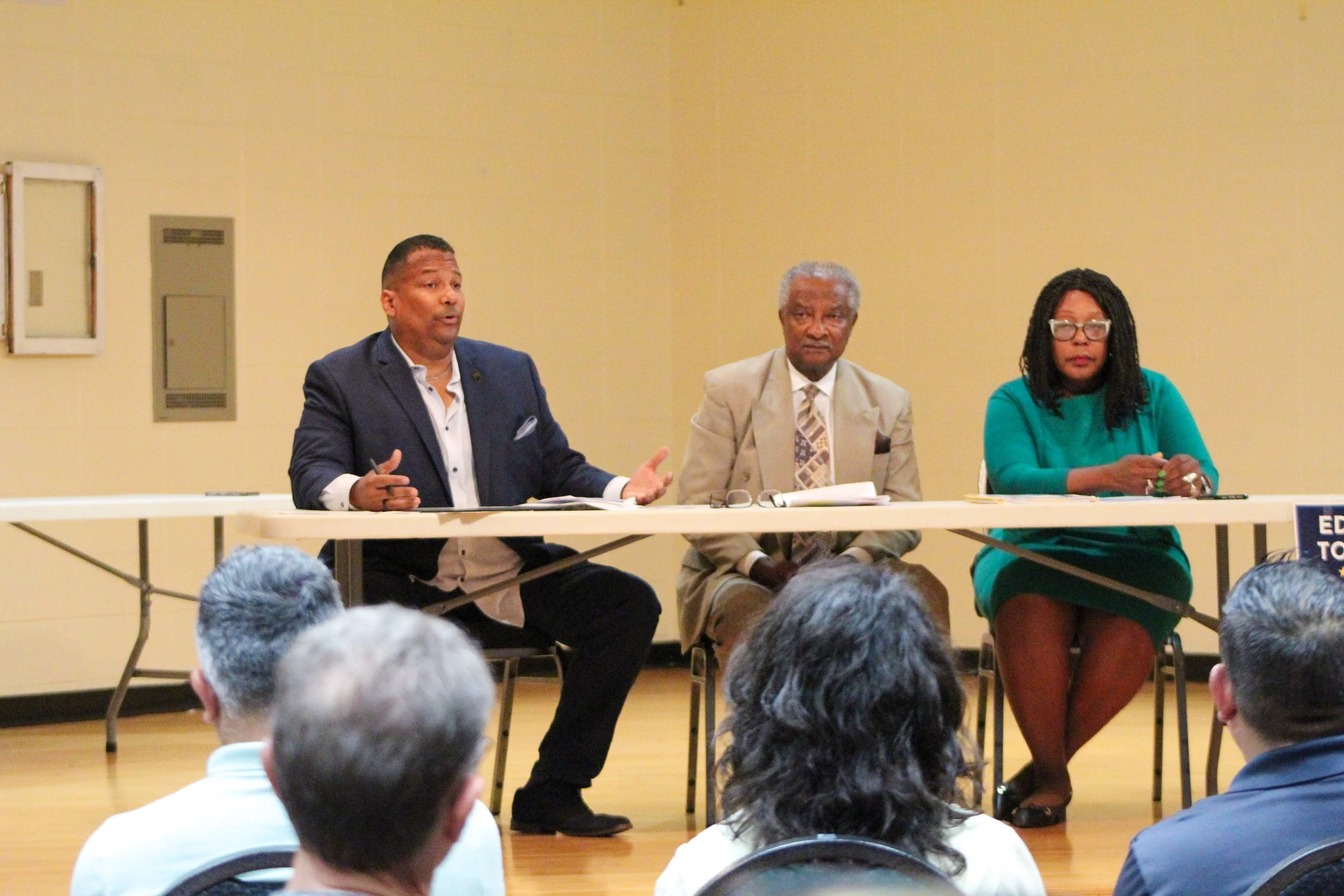
IBLC meets with Gov. Braun to discuss agenda, next steps for Indiana
On Jan. 7, members of the Indiana Black Legislative Caucus (IBLC) met with Gov. Mike Braun to discuss issues facing Hoosiers, including child care, health care, education and Diversity, Equity and Inclusion (DEI), as well as action items to ensure Hoosiers get the relief they need.
On Jan. 7, members of the Indiana Black Legislative Caucus (IBLC) met with Gov. Mike Braun to discuss issues facing Hoosiers, including child care, health care, education and Diversity, Equity and Inclusion (DEI), as well as action items to ensure Hoosiers get the relief they need.
State Rep. Earl Harris Jr. (D-East Chicago), chair of the IBLC, issued the following statement regarding the meeting:
"Our meeting with Gov. Braun was productive. The governor expressed interest in collaborating with us to fix Indiana's health care system and to increase child care throughout the state. We're in the process of scheduling further meetings with him and his team, along with state agency representatives, care providers and community leaders throughout the legislative session to work together to make Indiana a state that works for everyone.
"The IBLC intends to get a lot of work done to help Hoosiers, and that will take cooperation and collaboration from folks across the aisle. If we're all willing to work together for the sake of bettering our state, I have faith that we can get meaningful legislation across the finish line this session."
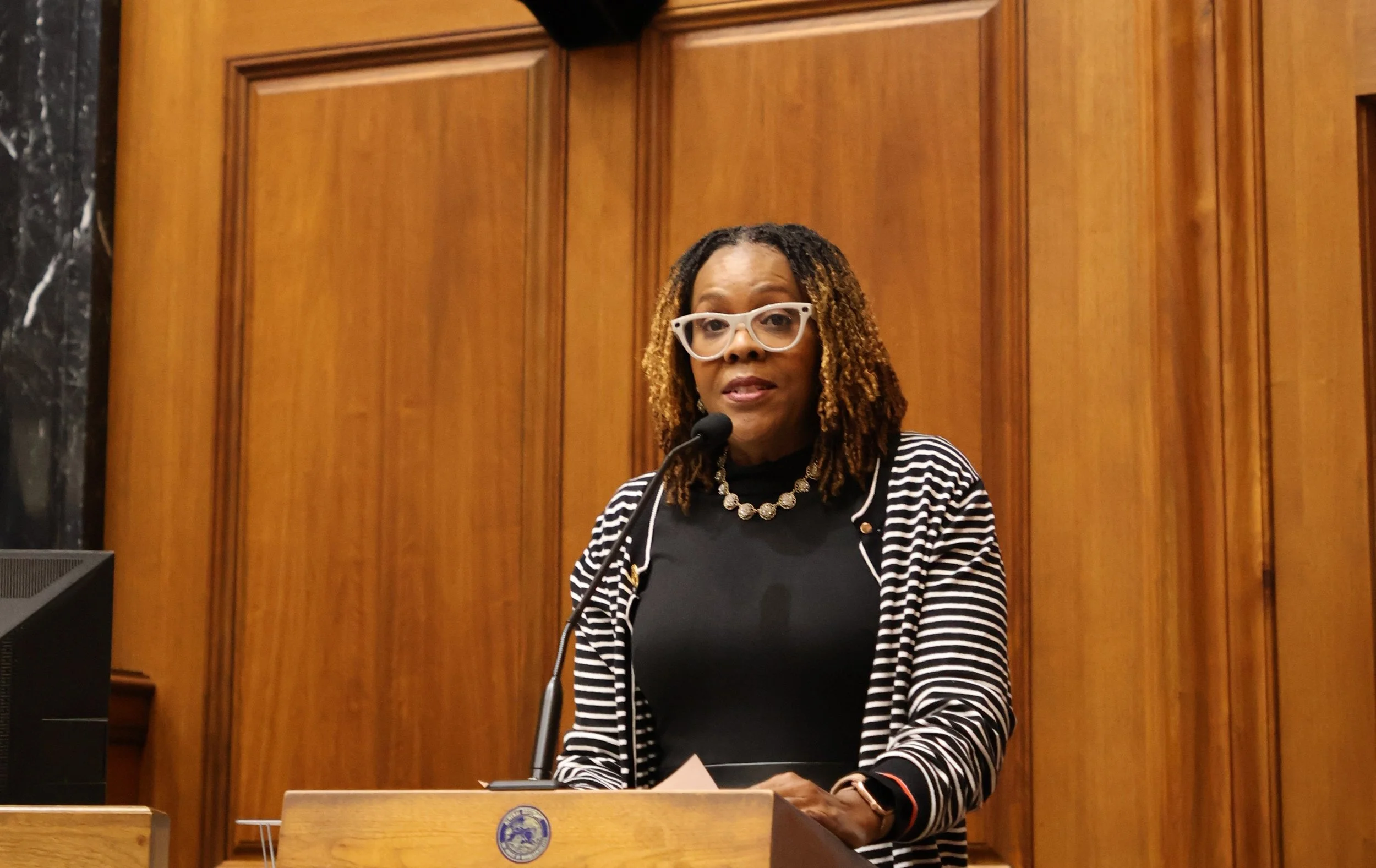
Shackleford introduces 2026 legislation, Working Hoosiers Agenda
Today, State Rep. Robin Shackleford (D-Indianapolis) introduced her 2026 legislative agenda focused on accountability in government, protecting Hoosier families and ensuring fairness and transparency across critical systems that impact everyday life.
Today, State Rep. Robin Shackleford (D-Indianapolis) introduced her 2026 legislative agenda focused on accountability in government, protecting Hoosier families and ensuring fairness and transparency across critical systems that impact everyday life.
Shackleford’s authored legislation for the 2026 session includes:
HB 1179 establishes term limits for elected and appointed state senators and representatives, capping service at a combined total of 20 years or until an individual’s 70th birthday.
HB 1180 directs the state health commissioner to convene a work group to study ways to prevent and reduce neglect in health care facilities and report recommendations to the General Assembly. The bill also requires facilities to designate a family advocacy liaison, establish an independent third-party review process for neglect complaints and offer grief support to families after a resident’s death. Additionally, it protects employees from retaliation for reporting suspected violations and calls for an interim study on staff-to-patient ratios.
HB 1181 creates an Access to Counsel in Eviction Task Force to review Indiana’s eviction process and explore ways to expand tenants’ access to legal representation. The task force will report its findings to the Legislative Council.
HB 1245 directs the Indiana Utility Regulatory Commission to study how increased electricity demand from data centers and other large users affects utility costs and electric rates for all customers, with findings included in the commission’s 2026 annual report.
HB 1246 requires adults in households receiving TANF or SNAP benefits to complete a state-developed financial literacy course. The Department of Education will establish and administer the program and provide annual reports to the General Assembly on participation and outcomes.
Shackleford released the following statement:
“Hoosiers deserve a government that is accountable, systems that are fair and policies that put people first. These bills reflect what I hear from constituents every day — concerns about affordability, transparency, dignity in care and access to opportunity. Whether it’s protecting families in health care settings, ensuring renters have a fair shot, keeping utility costs in check or making sure lawmakers are accountable to the people they serve, this legislation is about restoring trust and making government work better for everyday Hoosiers.”
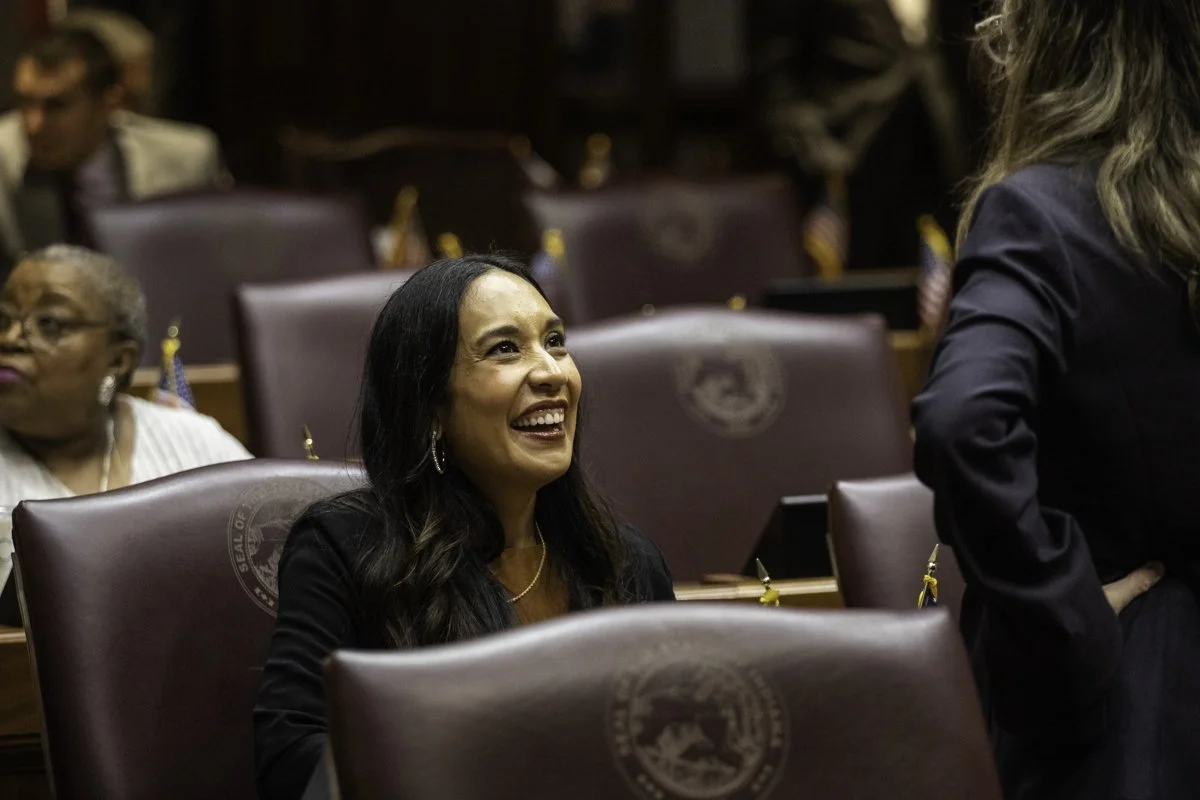
Garcia Wilburn files 2026 legislation to keep Hoosiers safe and healthy
Today, State Rep. Victoria Garcia Wilburn (D-Fishers) introduced her 2026 legislation aimed at keeping Hoosiers safe and healthy and putting money back in people's pockets.
Today, State Rep. Victoria Garcia Wilburn (D-Fishers) introduced her 2026 legislation aimed at keeping Hoosiers safe and healthy and putting money back in people's pockets.
Her authored legislation includes:
House Bill 1016: Allows health insurance recipients who are required to select a primary care provider to select a physical therapist or occupational therapist. More freedom in selecting a primary care provider means more targeted and effective care for Hoosiers.
House Bill 1017: Requires Indiana's universities to develop a process for students to designate a medical emergency contact for emergencies that occur on campus and requires the institution to notify a student's emergency contact if it has knowledge of a medical emergency that occurs on campus. This will keep parents better informed of health crises that occur on campus.
House Bill 1036: Requires the Department of Child Services to conduct an in-person assessment before closing an investigation into whether a child is a child in need of services (CHINS) or recommending discharge of a child who is the subject of a CHINS case in juvenile court. This legislation was drafted in response to tragedies like the death of Kinsleigh Welty, a five-year-old who died of starvation, and is aimed at ensuring children are safe before investigations and cases by DCS are closed.
House Bill 1037: Requires the state Insurance Commissioner to consider affordability when weighing whether to approve or deny a health insurance premium increase. Currently, the commissioner does not have to consider whether insurance premiums are affordable when reviewing premium rate increase requests.
House Bill 1060: Exempts degree programs primarily focused on emergency medical services from the 2025 state budget provision that state educational institution degree programs below a certain number of enrolled students must be eliminated. This will ensure that public safety is not compromised as the degree elimination provision is implemented by state universities.
House Resolution 1: Honors John Kautzman, an attorney who passed away last year at the age of 66. He spent his career advocating for and defending police officers and was recognized by the national Fraternal Order of Police in 2023.
Garcia Wilburn's co-authored legislation includes:
House Bill 1012: Protects Medicaid disability recipients against fraud and abuse without compromising their access to care. This legislation establishes standards of transparency and accountability for the state, Medicaid providers, and Medicaid recipients.
House Bill 1046: Establishes the family recovery court fund to fund family recovery courts and safe baby courts, thus promoting recovery and problem-solving in the judicial system. This follows Garcia Wilburn's work on House Bill 1107 last year, which passed out of committee but did not advance further in the legislative process.
House Bill 1223: Deters violent crimes against law enforcement officers by creating sentencing enhancements for crimes that result in serious bodily injury or death to a law enforcement officer.
House Bill 1271: Increases transparency and reduces the burden of medical debt by requiring hospitals to post and share information about the terms of and how to enroll in hospital payment plans. It also prevents insurance companies from inappropriately clawing back or reducing payments to health care providers for necessary health care services.
"This legislative session, I'm focused on keeping Hoosiers safe and healthy," Garcia Wilburn said. "My authored and co-authored legislation is crafted in response to concerns I hear from constituents about how expensive health care has gotten and a desire for the state legislature to prioritize public safety. From growing the emergency responder pipeline and protecting health care for our disability community to cracking down on violent crime against our brave law enforcement officers, these common-sense bills will improve Hoosiers' lives.
"Additionally, in the interest of saving more of your hard-earned money, I want to require the state Insurance Commissioner to take the affordability of premium rates into account when approving or denying rate increases. Insurance companies have a role to play in bringing down health care costs, and I want to make sure they're accountable to consumers."
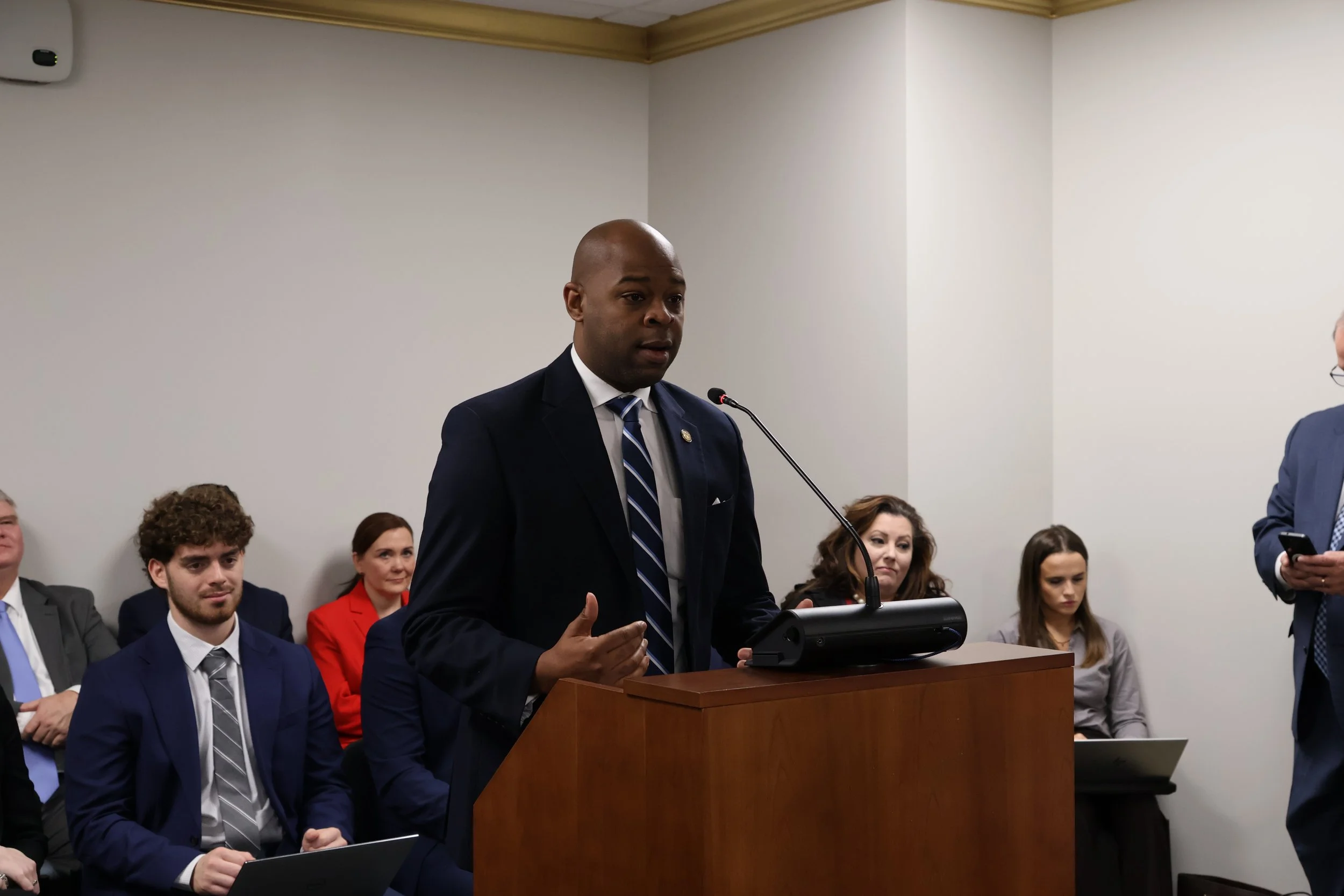
Op-Ed: As Data Centers Grow, Indiana Must Lead, Not React
As we head into session, my focus is on advancing responsible, forward-thinking and strategic legislation that puts Hoosiers first. Indiana must strike the right balance between economic development, revenue growth, transparency and the long-term needs of our communities. Our state’s economic interests are not one-size-fits-all. Every region has its own priorities, challenges and vision for the future, and state policy should reflect that reality.
As we head into session, my focus is on advancing responsible, forward-thinking and strategic legislation that puts Hoosiers first. Indiana must strike the right balance between economic development, revenue growth, transparency and the long-term needs of our communities. Our state’s economic interests are not one-size-fits-all. Every region has its own priorities, challenges and vision for the future, and state policy should reflect that reality.
One of the most pressing issues facing communities across Indiana is the rapid interest in data center development. Whether Hoosiers support or oppose these projects, it is clear that the Legislature must lead. Without clear guidance from the state, local governments are being forced to make complex decisions on their own. That has resulted in inconsistent processes, confusion and growing concerns from residents who want answers about water use, energy demands and long-term impacts on their communities.
I am working to develop a standardized, statewide framework for evaluating data center projects. That framework must guarantee safe, drinkable water, protect local water supplies and ensure that increased energy demand does not raise monthly utility bills for residential customers. Data centers can use millions of gallons of water and consume as much electricity as small cities, which makes thoughtful oversight essential.
At the federal level, there is currently no comprehensive framework governing data center development. Oversight is limited to broad environmental laws and permitting processes that were never designed to address the scale of water use and energy demand these facilities create. As a result, states across the country are stepping in to fill the gap. California and Connecticut now require disclosure of water and energy use before projects move forward. Minnesota and Arizona have tightened water permitting for large industrial users, particularly in regions facing supply constraints. Virginia, home to the largest concentration of data centers in the world, is actively debating additional transparency and infrastructure safeguards. Indiana should learn from these efforts and lead with a clear, consistent approach rather than leaving communities to navigate uncertainty on their own.
Hoosiers are paying attention and want their voices heard. That is why transparency must be a cornerstone of this effort. I strongly believe that requiring public hearings once plans are ready to be shared gives communities a seat at the table and ensures concerns are heard and addressed.
Handled correctly, this approach can strengthen Indiana’s economy, protect our resources and position our state as a national leader. We cannot afford to think short term. This is our moment to act responsibly and put Hoosiers first.

Harris announces Working Hoosiers Agenda
This week, State Rep. Earl Harris Jr. (D-East Chicago), unveiled his 2026 Working Hoosiers Agenda, along with the Indiana Black Legislative Caucus' (IBLC) "Working Families, Winning Futures" agenda. The agendas center on bringing down the cost of living and prioritizes measures to build an Indiana where Hoosiers can get ahead rather than get by.
This week, State Rep. Earl Harris Jr. (D-East Chicago), unveiled his 2026 Working Hoosiers Agenda, along with the Indiana Black Legislative Caucus' (IBLC) "Working Families, Winning Futures" agenda. The agendas center on bringing down the cost of living and prioritizes measures to build an Indiana where Hoosiers can get ahead rather than get by.
Harris' agenda tackles barriers to homeownership, increases access to nutritional foods, expands health care access and helps more Hoosiers get a post-secondary education.
"As the representative for House District 2 and chair of the IBLC, I've had the opportunity to speak with Hoosiers throughout the state during the interim of 2025, and one thing is clear: Hoosiers need help to make ends meet.
"The facts speak for themselves. The average age of a Hoosier homeowner is now 40. The majority of Hoosiers with a bachelor's degree have an average of $30,000 in debt. Nearly 130,000 children in Indiana don't have health insurance. These folks aren't just statistics, they're our neighbors. And when our neighbors are struggling, our entire community struggles. My legislative agenda, along with the 2026 IBLC agenda, seeks to strengthen our communities by lifting up our neighbors."
Harris' full legislative agenda includes:
House Bill 1135, which establishes the Housing Downpayment Assistance Fund and limits the number of single-family residences that can be owned by one person or entity.
House Bill 1136, which prohibits colleges and universities from raising tuition fees for students throughout the course of their education.
House Bill 1154, which creates the Hunger-Free Campus Grant Program to address food insecurity on college campuses
House Bill 1159, which requires school corporations to conduct vision testing for prekindergarten students.
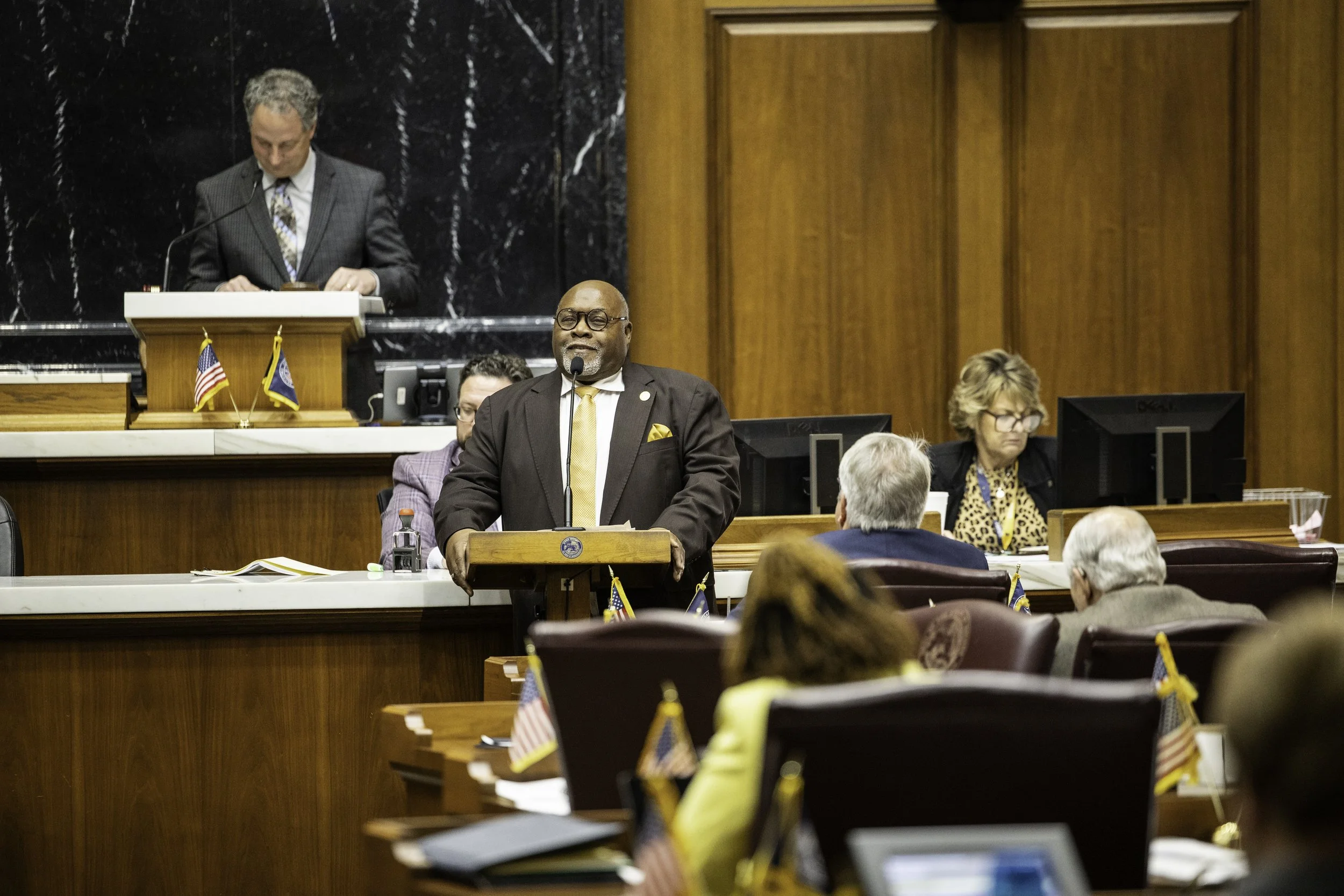
Porter: ‘Republicans continue to break their promise to homeowners’
Today, the House Ways and Means Committee heard House Bill 1259. The bill tweaks the changes made to local income taxes in Senate Enrolled Act 1, following an outpouring of concern from cities and towns. Under SEA 1, local governments will lose $1.8 billion by 2028.
Today, the House Ways and Means Committee heard House Bill 1259. The bill tweaks the changes made to local income taxes in Senate Enrolled Act 1, following an outpouring of concern from cities and towns. Under SEA 1, local governments will lose $1.8 billion by 2028.
State Rep. Gregory W. Porter (D-Indianapolis) released the following statement:
“SEA 1 wasn’t ready for prime time. HB 1259 is proof. It’s evidence of their dysfunction. The supermajority made a mess. Now, they’re cleaning it up.
“Republicans have been in charge for twenty years. They’ve had two decades to tackle skyrocketing property taxes. But they’re too busy infighting to pass sound fiscal policy. SEA 1 is a failure.
“It defunds local governments, makes it harder to bond and fails to cut homeowners’ taxes. Most homeowners won’t save anything with the credit. Rural homeowners with low assessed values will actually see an increase. Republicans failed to do the one thing they promised to achieve.
“Our local governments need these LIT changes in this bill. But what about the homeowners? What are we doing to give Hoosiers the relief they desperately need? Republicans don’t have an answer. They don’t know how to solve the problems they created.”
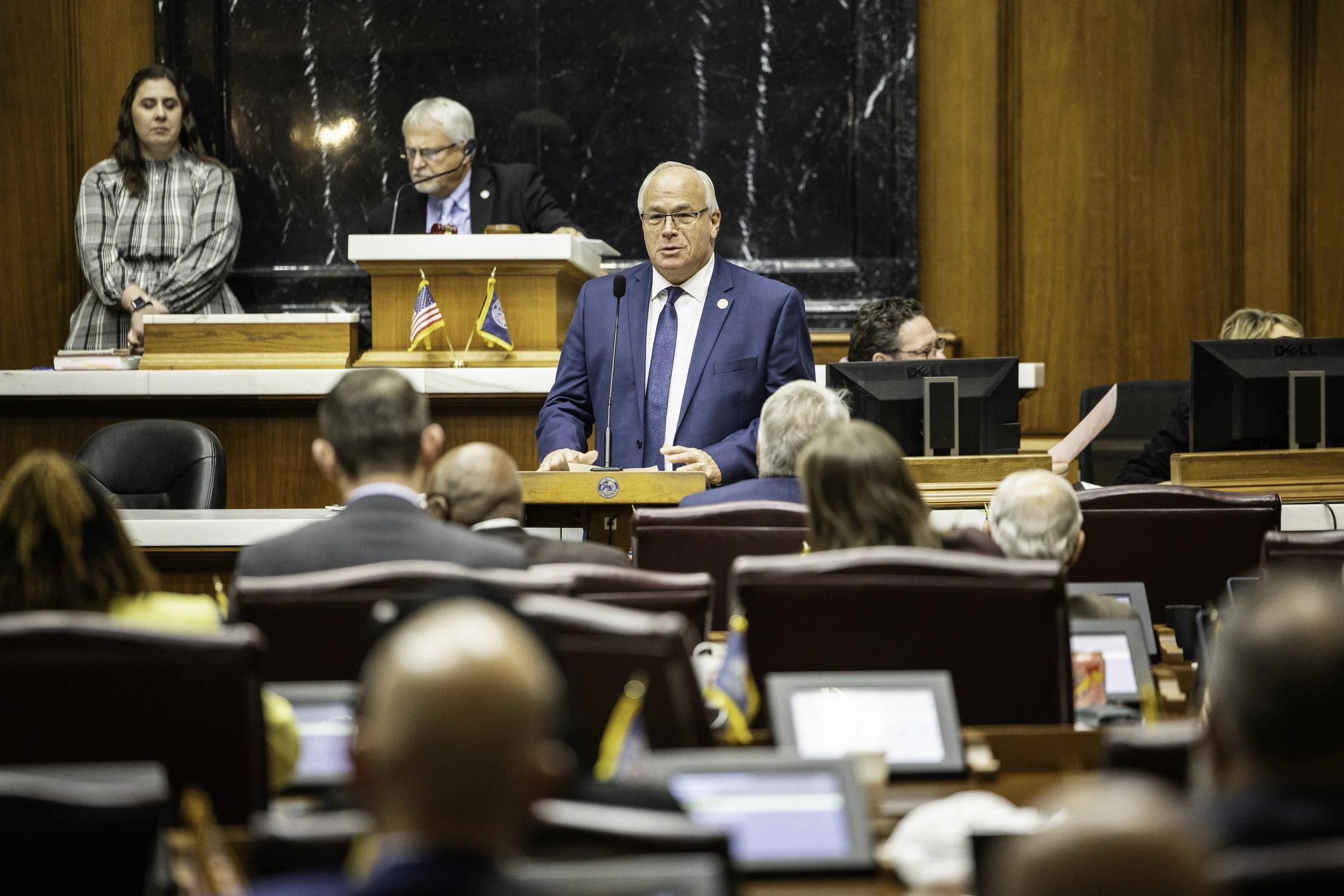
Novak introduces 2026 legislation, Working Hoosiers Agenda
Today, State Rep. Randy Novak (D-Michigan City) introduced his 2026 legislative priorities aimed at growing Indiana’s workforce, supporting first responders and putting money back into the pockets of Hoosiers.
Today, State Rep. Randy Novak (D-Michigan City) introduced his 2026 legislative priorities aimed at growing Indiana’s workforce, supporting first responders and putting money back into the pockets of Hoosiers.
A full list of Novak’s authored legislation:
HB 1048: Increases the clothing and vehicle allowance for an active member of a volunteer fire department to ensure correct, safe clothing and upkeep on wear and tear on cars for safe, reliable travel.
HB 1162: Ensures Medicaid dollars meant for home- and community-based care are actually used to pay the caregivers providing those services. The bill requires providers to meet clear standards for how state Medicaid funds are spent on direct care staff and to file an annual cost report to show they are complying. This is critical for safeguarding against fraud and abuse while ensuring recipients get quality care.
HB 1189: Requires that agreements for major data center and advanced computing projects supported by the state include strong labor standards, requiring construction bids to go to labor unions or employers operating under project labor agreements to support skilled workers and good-paying Hoosier jobs.
HB 1190: Recognizes certain PFAS-related health conditions as job-related for firefighters, creating a presumption that those illnesses were caused in the line of duty under specific circumstances and ensuring firefighters can more easily access disability benefits.
HB 1244: Requires that 10% of excess property tax revenue collected in a redevelopment area be shared with local schools, libraries and public safety agencies, including police, fire, EMS and other emergency services that serve the area.
Novak released the following statement on his legislation:
“The rising cost of living is hitting Hoosiers from every direction. We have seven weeks to pass legislation that lowers utility costs, makes housing and child care more affordable, protects our first responders and reduces property taxes while still supporting local governments and public safety.
“The bills I introduced this session are common sense and put Hoosiers first. Our workforce drives Indiana’s economy, and if we don’t invest in it now, we’ll feel the consequences later. That means keeping jobs and labor here in Indiana and making sure first responders have the protections, equipment and health support they need after putting their lives on the line.
“I’m advancing my Working Hoosiers Agenda to make sure that if you live and work hard in Indiana, you can afford to live here. Families should have access to safe child care, a quality education for their kids and health care without having to choose between paying the bills or putting food on the table.
“I’m grateful for the opportunity to serve and ready to get to work building relationships and delivering results for District 9.”
###
Click here to download a high-resolution photo of Novak.
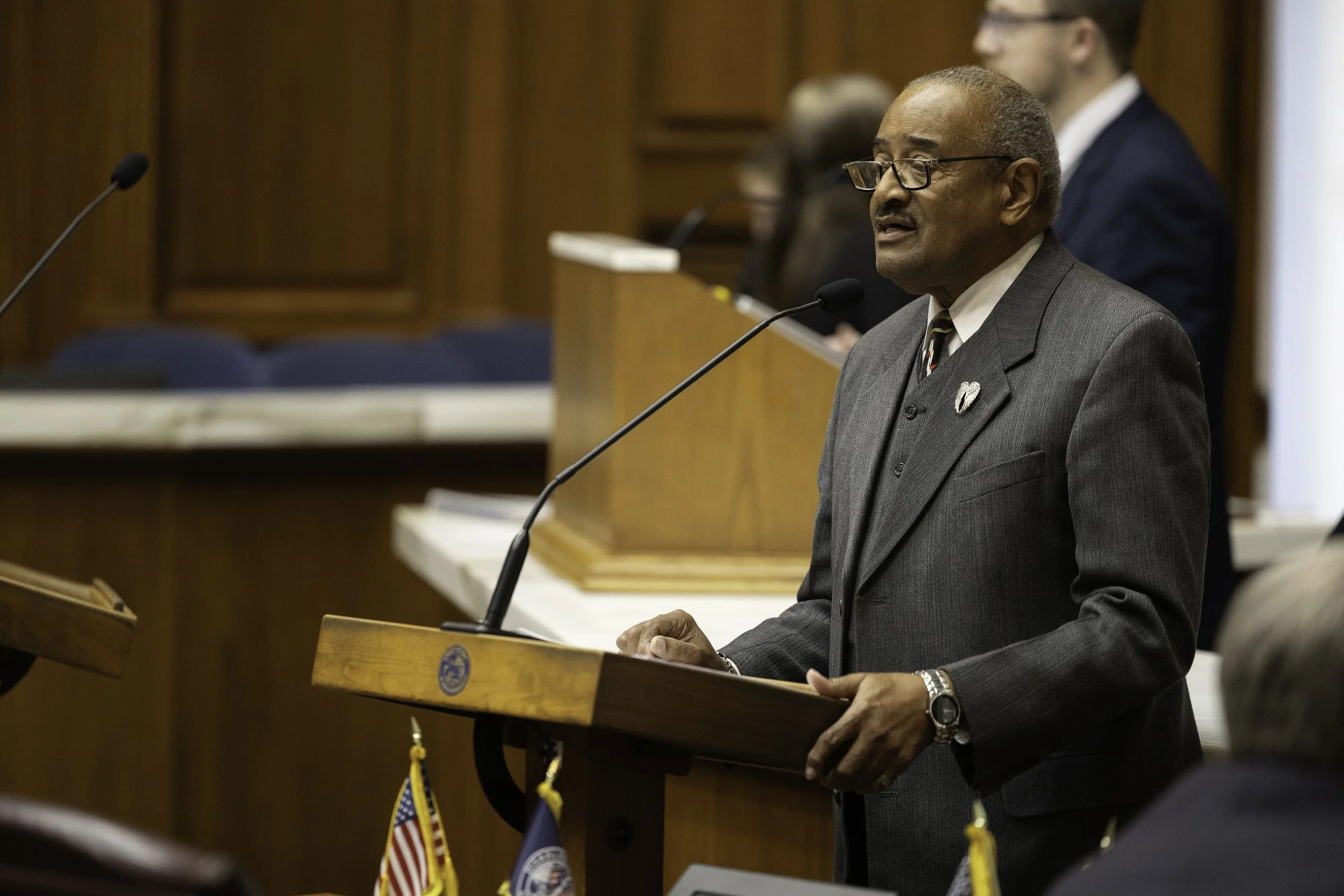
Smith to focus on cost of living, community needs this session
On Monday, Jan. 5, the Indiana House Democratic Caucus announced its 2026 Working Hoosiers Agenda. The agenda centers on bringing down the cost of living and prioritizes measures to build an Indiana where Hoosiers can get ahead rather than stay afloat. This includes reducing utility bills, lowering health care costs, housing reform and affordable child care.
On Monday, Jan. 5, the Indiana House Democratic Caucus announced its 2026 Working Hoosiers Agenda. The agenda centers on bringing down the cost of living and prioritizes measures to build an Indiana where Hoosiers can get ahead rather than stay afloat. This includes reducing utility bills, lowering health care costs, housing reform and affordable child care.
State Rep. Vernon G. Smith (D-Gary) issued the following statement about his focus on the cost of living:
"Many of our people are struggling to stay afloat. They're working multiple jobs, and they still can't make ends meet. People’s paychecks aren’t growing, but costs are rising. That’s why we must address skyrocketing utility bills, health care costs and housing. We need to give the residents of Indiana some relief.”
Indiana House Democrats' full agenda is below:
• Priority 1: Provide immediate financial relief on utility bills.
• Priority 2: Keep Hoosiers healthy through affordable health coverage and guardrails on medical debt.
• Priority 3: Create generational wealth by empowering more Hoosier homeowners.
• Priority 4: Deliver accessible, affordable and safe childcare for working families.
• Priority 5: Keep Hoosiers safe in their homes and neighborhoods.
In addition to the Indiana House Democrats' agenda, Smith filed five pieces of legislation to improve his community. Representatives can only file five bills during a short session. One of Smith’s bills, House Bill 1081, would establish the Hoosier Scam Prevention Board to protect Hoosiers from predatory scamming operations. A resident of Indiana House District 14 requested this bill.
“Scam attempts have become alarmingly common, and no one is more susceptible to scams than people in poverty,” Smith said. “When you're in need, it's easier to believe that these scams offering gifts or money could make a difference. People often fall for these tricks, losing thousands of dollars in the process. It adds more pain to an already difficult situation. We need to establish the Hoosier Scam Prevention Board to give struggling Hoosiers the help they need.”
House Bill 1299 and House Bill 1301 reform aspects of Indiana’s corrections system. HB 1299 prohibits people convicted of domestic violence from owning firearms, and HB 1301 requires the Indiana Department of Corrections (IDOC) to issue certificates of eligibility for release to convicted people who have shown clear signs of rehabilitation and good behavior.
"If our system is doing what it’s supposed to do — correcting — then the IDOC shouldn’t hold people longer than necessary,” Smith said. “Corrections should be about the journey to rehabilitation, not about punishment. I know firsthand through calls, letters and emails with inmates that people are capable of change. They should be rewarded for their hard work to better themselves by having their sentences individually evaluated rather than continuing to be punished for past mistakes.”
Another piece of Smith’s legislation, House Bill 1082, requires that charter schools that receive referendum tax levies must also contribute a share of the labor to conduct those referendums.
“Charter schools are often managed by entities outside of the communities they operate in,” Smith said. “Charter school administrators promised to provide a cheaper, better education than public schools. Research shows that they haven’t. Charter schools have become more about profit and less about education. The overwhelming majority of citizens feel that charter schools shouldn't get a share of property taxes, but if they do, they should share the labor requirements.
“It takes work to pass a referendum through door knocking, phone banks, advertising and working the polls. Charter schools should be an equal partner in that labor if they want a share of the funding.”
A full list of Smith’s legislation is available below:
1. House Bill 1081: Hoosier Scam Prevention Board
2. House Bill 1082: Shared Labor to Conduct a Referendum
3. House Bill 1299: Surrender of Firearms for Domestic Violence Crimes
4. House Bill 1300: Deferred Retirement Option Plan
5. House Bill 1301: Sentence Modification
“The legislation I’ve filed for the 2026 Legislative Session, along with my caucus’s agenda, mirrors my strong commitment to uplifting House District 14. I hope to see progress on each of these issues in the coming weeks to benefit Hoosiers across our state."
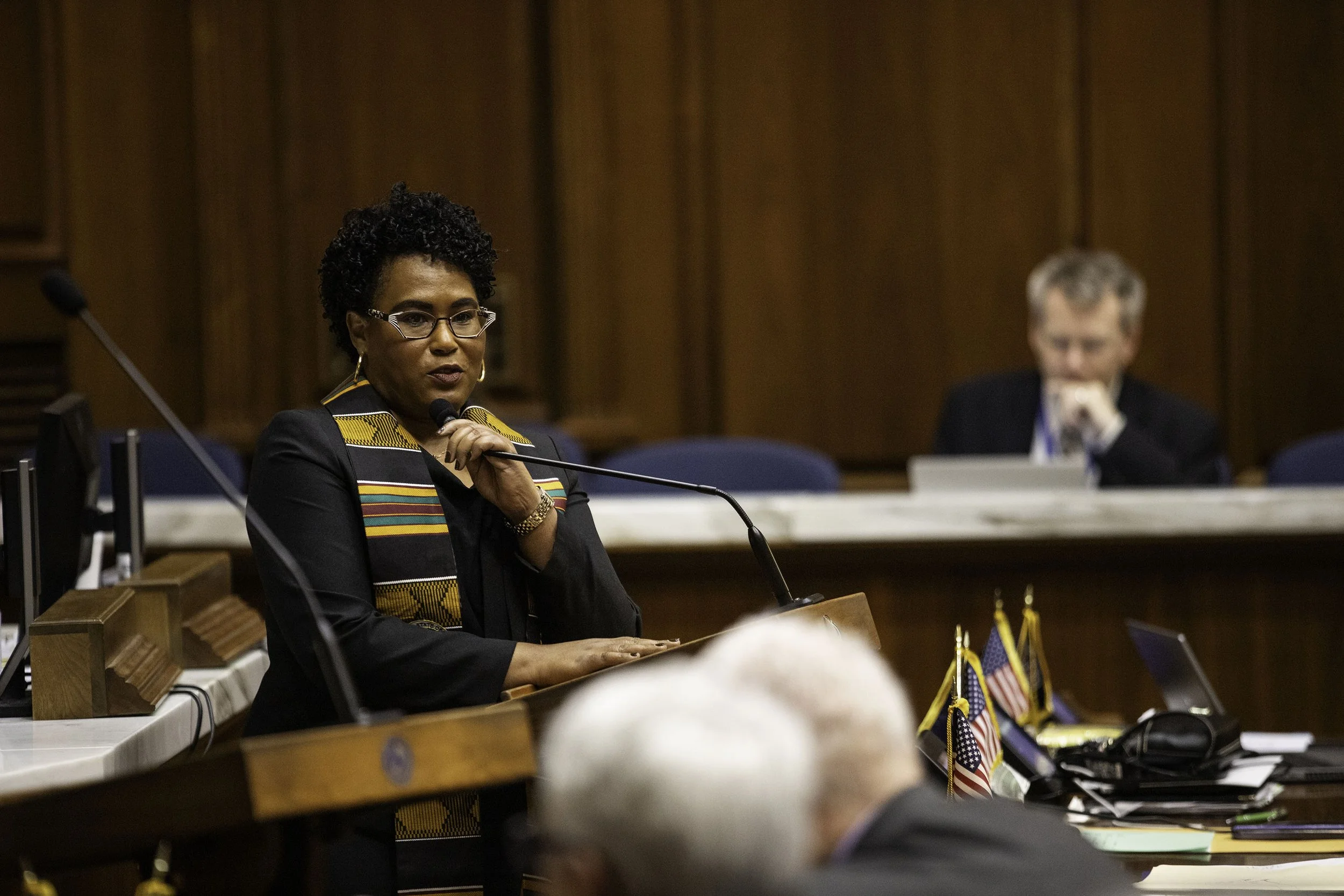
Pryor announces support for Working Hoosiers Agenda
Monday, Jan. 5, the Indiana House Democratic Caucus announced its 2026 Working Hoosiers Agenda. The agenda centers on bringing down the cost of living and prioritizes measures to build an Indiana where Hoosiers can get ahead rather than get by.
Monday, Jan. 5, the Indiana House Democratic Caucus announced its 2026 Working Hoosiers Agenda. The agenda centers on bringing down the cost of living and prioritizes measures to build an Indiana where Hoosiers can get ahead rather than get by.
State Rep. Cherrish Pryor (D-Indianapolis) has filed her 2026 legislation with the Working Hoosiers Agenda in mind, specifically focusing on bringing down the cost of utilities and health care.
"Hoosiers across the state and all over the political spectrum can agree on one key fact: life has gotten too expensive," Pryor said. "I am focused on making life more affordable for Hoosiers by bringing down the skyrocketing cost of utilities, child care, health care, and housing."
House Bill 1111 would protect ratepayers from having to pay to reconnect their service and give ratepayers bill credits if they experience service disruptions. The bill also bars utilities from turning off service in residences that are home to people who are older than 65 or younger than 17. Additionally, it requires utilities to identify new residential customers who are 62 or older and provide them with information regarding relevant senior assistance programs.
"Protecting ratepayers has been one of my top priorities throughout my legislative career," Pryor said. "Since utilities are a regulated monopoly in Indiana, consumers have no choice if they are unsatisfied by the service they are receiving. This bill holds utilities accountable for providing that quality service by transferring the cost of disconnections and outages to the company, not the consumer. Additionally, this bill protects vulnerable Hoosiers from being exploited or facing unsafe living conditions if they are forced to go without power."
House Bill 1112 requires state employee health plans to cover diagnostic and supplemental breast examinations. The bill also provides that diagnostic and supplemental breast examinations cannot be subject to any copays, deductibles or other cost-sharing requirement. House Bill 1114 prohibits health care providers that grant coverage for advanced, metastatic cancer and associated conditions from requiring patients to prove history of failure of other prescription drugs before providing coverage for certain prescription drugs.
"Screening for cancer increases the chance of early detection and therefore the chance of survival," Pryor said. "Hoosiers shouldn’t have to break the bank to receive a potentially lifesaving tests. For those who have been diagnosed with cancer, the burden of fighting that illness is stressful enough. Insurance companies should not be placing additional hardships on cancer patients by making them jump through hoops to get their prescriptions covered."
House Bill 1113 requires landlords repair or replace an essential item within 24 hours of being notified by the tenant that the item is missing or broken. It also provides that tenants can request an enforcement authority to conduct an inspection, replace or repair the essential item within 24 hours and order a civil penalty to be paid by the landlord. It also requires all new rental agreements include provisions allowing tenants to be reimbursed for lost deposits and have their rental agreements terminated if certain repairs aren’t made within seven days.
"Indiana has some of the weakest renter protections in the country. With rent prices placing significant strain on Hoosiers, the last thing they need is to end up living in poor conditions. This bill adds accountability for problematic landlords who do not keep their properties up to the adequate standards."
Finally, House Bill 1023 restores a property tax deduction for surviving spouses of WWI veterans. This deduction was deleted in Senate Enrolled Act 1 from the 2025 Session. Restoring this deduction will have minimal fiscal impact to the state and will make a big difference in the lives of the surviving spouses of those who fought in the Great War.
See the full Working Hoosiers Agenda below:
Priority 1: Provide immediate financial relief on utility bills
Eliminate the sales tax on residential utility use
Protect Hoosiers from being overcharged by limiting excessive utility company profit margins
Pause skyrocketing rate hikes
Get big utilities out of politics by ending the appointment of political cronies to consumer watchdog positions and banning spending on political contributions and gifts
Priority 2: Keep Hoosiers healthy through affordable health coverage and guardrails on medical debt
Cap insurance premiums
Implement a state health exchange
Stop medical debt from impacting credit scores
Priority 3: Create generational wealth by empowering more Hoosier homeowners
Help Hoosiers save for their first home by creating tax-free savings accounts for home purchases
Establish a first-time homebuyer grant program funded by a tax on investor-owned properties
Institute a property tax credit to deliver real and immediate relief for homeowners
Priority 4: Deliver accessible, affordable and safe childcare for working families
Create a public-private partnership program to split childcare costs between employers, the state of Indiana and parents
Save families money through a childcare tax credit
Fully fund Child Care and Development Fund (CCDF) vouchers to keep daycare centers open and parents at work
Priority 5: Keep Hoosiers safe in their homes and neighborhoods
Fund the police, fire, and EMS by taking Senate Enrolled Act 1 back to the drawing board and inviting more public input
Keep violent offenders off the streets
Burton announces Working Hoosiers Agenda
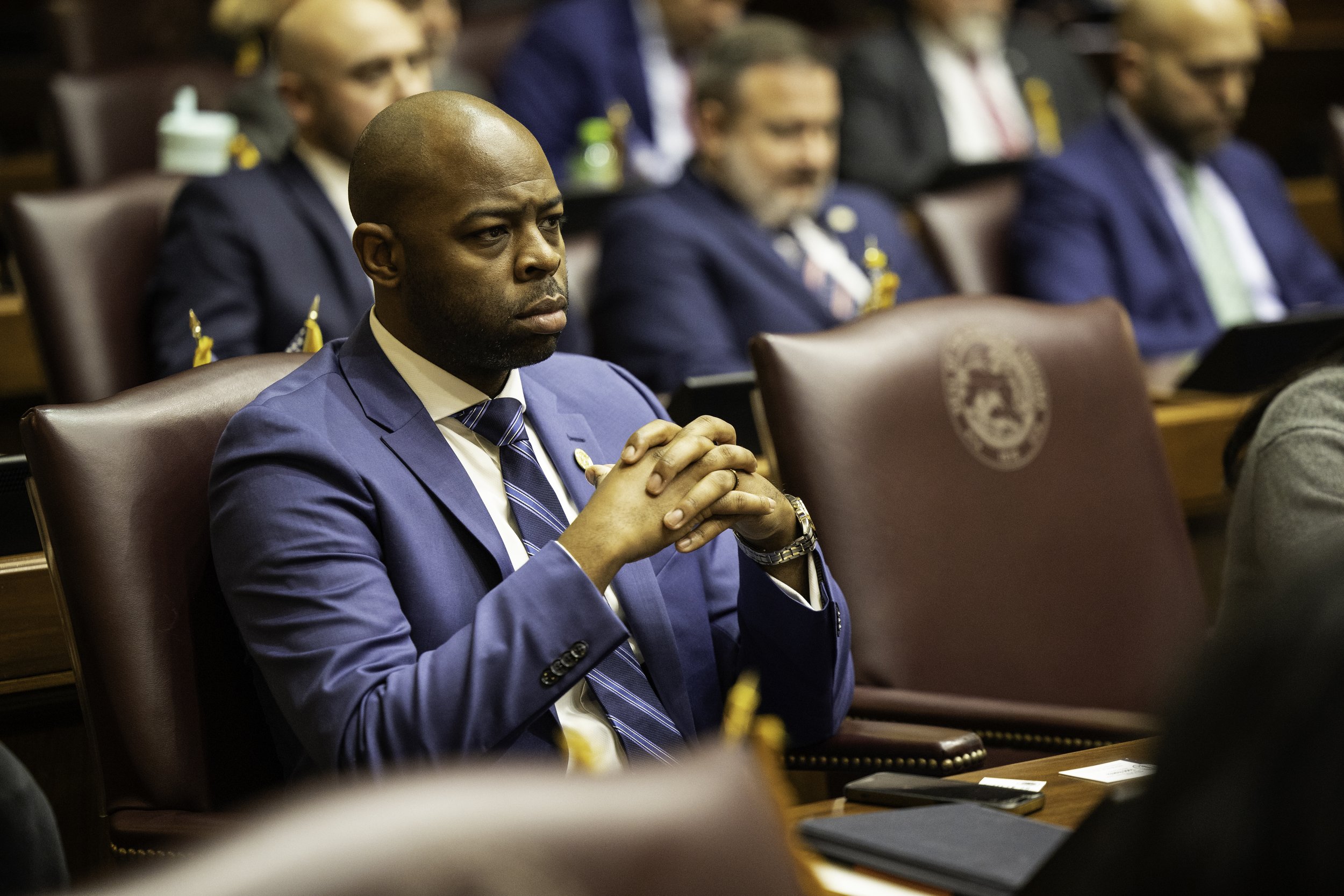
Yesterday, Jan. 5, State Rep. Alex Burton (D-Evansville) unveiled the House Democrats’ 2026 Working Hoosiers Agenda. The agenda centers on bringing down the cost of living and prioritizes measures to build an Indiana where Hoosiers can get ahead rather than get by.
Those measures include bringing utility costs down; lowering health care costs and protecting Hoosiers from medical debt; helping Hoosiers buy their first home through housing reform; delivering accessible, affordable and safe child care to working families; and keeping Indiana safe for all Hoosiers.
Yesterday, Jan. 5, State Rep. Alex Burton (D-Evansville) unveiled the House Democrats’ 2026 Working Hoosiers Agenda. The agenda centers on bringing down the cost of living and prioritizes measures to build an Indiana where Hoosiers can get ahead rather than get by.
Those measures include bringing utility costs down; lowering health care costs and protecting Hoosiers from medical debt; helping Hoosiers buy their first home through housing reform; delivering accessible, affordable and safe child care to working families; and keeping Indiana safe for all Hoosiers.
Burton issued the following statement in support of the Working Hoosiers Agenda:
"Hoosiers are working hard, but for too many households the cost of living keeps climbing faster than earned wages. The Working Hoosiers Agenda is about putting people first by stabilizing and lowering monthly costs, protecting families from medical debt, helping first-time homeowners, supporting working parents, ensure child care affordability and making sure every Hoosier is safe in their neighborhood. This is a practical, people-focused agenda that prioritize working families, while advocating for policies that position a real shot at getting ahead."
See the full Working Hoosiers Agenda below:
Priority 1: Provide immediate financial relief on utility bills
Eliminate the sales tax on residential utility use
Protect Hoosiers from being overcharged by limiting excessive utility company profit margins
Pause skyrocketing rate hikes
Get big utilities out of politics by ending the appointment of political cronies to consumer watchdog positions and banning spending on political contributions and gifts
Priority 2: Keep Hoosiers healthy through affordable health coverage and guardrails on medical debt
Cap insurance premiums
Implement a state health exchange
Stop medical debt from impacting credit scores
Priority 3: Create generational wealth by empowering more Hoosier homeowners
· Help Hoosiers save for their first home by creating tax-free savings accounts for home purchases
· Establish a first-time homebuyer grant program funded by a tax on investor-owned properties
· Institute a property tax credit to deliver real and immediate relief for homeowners
Priority 4: Deliver accessible, affordable and safe childcare for working families
Create a public-private partnership program to split childcare costs between employers, the state of Indiana and parents
Save families money through a childcare tax credit
Fully fund Child Care and Development Fund (CCDF) vouchers to keep daycare centers open and parents at work
Priority 5: Keep Hoosiers safe in their homes and neighborhoods
Fund the police, fire, and EMS by taking Senate Enrolled Act 1 back to the drawing board and inviting more public input
Keep violent offenders off the streets
Deter violent crimes against law enforcement officers through sentencing enhancements
Bauer introduces 2026 legislation focused on safety, accountability and protecting Hoosiers
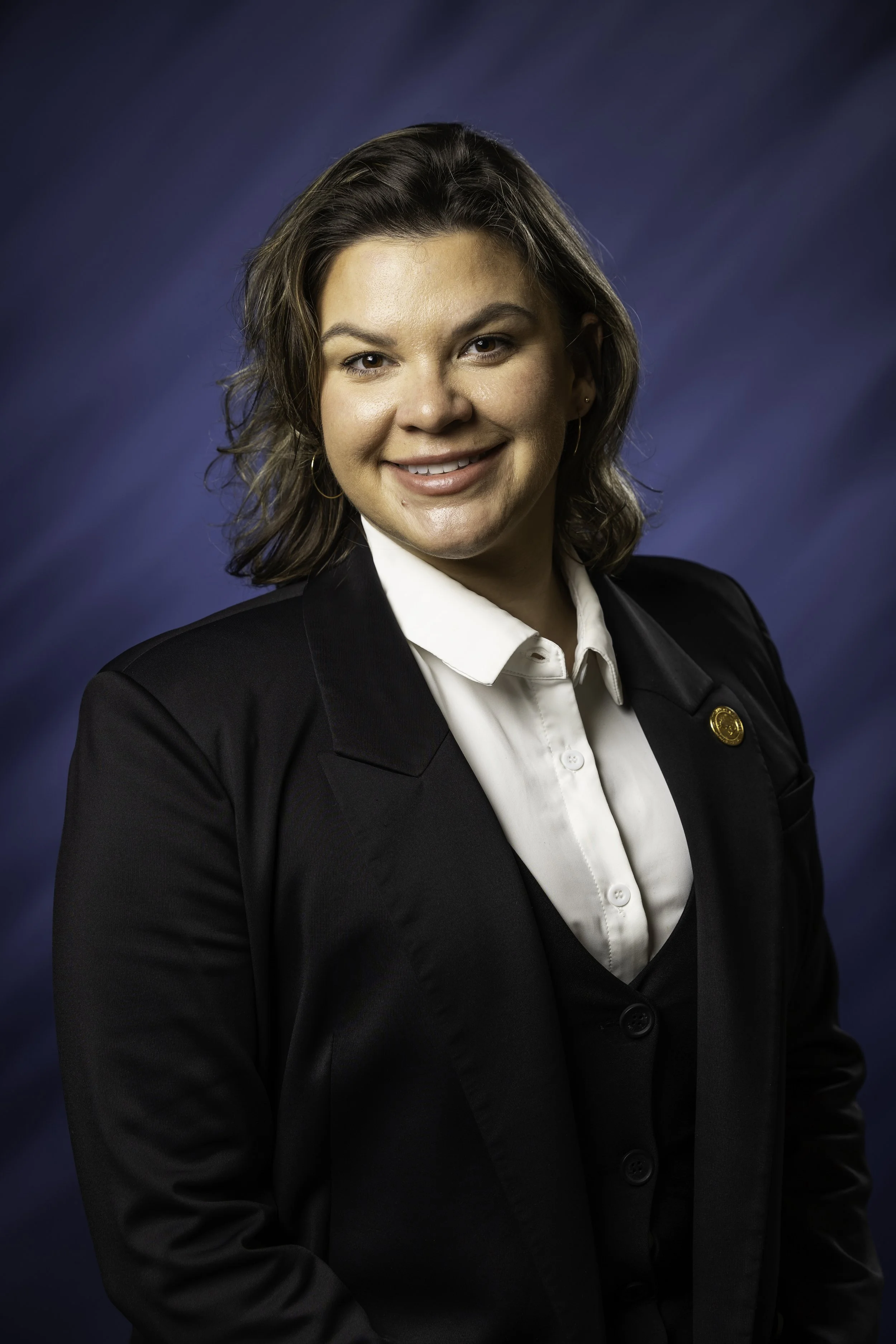
State Rep. Maureen Bauer (D-South Bend) introduced her 2026 legislative agenda focused on strengthening public safety, protecting Hoosiers from emerging threats, and ensuring commonsense standards across health care, technology and the criminal justice system.
Bauer’s legislation centers on prevention, accountability and closing gaps in existing law to better reflect the realities Hoosiers face in their homes, workplaces and communities.
“These bills are about protecting people,” Bauer said. “Whether that means ensuring patients are safe in medical settings, helping first responders do their jobs more safely, or responding to new forms of exploitation and violence, Hoosiers deserve laws that work for the world we live in today.”
State Rep. Maureen Bauer (D-South Bend) introduced her 2026 legislative agenda focused on strengthening public safety, protecting Hoosiers from emerging threats, and ensuring commonsense standards across health care, technology and the criminal justice system.
Bauer’s legislation centers on prevention, accountability and closing gaps in existing law to better reflect the realities Hoosiers face in their homes, workplaces and communities.
“These bills are about protecting people,” Bauer said. “Whether that means ensuring patients are safe in medical settings, helping first responders do their jobs more safely, or responding to new forms of exploitation and violence, Hoosiers deserve laws that work for the world we live in today.”
Bauer’s 2026 legislative agenda includes:
Ensuring proper safety requirements for sonography and ultrasound practices (HB 1014), strengthening patient protections and professional standards in medical imaging facilities.
Digital warnings for first responder safety (HB 1167), expanding digital alert tools to help law enforcement, firefighters and EMTs safely respond to emergency calls.
Criminalizing the possession and distribution of digitally created sexual images (HB 1182), addressing the growing misuse of AI and digitally altered images to exploit and harm individuals.
Court-ordered offender education for unlawful proposition (HB 1269), creating opportunities for intervention and education to reduce repeat offenses and improve community safety.
Preventing domestic violence fatalities through improved data collection (HB 1310), strengthening coordination and data-sharing to identify risk factors and prevent lethal outcomes.
Together, the legislation prioritizes proactive solutions that improve public safety, support victims, and hold offenders accountable while modernizing Indiana law.
Bauer’s agenda aligns with priorities advanced by House Democrats through the Working Hoosiers Agenda, which focuses on protecting working families and ensuring Indiana laws promote safety, fairness, and opportunity.
“Public safety is foundational to strong communities and a strong workforce,” Bauer said. “This legislative package focuses on prevention, accountability and making sure our laws protect the people they are intended to serve.”
IBLC unveils “Working Families, Winning Futures” legislative agenda
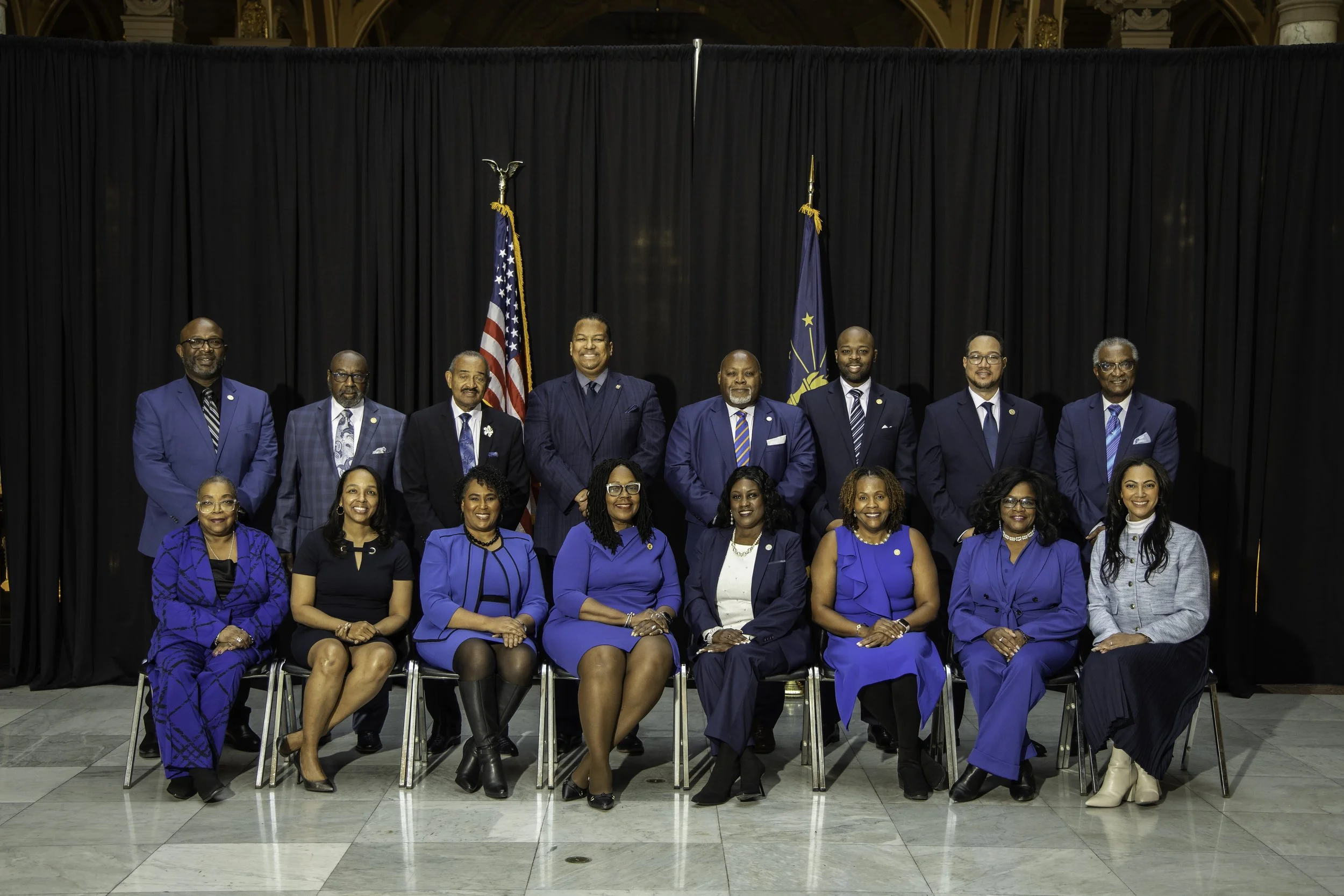
Today, Jan. 6, members of the Indiana Black Legislative Caucus (IBLC), announced their 2026 legislative agenda: "Working Families, Winning Futures." The multi-pronged agenda aims to lower the cost of living, ease the burden of medical debt, address rising utility fees and lower the barriers to homeownership.
Today, Jan. 6, members of the Indiana Black Legislative Caucus (IBLC), announced their 2026 legislative agenda: "Working Families, Winning Futures." The multi-pronged agenda aims to lower the cost of living, ease the burden of medical debt, address rising utility fees and lower the barriers to homeownership.
"For years, we've heard our colleagues in the Republican supermajority tout the strength of Indiana's economy," IBLC chair State Rep. Earl Harris Jr. (D-East Chicago) said. "Unfortunately, Hoosiers aren't seeing that strength when they look at their bank accounts. The supposed strength of our economy was built on the backs of our most vulnerable: our working class, our sick and disabled and our working parents. An economy that prioritizes the few over the many is not strong; it's predatory. We want a strong state for business and innovation, but we can have that without leaving our working Hoosiers behind."
The "Working Families, Winning Futures" agenda includes:
House Bill 1317, authored by State Rep. John Bartlett (D-Indianapolis)
House Bill 1100, authored by State Rep. Alex Burton (D-Evansville)
House Bill 1135, authored by State Rep. Earl Harris Jr. (D-East Chicago)
House Bill 1324, authored by State Rep. Ragen Hatcher (D-Gary)
Senate Bill 152, authored by State Sen. Andrea Hunley (D-Indianapolis)
Senate Bill 153, authored by State Sen. La Keisha Jackson (D-Indianapolis)
House Bill 1126, authored by State Rep. Renee Pack (D-Indianapolis)
House Bill 1026, authored by State Rep. Gregory W. Porter (D-Indianapolis)
House Bill 1111, authored by State Rep. Cherrish Pryor (D-Indianapolis)
Senate Bill 20, authored by State Sen. Lonnie Randolph (D-East Chicago)
House Bill 1181, authored by State Rep. Robin Shackleford (D-Indianapolis)
House Bill 1081, authored by State Rep. Vernon Smith (D-Gary)
Senate Bill 166, authored by State Sen. Mark Spencer (D-Gary)
House Bill 1050, authored by State Rep. Vanessa Summers (D-Indianapolis)
"Too many Hoosiers are living paycheck to paycheck," Harris said. "This session, we're committed to helping Hoosiers thrive, not simply eke by every month. We're calling on Gov. Braun and the Republican supermajority to work with us to help all Hoosiers create a quality of life and economic opportunity for themselves."