

Latest News
Find our archive of news distributions below. To request a media interview or statement from one of our members, visit our press inquiries page here.
Search Our Press Release Archive
Sort by Rep. or Topic
- Economy
- Education
- IBLC
- Internship
- Leadership
- Mental Health
- Public Safety
- Rep. Alex Burton
- Rep. Blake Johnson
- Rep. Carey Hamilton
- Rep. Carolyn Jackson
- Rep. Cherrish Pryor
- Rep. Chris Campbell
- Rep. Chuck Moseley
- Rep. Dant Chesser
- Rep. Earl Harris Jr.
- Rep. Ed DeLaney
- Rep. Gregory W. Porter
- Rep. John Bartlett
- Rep. Justin Moed
- Rep. Kyle Miller
- Rep. Matt Pierce
- Rep. Maureen Bauer
- Rep. Mike Andrade
- Rep. Mitch Gore
- Rep. Pat Boy
- Rep. Phil GiaQuinta
- Rep. Ragen Hatcher
- Rep. Randy Novak
- Rep. Renee Pack
- Rep. Robin Shackleford
- Rep. Ryan Dvorak
- Rep. Sheila Klinker
- Rep. Sue Errington
- Rep. Tonya Pfaff
- Rep. Vanessa Summers
- Rep. Vernon Smith
- Rep. Victoria Garcia Wilburn
- Rep. Wendy Dant Chesser
- cherrish
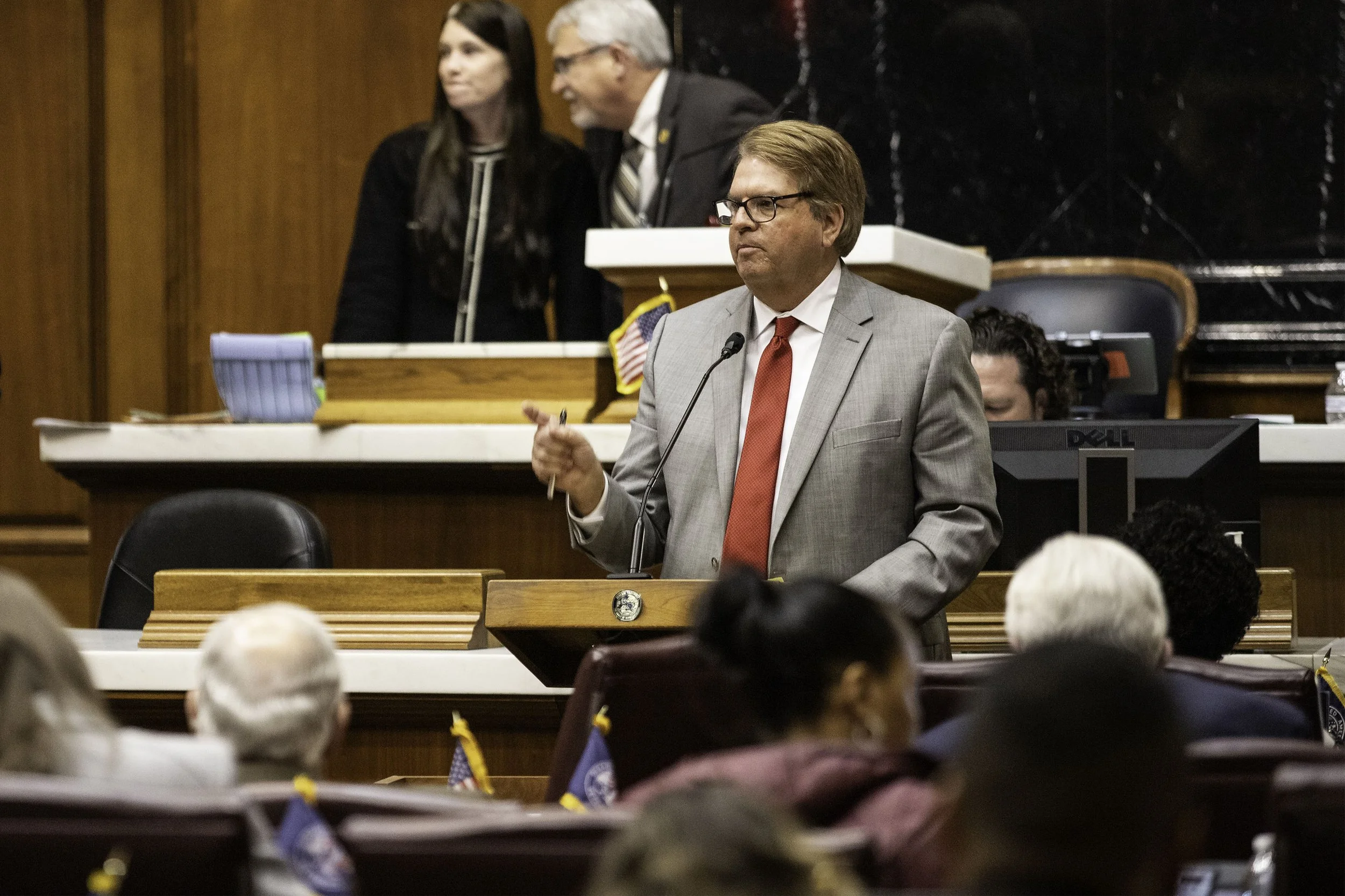
House Democrats fight for immediate utility affordability
Today, Indiana House Democrats offered 12 amendments to House Bill 1002 to immediately lower utility bills for Hoosier residential customers. All were rejected or blocked by Indiana House Republicans.
Today, Indiana House Democrats offered 12 amendments to House Bill 1002 to immediately lower utility bills for Hoosier residential customers. All were rejected or blocked by Indiana House Republicans.
See the list of amendments and descriptions:
Amendment #4: Allows Hoosiers to tap into low-cost energy through small-scale, community-based renewable energy projects.
Amendment #5: Protects medically vulnerable Hoosiers by prohibiting disconnections for individuals who have a certified medical condition that could result in severe illness or death in the event of a power outage.
Amendment #6: Requires utility companies to include information about payment assistance programs in on the monthly bills of senior customers.
Amendment #7: Holds utilities accountable for reliable service by requiring they reimburse customers for any financial losses suffered as the result of an outage.
Amendment #8: Protects Hoosiers from private equity firms acquiring Indiana utility companies that lead to rate hikes.
Amendment #10: Creates a 1-year moratorium on the 7% sales tax on residential utility bills and prohibits IURC from issuing future tax breaks for data centers and quantum computing facilities.
Amendment 11: Prohibits utilities from passing on the costs of lobbying and political activities to customers. This amendment was blocked on procedural grounds instead of outright rejected.
Amendment #13: Prohibits utility companies from raising utility rates more than 3% and require utility companies to hold 3 public hearings in the affected utility service area before raising rates.
Amendment #14: Prohibits utility companies from disconnecting residential electric or natural gas service during the coldest time of year (beginning Dec. 1 and ending March 15).
Amendment #15: Eliminates the 7% sales tax on residential utility bills.
Amendment #16: Prohibits the Indiana Utility Regulatory Commission (IURC) from approving a rate increase above 3% of the average monthly bill.
Amendment #19: Prohibits any increases on fixed rates and charges for utility bills for the next two years. (Effective June 30, 2026 to July 1, 2028).
Full vote counts for each of the amendments will be available here.
House Democratic Leader Phil GiaQuinta (D-Fort Wayne) released the following statement on the rejection of all House Democrat amendments:
"House Bill 1002 is a step in the right direction, but Hoosiers have been clear: They need immediate relief on skyrocketing utility bills yesterday. Hoosiers have done everything right – they've kept their heat down and bundled up around the house, but their energy bill keeps going up. They cannot wait for levelized billing or performance-based ratemaking to kick in.
"That's why House Democrats offered amendments to take urgent action, from repealing the sales tax on residential bills and suspending all residential shutoffs during the cold weather months to prohibiting exorbitant rate hikes and stopping utilities from increasing their fixed rates and charges.
"All our utility affordability amendments were voted down by House Republicans. Hoosiers should take note that House Republicans are not interested in giving them immediate relief on their utility bills while preserving the ability for lawmakers to take lobbyist money without scrutiny and big data center tax breaks. House Democrats understand that working people are doing all they can to make ends meet, but they need the legislature to step in and get bills under control."
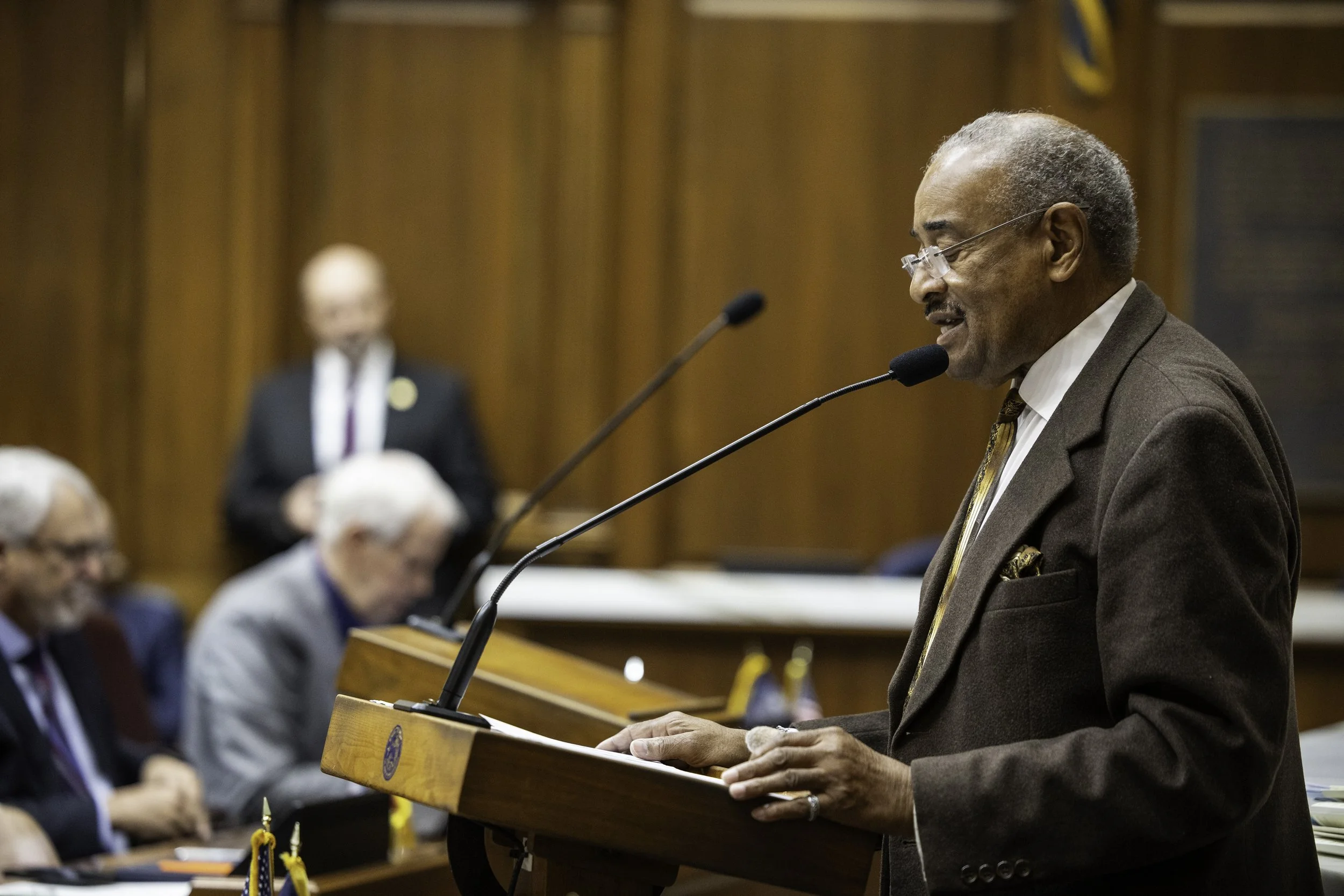
Smith supports amendments to cut Hoosiers’ utility bills
– Today, House Democrats offered an array of amendments to give Hoosiers financial relief and expand protections for their utility services. The legislation aims to create a levelized billing plan for utility consumers. This year, the Indiana House Democratic Caucus’ agenda is focused on affordability. While House Bill 1002 is a step in the right direction in lowering costs, it is not enough to provide long-lasting relief. Further, members of the House Democratic Caucus offered over a dozen amendments to improve the bill, none of which were adopted by the Republican supermajority.
Today, House Democrats offered an array of amendments to give Hoosiers financial relief and expand protections for their utility services. The legislation aims to create a levelized billing plan for utility consumers. This year, the Indiana House Democratic Caucus’ agenda is focused on affordability. While House Bill 1002 is a step in the right direction in lowering costs, it is not enough to provide long-lasting relief. Further, members of the House Democratic Caucus offered over a dozen amendments to improve the bill, none of which were adopted by the Republican supermajority.
State Rep. Vernon G. Smith (D-Gary) issued the following statement upon the supermajority rejecting all 13 amendments offered by House Democrats:
“By the year 2028, we will have a $5 billion surplus. It will not hurt the state to give some relief to the average citizen. Hoosiers struggling to afford their utility bills deserve the same privilege as major corporations. I am simply astounded that Republicans refused to remove the 7% sales tax on residential utility bills. What is the point of having a surplus if we aren’t going to use it to help our people get by?
“Another amendment rejected would have helped notify seniors about payment assistance programs. The Republican argument against this amendment was that seniors can have a young family member help them navigate assistance programs online. Unfortunately, not everyone is blessed with young people in their families that can assist with this. This amendment would have been an easy way to help more people get financial relief, and the Republican supermajority blocked it.
“My constituents are reaching out for help. They need relief, and they need relief now. The amendments offered by my colleagues today would have helped all Hoosiers, from our most vulnerable to the average working family just trying to make ends meet. I am glad that we are having the discussion about the importance of lowering utility bills. However, I am gravely disappointed that so many good ideas were rejected today.”
See below for the list of amendments and descriptions:
Amendment #4 would have allowed for community energy facilities to generate or store energy from alternative, cheaper sources such as solar, wind or battery power to lower costs for all customers in the community.
Amendment #5 protects vulnerable Hoosiers by requiring utility companies to implement a program that would prohibit disconnections for individuals who have a medical condition where they rely on life support devices like respirators, ventilators, dialysis machines, refrigerated medications or other medical treatment.
Amendment #6 would have required utility companies to include information about payment assistance programs in the monthly bills of senior customers.
Amendment #7 would have held utilities accountable for reliable service by requiring they reimburse customers for any financial losses suffered as the result of an outage, including spoiled food.
Amendment #8 would have added oversight by requiring public utilities to get approval from the Utility Regulatory Commission before making certain profit enhancing moves such as selling stock, entering certain contracts, reorganizing or acquiring another utility.
Amendment #10: would have suspended the 7% sales tax on residential utility bills and prohibited the IURC from issuing future sales tax breaks for data centers and quantum computing facilities.
Amendment 11: Prohibits utilities from recovering the cost of lobbying and political activities through ratepayer bills. This amendment was blocked on procedural grounds instead of outright rejected.
Amendment #13 would have required utility companies to hold three public hearings in the communities affected by a proposed rate hike.
Amendment #14 would have prohibited companies from disconnecting any resident for missing payments during the coldest months of the year. Currently, only residents who qualify for the energy assistance program are protected from disconnections during the coldest months. This amendment would have ensured that all Hoosiers are protected from disconnections in dangerous weather.
Amendment #15 would have eliminated the sales tax on residential utility bills as commercial utility bills are granted.
Amendment #16 would have prohibited the Indiana Utility Regulatory Commission (IURC) from approving a rate increase above 3% of the average monthly bill.
Amendment #19 would have established a 2-year moratorium on fixed rates and charges - effective June 30, 2026, to July 1, 2028.
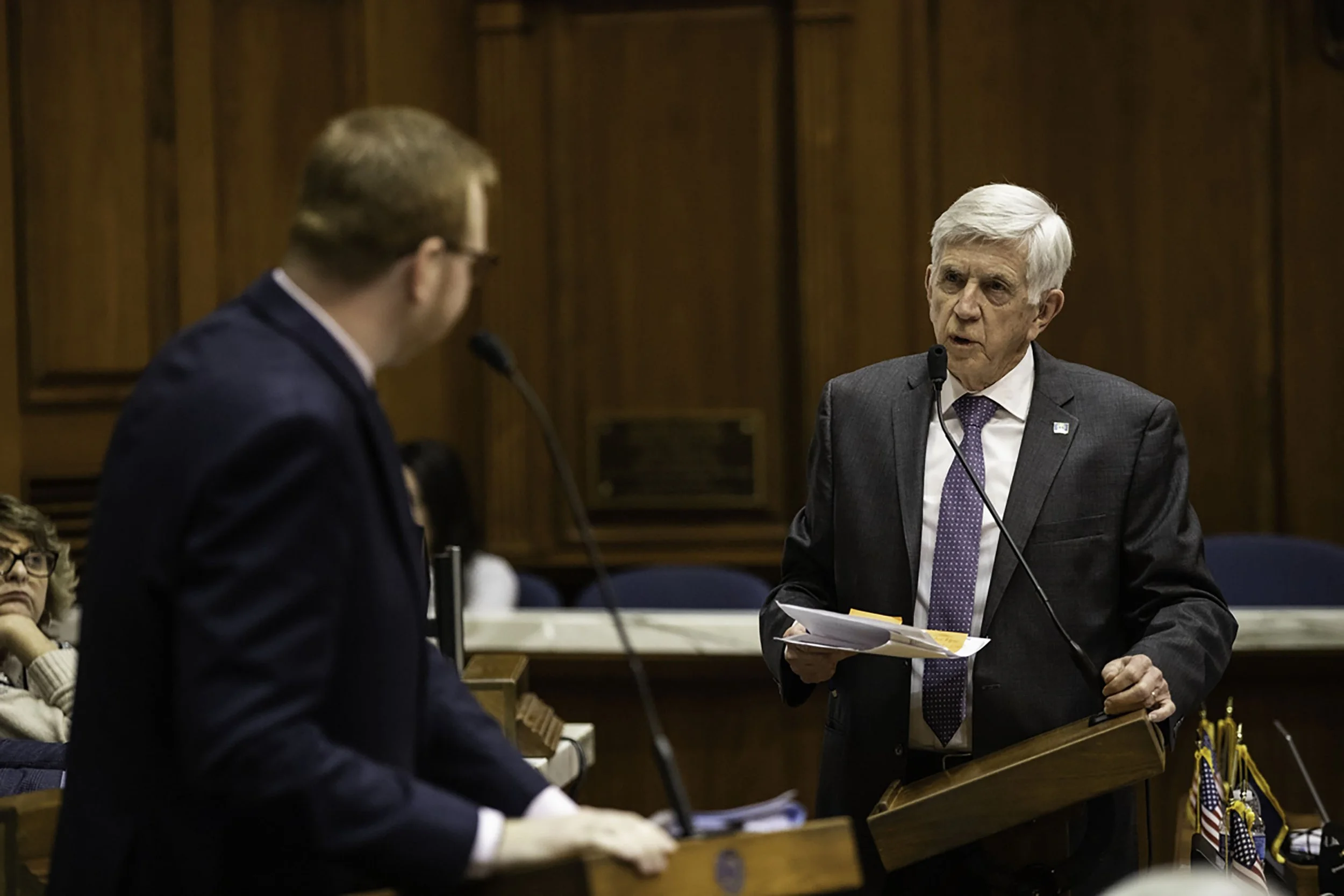
DeLaney astonished by Republican refusal to take ratepayers’ side
Today, House Democrats offered an array of amendments to House Bill 1002 to give Hoosiers financial relief and expand protections for their utility services.
Today, House Democrats offered an array of amendments to House Bill 1002 to give Hoosiers financial relief and expand protections for their utility services. One of those amendments would have prohibited utility companies from passing on the costs of lobbying and political activities to customers. House Republicans chose to block this amendment on procedural grounds instead of allowing it to be voted on.
State Rep. Ed DeLaney (D-Indianapolis) issued the following statement after speaking out on the House Floor against a ruling to not allow a vote on the amendment:
“It seems straightforward to me that consumers should not be footing the bill for utility companies to lobby directly against the interest of consumers. However, when my colleague State Rep. Matt Pierce (D-Bloomington) offered an amendment to prohibit utilities from passing along the cost of lobbying to ratepayers, the Republicans chose to block the measure in order to duck a yes or no vote. This could have been an opportunity to prove to consumers that the general assembly is looking out for their best interest. However, the supermajority is unwilling to go on the record about whether they are on the side of the utility company or the ratepayers.”
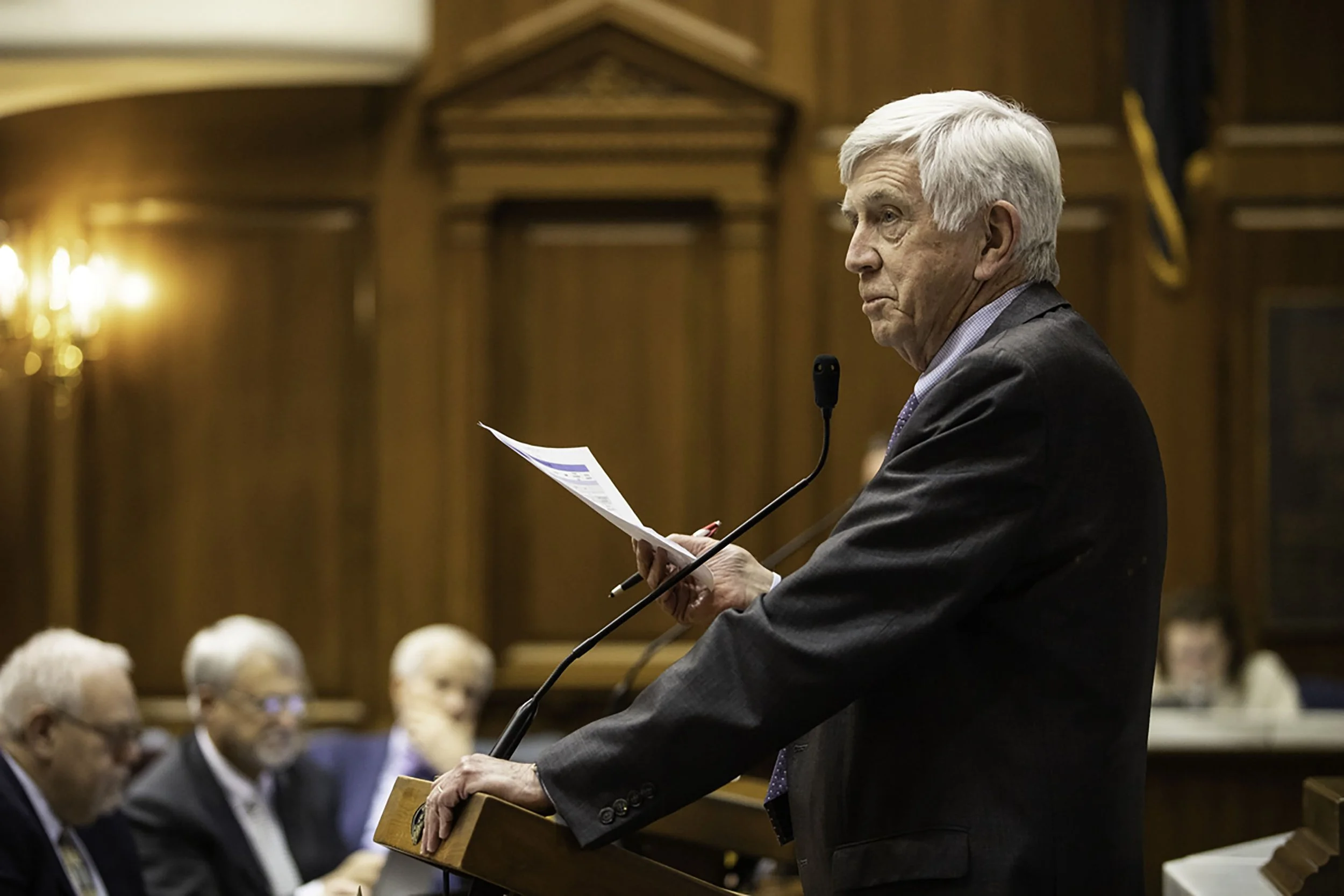
DeLaney amendment to protect communities from unwanted military presence rejected
Today, State Rep. Ed DeLaney (D-Indianapolis) offered an amendment to House Bill 1343 that would require local authorities to agree before military police from the National Guard be deployed to their city to enforce civil laws.
Today, State Rep. Ed DeLaney (D-Indianapolis) offered an amendment to House Bill 1343 that would require local authorities to agree before military police from the National Guard be deployed to their city to enforce civil laws. Currently, this bill gives the governor authority to send a paramilitary police force into any part of the state whenever he deems necessary without the consent of the community or its elected officials.
“Our citizens do not expect military police to come into our communities against their will to enforce the law,” DeLaney said. “Minnesota is a prime example of what happens when different law enforcement agencies are thrown together without being on the same page. In a scenario where National Guard members are sent into a city without the consent of the local officials, they are likely going to have differing directives and even be put directly at odds with each other. These crossed wires do nothing but sow chaos. As we saw in Minneapolis over the weekend, that chaos can have deadly consequences.
“Giving the governor sole authority to send soldiers trained in combat, not as civilian law enforcement, into communities against the will of local leaders goes against everything I thought Indiana stood for. The people best equipped to police and protect their communities are the local law enforcement agencies and local officials. Full stop.”
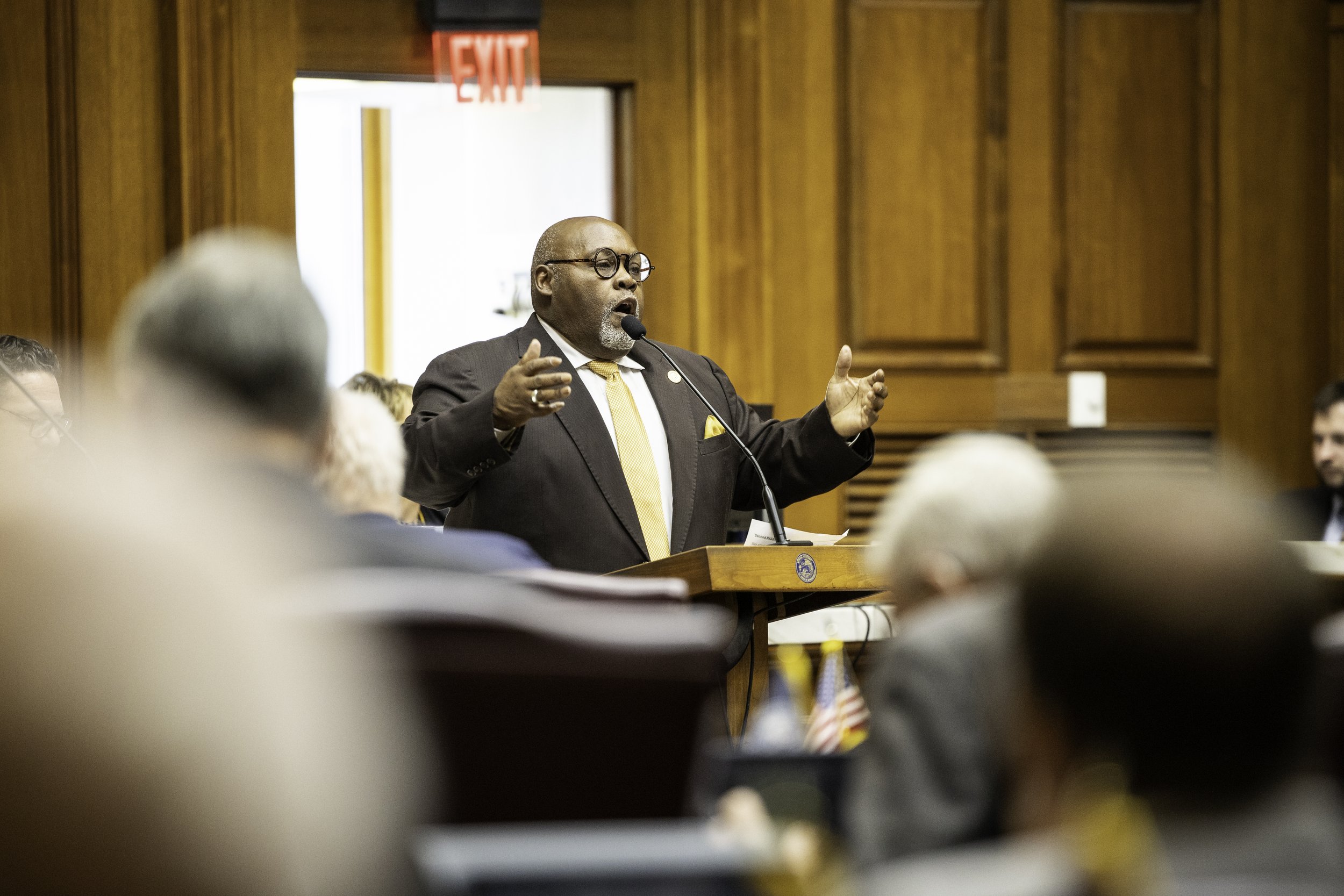
Republicans strike down amendments funding child care and Pre-K vouchers
Today, State Rep. Gregory W. Porter offered two amendments to House Bill 1177 in the House Committee on Ways and Means. The amendments offered two different options to reverse the cuts and fully fund the Child Care Development Voucher Fund (CCDF) and the On My Way Pre-K program (OMWPK).
Today, State Rep. Gregory W. Porter offered two amendments to House Bill 1177 in the House Committee on Ways and Means. The amendments offered two different options to reverse the cuts and fully fund the Child Care Development Voucher Fund (CCDF) and the On My Way Pre-K program (OMWPK).
The first amendment would have appropriated $300 million from the Financial Responsibility and Opportunity Growth Fund. The second amendment would have appropriated $256.7 million from the State General Fund. Both amendments were voted down.
“Indiana has a child care crisis, not challenges, not difficulties,’ Porter said. “It’s a crisis. Child care centers can’t keep their doors open after the reimbursement rate cuts. Since September, close to 200 providers have already closed.
“A properly funded child care system is an investment in our society. It’s about getting kids the care they need and ensuring our parents are able to work to support their families. Parents shouldn’t have to choose between their livelihoods and caring for their children.
“These amendments were common-sense solutions that supported our families with existing revenue. But Republicans voted them down. They continue to prioritize a ballooning surplus over the real needs of Hoosier families.”
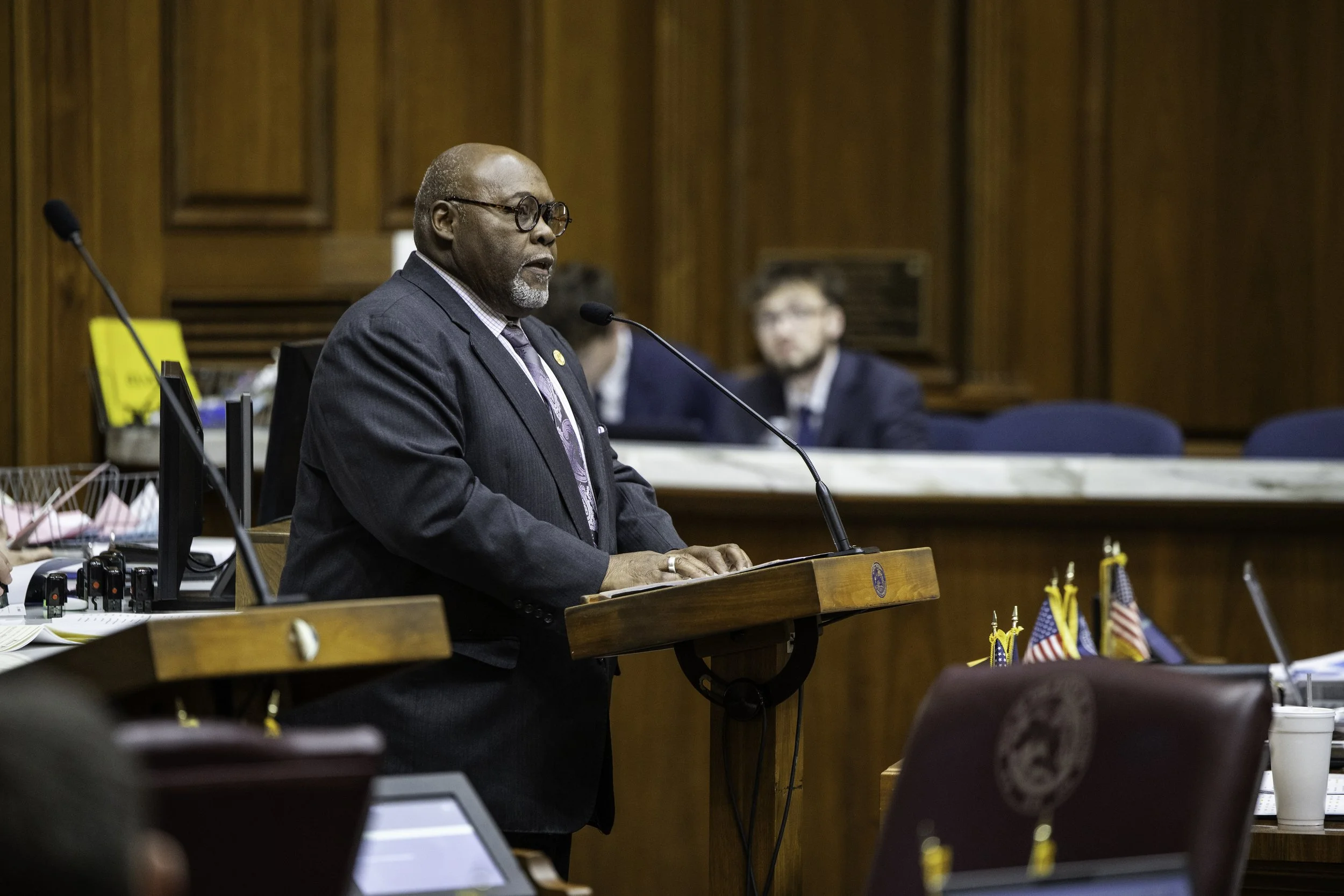
Porter passes amendment creating transparency for Hoosier homeowners
Today, State Rep. Gregory W. Porter passed an amendment to House Bill 1406 in the House Committee on Ways and Means. Porter’s amendment requires the county treasurer to list if the homeowner saved money, and the amount, if applicable, on their 2027 property tax bill.
Today, State Rep. Gregory W. Porter passed an amendment to House Bill 1406 in the House Committee on Ways and Means. Porter’s amendment requires the county treasurer to list if the homeowner saved money, and the amount, if applicable, on their 2027 property tax bill.
“SEA 1 was a mess, “ Porter said. “Let the math do the talking. I want homeowners to see how little they actually save on their property taxes, if they save anything at all.
“I keep hearing that homeowners will pay less on their bills in 2026 than in 2025. That’s not true. The average homeowner won’t save anything. Their bills will be lower than they would have been, but still higher than their payment in 2025.
“Our neighbors who need the most financial relief will actually pay more. Homeowners with low-assessed-value homes will see a 35.4% property tax increase by 2031. SEA 1 isn’t tax relief; it’s a shift of the tax burden. I’m thankful this amendment passed so homeowners can see the facts and come to their own conclusions.”
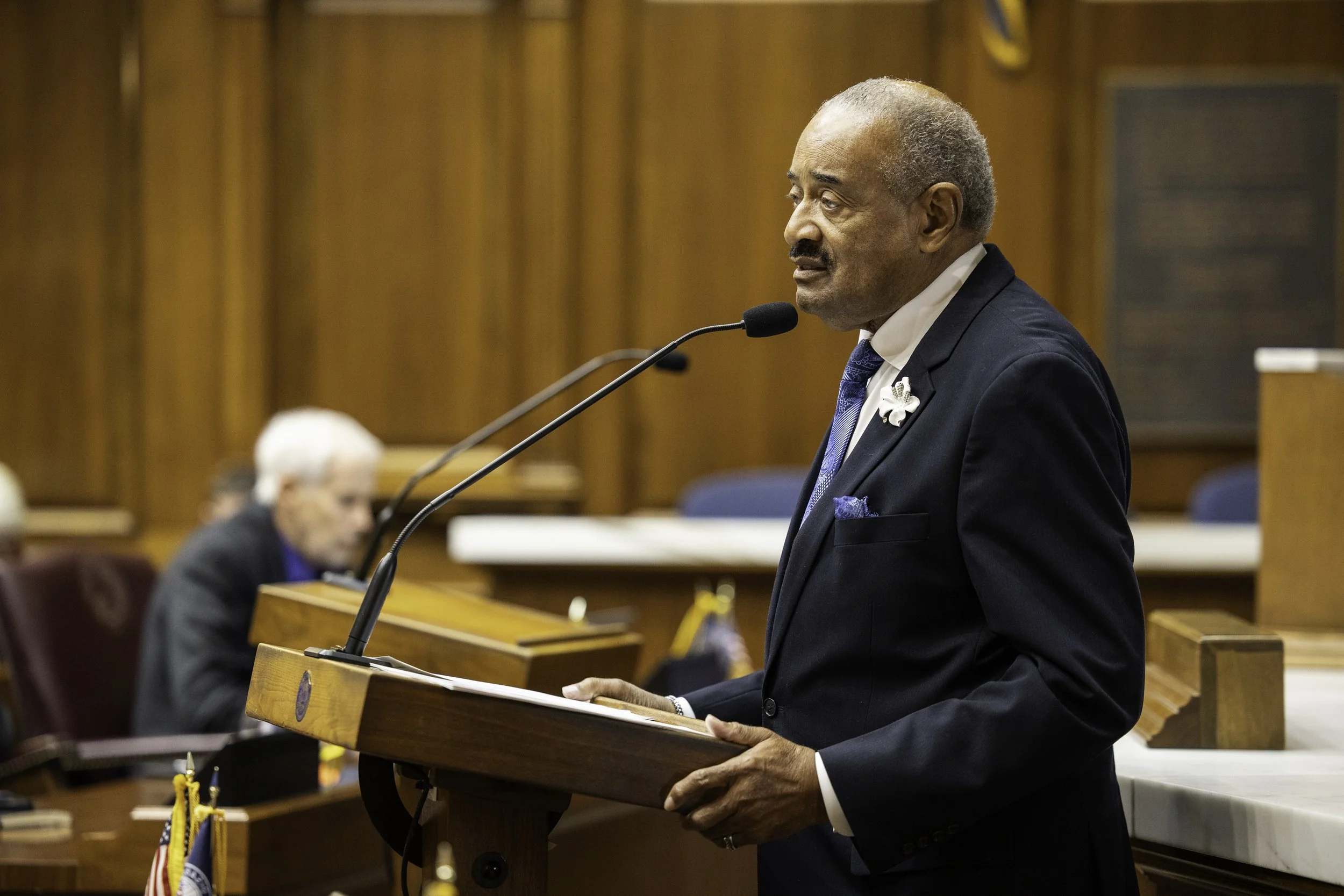
Smith strongly against execution by firing squad, encourages input from his community
Today, Jan. 27, State Rep. Dr. Vernon G. Smith (D-Gary) issued the following statement on House Bill 1119, which would legalize the use of firing squads to carry out the death penalty:
Today, Jan. 27, State Rep. Dr. Vernon G. Smith (D-Gary) issued the following statement on House Bill 1119, which would legalize the use of firing squads to carry out the death penalty:
“I have long opposed the death penalty because of my faith and my belief in the sanctity of life. People should be held accountable for their crimes, but I do not support taking a life that was bestowed by our Creator. My position has not changed.
“However, the push to legalize execution by firing squads is deeply troubling. It’s a brutal, painful way to die that was outlawed in 1913 in the state of Indiana because it was deemed cruel and unusual punishment. This law seeks to draw us back to darker times, where inflicting pain is paramount rather than our morality.
“As a state representative, I believe it is important to hear directly from the people I represent. This is a serious and moral issue, and I want to understand my constituents’ perspectives before moving forward. I encourage you to contact me as soon as possible since the legislation is moving quickly.”
HB 1119 final vote in the House is scheduled for tomorrow, Jan. 28, and then it will head to the Senate. The community can send their thoughts, concerns and questions to Smith at (317) 232-9731 or at h14@iga.in.gov.
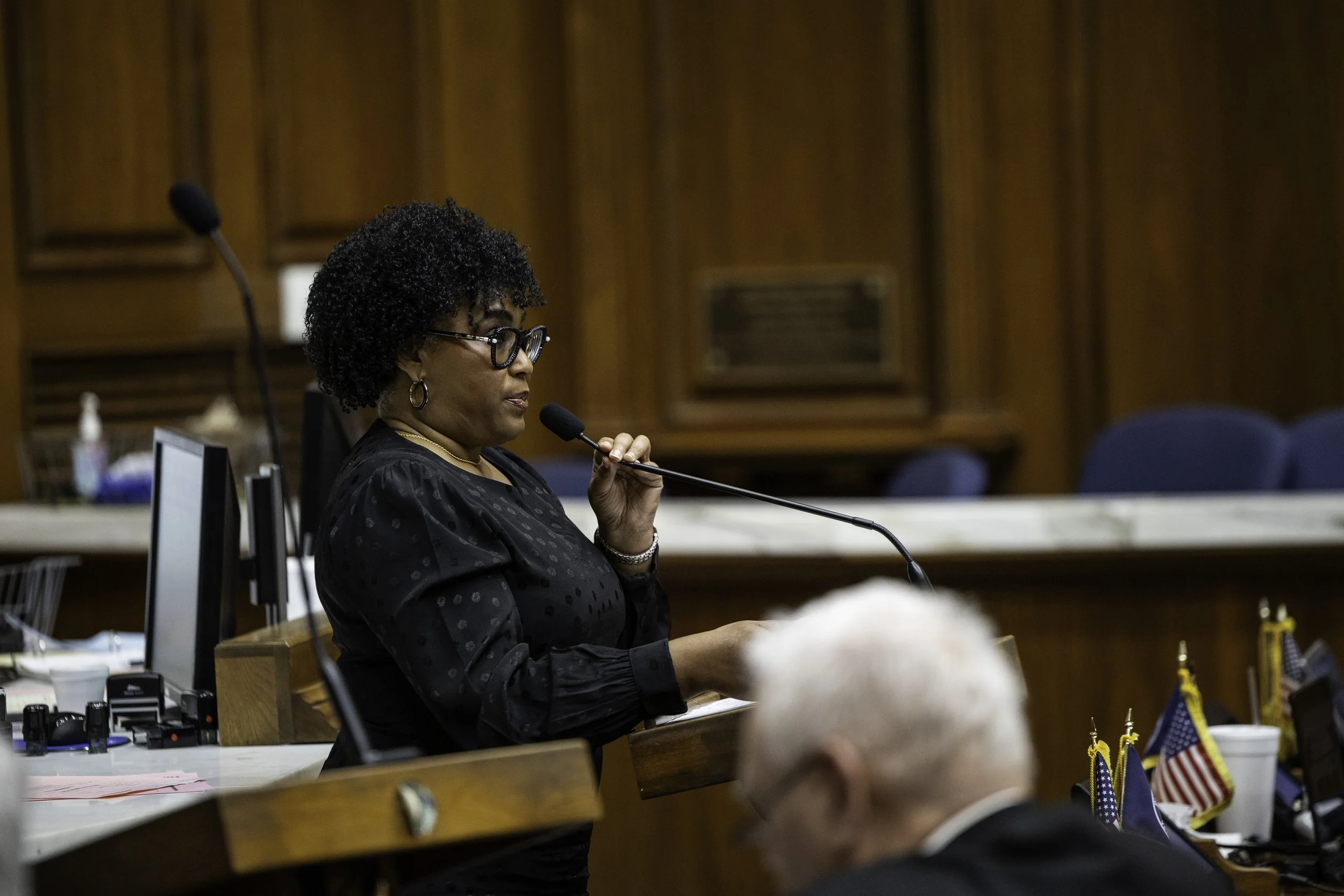
Pryor offers amendments to cut Hoosier utility bills
Today, House Democrats offered an array of amendments to give Hoosiers financial relief and expand protections for their utility services. State Rep. Cherrish Pryor (D-Indianapolis) offered four amendments to protect vulnerable Hoosiers and add oversight and accountability measures for utility companies. All four amendments were rejected by the supermajority.
Today, House Democrats offered an array of amendments to give Hoosiers financial relief and expand protections for their utility services. State Rep. Cherrish Pryor (D-Indianapolis) offered four amendments to protect vulnerable Hoosiers and add oversight and accountability measures for utility companies. All four amendments were rejected by the supermajority.
See below for the amendment descriptions:
Amendment #5 protects vulnerable Hoosiers by requiring utility companies to implement a program that would prohibit disconnections for individuals who have a medical condition where they rely on life support devices like respirators, ventilators, dialysis machines, refrigerated medications or other medical treatment.
Amendment #6 requires utility companies to include information about payment assistance programs in the monthly bills of senior customers.
Amendment #7 holds utilities accountable for reliable service by requiring they reimburse customers for certain financial losses suffered as the result of an outage.
Amendment #8 adds oversight by requiring public utilities to get approval from the Indiana Utility Regulatory Commission before making certain profit enhancing moves such as selling stock, being sold, reorganizing or acquiring another utility.
“My constituents and people across the state have made it crystal clear that utility rates are simply too expensive,” Pryor said “In Indiana, utilities operate as a regulated monopoly, meaning that ratepayers are not protected by the free market and have no other option if they are unsatisfied with the price of their service. It is up to the state to protect our consumers from being exploited while utility companies increase their profit margins. That is why I offered amendments today to increase oversight of utility companies and hold them financially responsible for shoddy services.
“Having heat in the winter and air conditioning in the summer is not a luxury, but a necessity. It is dangerous for people with certain medical conditions to go without heat or air conditioning if they face a disconnection. One of my amendments today would have prohibited disconnections for this population of people. Additionally, I offered an amendment that requires utilities companies to provide information on monthly utility bills of seniors about energy assistance programs.
“Although my colleagues across the aisle have realized we must address the skyrocketing price of utilities, this bill does not go far enough to help Hoosiers with their high utility bills. I believe that my amendments and the other amendments offered by House Democrats would have significantly strengthened the system and provided relief for Hoosiers. I am disappointed that my amendments were not accepted, but I look forward to continuing to advocate for more affordable utility costs for my constituents and Hoosiers across Indiana.”
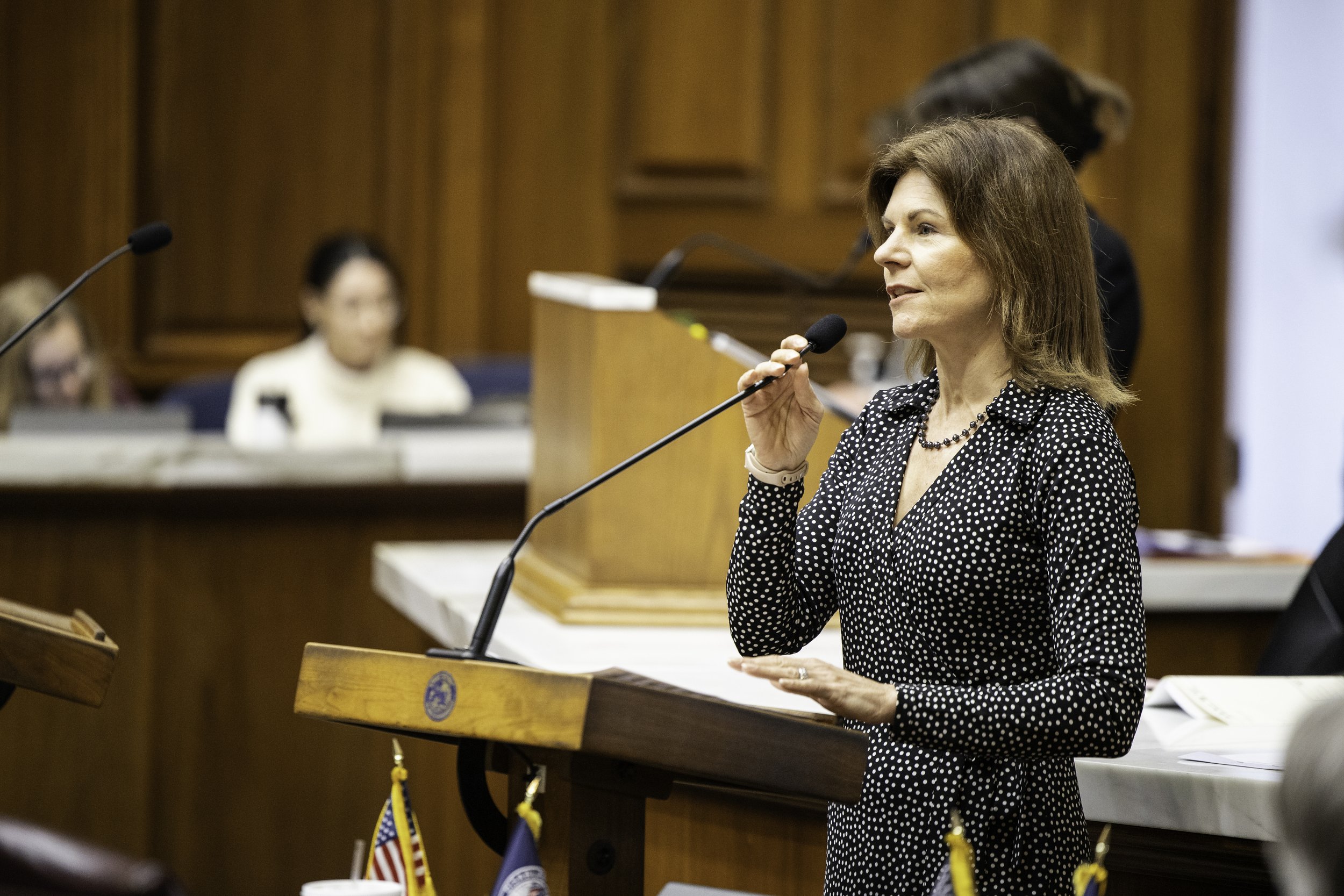
Hamilton amendment to reduce Hoosier utility bills struck down
Today, House Democrats offered an array of amendments on House Bill 1002 to give Hoosiers financial relief and expand protections for their utility services. State Rep. Carey Hamilton (D-Indianapolis) offered an amendment that will allow the establishment of Community Energy Facilities that store or generate electricity via solar power, wind power or battery storage. The amendment was defeated on party lines.
Today, House Democrats offered an array of amendments on House Bill 1002 to give Hoosiers financial relief and expand protections for their utility services. State Rep. Carey Hamilton (D-Indianapolis) offered an amendment that will allow the establishment of Community Energy Facilities that store or generate electricity via solar power, wind power or battery storage. The amendment was defeated on party lines.
“Everyone can agree that utility costs in Indiana are too high,” Hamilton said. “Solar and wind energy are amongst the cheapest energy sources available today. This amendment would allow for energy from these sources to be generated from small-scale, local facilities and distributed to local subscribers. Renters and homeowners would be able to participate and see lower bills. By generating electricity closer to where it is consumed, these projects reduce strain on the energy grid, eliminate long-distance transmission and its inherent energy loss and require fewer transmission lines.
“Hoosiers are demanding that the General Assembly take action to address the rising costs of utilities and it is clear the current system is not working. I am glad that the legislature has taken up this critical issue as a priority, and this bill is a small step in the right direction. But we need out of the box solutions to really make a difference in people's monthly bills. Integrating small-scale, low-cost renewable energy and battery storage is a fiscally responsible choice that would result in ratepayers keeping more of their hard-earned money.
“While I am disappointed this amendment was not accepted, I look forward to continued collaboration on bringing down the cost of utilities for all Hoosiers.”
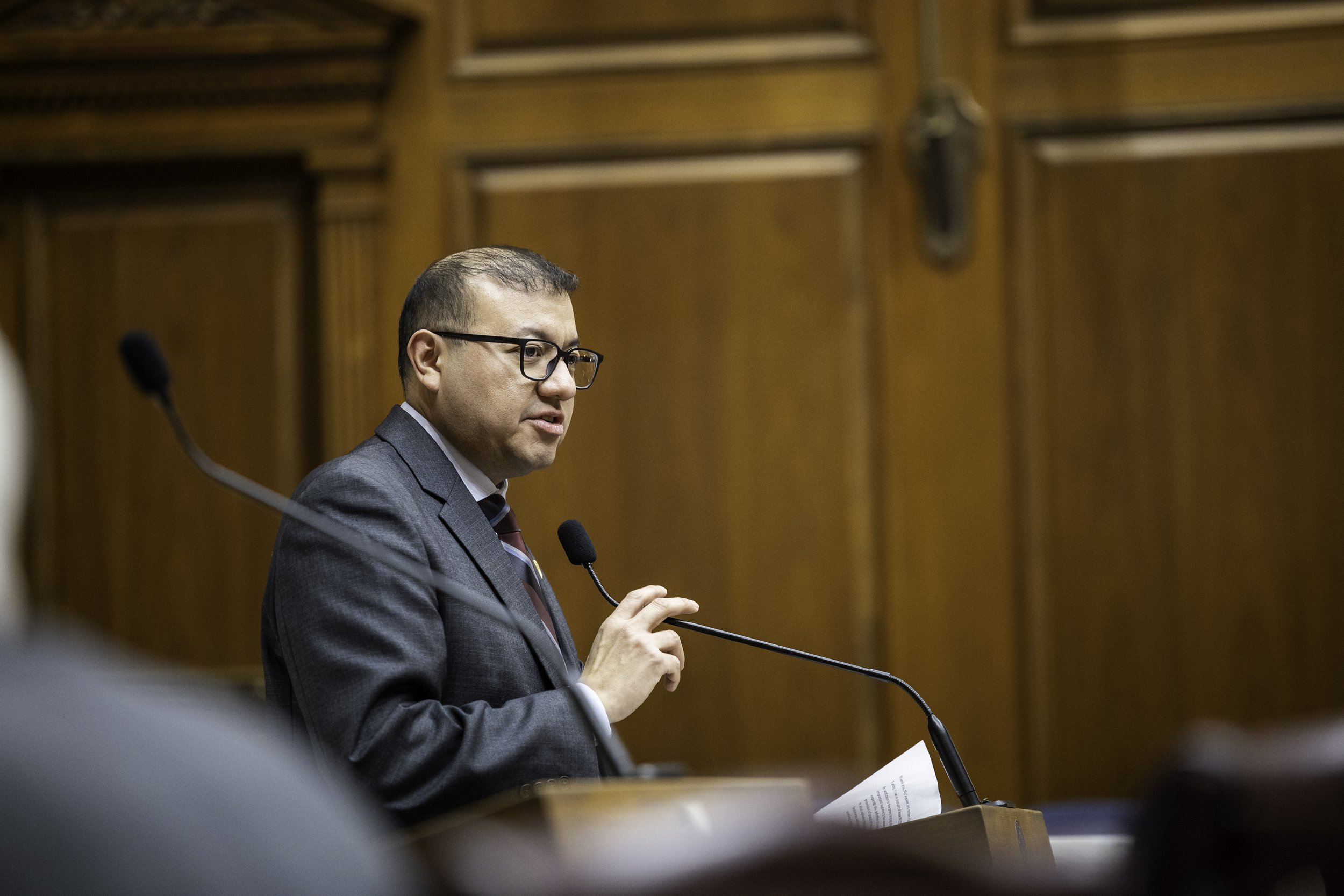
Andrade offers utility accountability amendments on HB 1002, all voted down by House supermajority
Today, State Rep. Mike Andrade (D-Munster) offered several amendments to House Bill 1002 during second reading that aimed to strengthen transparency, accountability and affordability in Indiana’s utility rate-setting process. Each amendment was voted down by House Republicans.
Today, State Rep. Mike Andrade (D-Munster) offered several amendments to House Bill 1002 during second reading that aimed to strengthen transparency, accountability and affordability in Indiana’s utility rate-setting process. Each amendment was voted down by House Republicans.
The amendments sought to provide meaningful protections for Hoosiers facing record-high utility bills and to hold utility companies and regulators accountable for repeated and unjustified rate increases.
The following amendments were offered:
Amendment #13: Prohibits companies from raising utility rates more than 3% and requires utility companies to hold 3 public hearings in the affected utility service area before raising rates.
Amendment #14: Prohibits utility companies from disconnecting residential electric or natural gas service during the coldest time of year (beginning Dec. 1 and ending March 15).
Amendment #15: Eliminates the sales tax on residential utility bills.
Amendment #16: Prohibits the Indiana Utility Regulatory Commission (IURC) from approving a rate increase above 3% of the average monthly bill.
Amendment #19: Creates a 2-year moratorium on fixed rates and charges - effective June 30, 2026, to July 1, 2028.
Full vote counts for each of the amendments will be available here.
Andrade released the following statement on his offered amendments:
“Hoosiers deserve real relief from rising utility costs and a regulatory system that works for them, not against them.
“In Northwest Indiana, my constituents are being hit harder than anyone else in the state. While average utility costs statewide have increased by about 17 percent, NIPSCO customers have seen bills skyrocket by an average of 25% year after year. Families are doing everything right and still falling behind.
“And it’s not just the cost. NIPSCO is currently under investigation after customers reported unexplained bill spikes following the installation of nearly one million new customer gas meters (Case: 46329-112625). When bills jump overnight with no clear explanation, Hoosiers deserve answers and real accountability.
“These amendments were common-sense solutions. I hear from hundreds of Hoosiers about NIPSCO. My phone is never quiet, and my inbox is never empty. People are frustrated and angry about bills they simply cannot afford.
“If these rate hikes are supposed to pay for infrastructure, then Hoosiers have every right to ask where it is. Outages continue, reliability hasn’t improved and instead of long-term solutions, families are handed short-term ‘relief’ plans that fail to address the root of the problem. This is not sustainable.
“Electric and gas services are not a privilege - they are necessities. No one should have to choose between keeping the lights on and buying groceries. With 1 in 4 Americans living paycheck to paycheck and utility bills rising faster than wages, inaction is no longer an option.
“After all of these amendments were voted down, it’s clear this bill does little to address affordability or hold NIPSCO and the IURC accountable. Utility companies are posting record profits, yet Hoosiers are left to shoulder the burden.
“Indiana can and must do better. Until we put people ahead of profits and accountability ahead of politics, Hoosiers will keep paying the price - and that is unacceptable.”
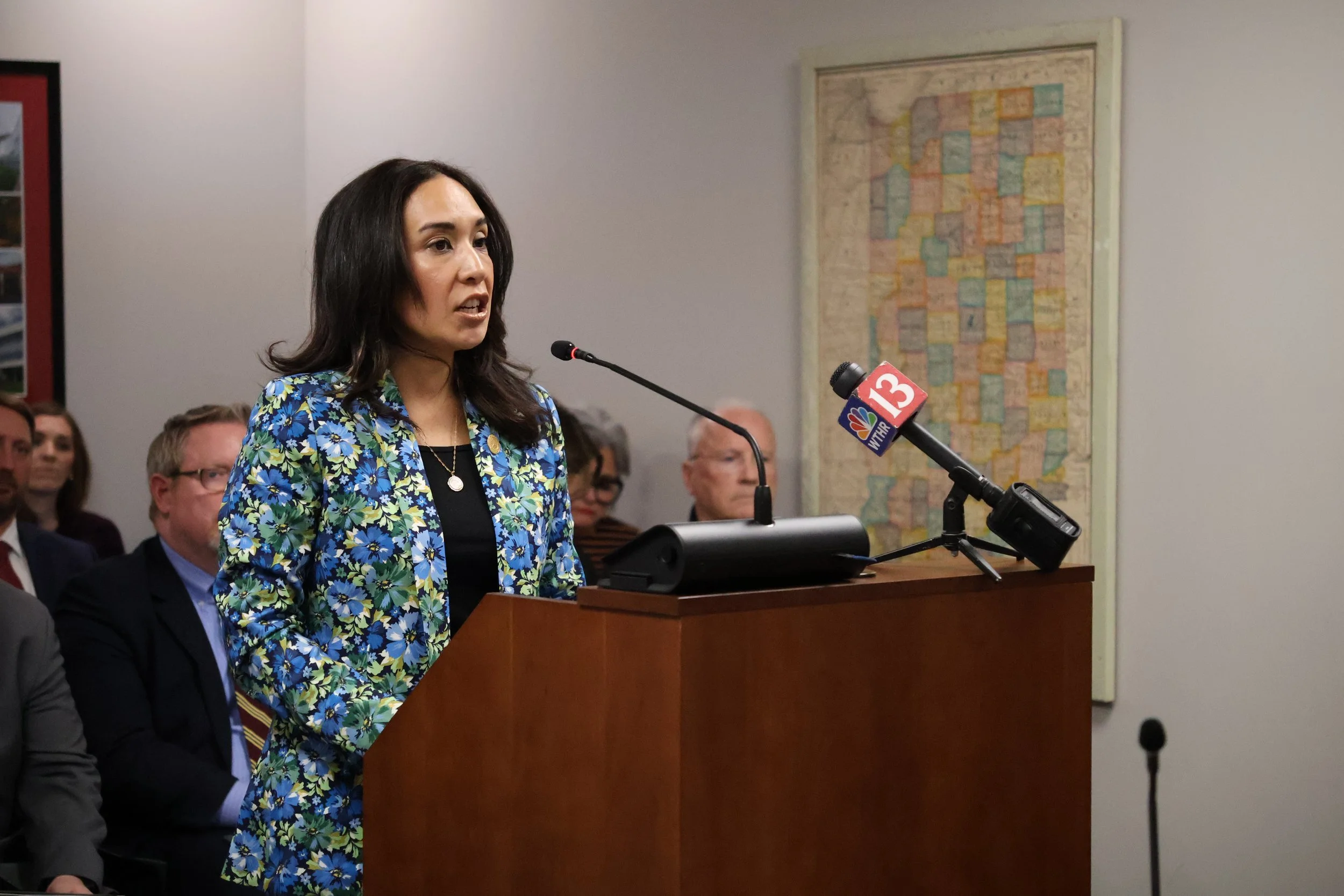
Garcia Wilburn bill to keep kids in DCS system safe passes out of committee
Today, Jan. 26, House Bill 1036 passed unanimously out of the House Judiciary Committee. Authored by the committee's ranking Democrat State Rep. Victoria Garcia Wilburn (D-Fishers), the bill requires that Indiana Department of Child Services (DCS) caseworkers must see a child in person within 30 days before a case closure or discharge.
Today, Jan. 26, House Bill 1036 passed unanimously out of the House Judiciary Committee. Authored by the committee's ranking Democrat State Rep. Victoria Garcia Wilburn (D-Fishers), the bill requires that Indiana Department of Child Services (DCS) caseworkers must see a child in person within 30 days before a case closure or discharge.
This legislation was drafted in response to tragedies like the death of Kinsleigh Welty, a five-year-old who died of starvation, and is aimed at ensuring children are safe before investigations and cases by DCS are closed.
Garcia Wilburn issued the following statement after the bill's committee passage:
"House Bill 1036 was written in the memory and in the honor of Kinsleigh Welty, a 5-year-old Indianapolis girl who died tragically and whose story was shared by her grandfather Brian via written testimony today. This legislation aims to close a dangerous gap in child safety oversight with codifying one simple protection – the necessity of an in-person visit by a DCS caseworker before a case closure. This is a commonsense protection that guarantees decisions are based on the child’s current condition, not outdated information. A caseworker’s last visit may be the only physical verification of a child’s safety.
"Children deserve more than assumptions. They deserve to be seen. This bill ensures that before Indiana closes a case or steps away from a child's life, the department has laid eyes on that child and verified their safety. No child should fall through the cracks. This is a simple, powerful step toward a safer and more accountable child protection system.
"I'm thankful to the House Judiciary Committee for their unanimous support of my legislation today and to my co-authors Reps. Alex Burton, Lori Goss-Reaves and Julie McGuire. I also appreciate Braelynn Yerington, a former foster parent and founder of Champions for Children, for testifying in favor of the bill and sharing Kinsleigh and Brian's story. I look forward to advocating for HB 1036 to advance further in the legislative process so we can keep more kids safe."
The bill now heads to the House floor for further consideration.

Bartlett bill to honor retired lawmakers passes through committee
Today, Jan. 27, House Bill 1122, authored by State Rep. John L. Bartlett (D-Indianapolis) passed through the House Committee on Roads and Transportation by a vote of 11-1 and now moves to the House floor.
Today, Jan. 27, House Bill 1122, authored by State Rep. John L. Bartlett (D-Indianapolis) passed through the House Committee on Roads and Transportation by a vote of 11-1 and now moves to the House floor. The bill would provide retired Indiana lawmakers who served in either the House of Representatives for 10 years or Senate for 12 years with a special license plate.
Bartlett issued the following statement on the bill's passage:
"We have a lot of folks from various public service professions who have retiree plates, and I think lawmakers should be among that group. This is a great way to honor the men and women who have dedicated large portions of their adult lives to bettering the state of Indiana, and I look forward to working with my colleagues to get this passed through the House."