

Latest News
Find our archive of news distributions below. To request a media interview or statement from one of our members, visit our press inquiries page here.
Search Our Press Release Archive
Sort by Rep. or Topic
- Economy
- Education
- IBLC
- Internship
- Leadership
- Mental Health
- Public Safety
- Rep. Alex Burton
- Rep. Blake Johnson
- Rep. Carey Hamilton
- Rep. Carolyn Jackson
- Rep. Cherrish Pryor
- Rep. Chris Campbell
- Rep. Chuck Moseley
- Rep. Dant Chesser
- Rep. Earl Harris Jr.
- Rep. Ed DeLaney
- Rep. Gregory W. Porter
- Rep. John Bartlett
- Rep. Justin Moed
- Rep. Kyle Miller
- Rep. Matt Pierce
- Rep. Maureen Bauer
- Rep. Mike Andrade
- Rep. Mitch Gore
- Rep. Pat Boy
- Rep. Phil GiaQuinta
- Rep. Ragen Hatcher
- Rep. Randy Novak
- Rep. Renee Pack
- Rep. Robin Shackleford
- Rep. Ryan Dvorak
- Rep. Sheila Klinker
- Rep. Sue Errington
- Rep. Tonya Pfaff
- Rep. Vanessa Summers
- Rep. Vernon Smith
- Rep. Victoria Garcia Wilburn
- Rep. Wendy Dant Chesser
- cherrish
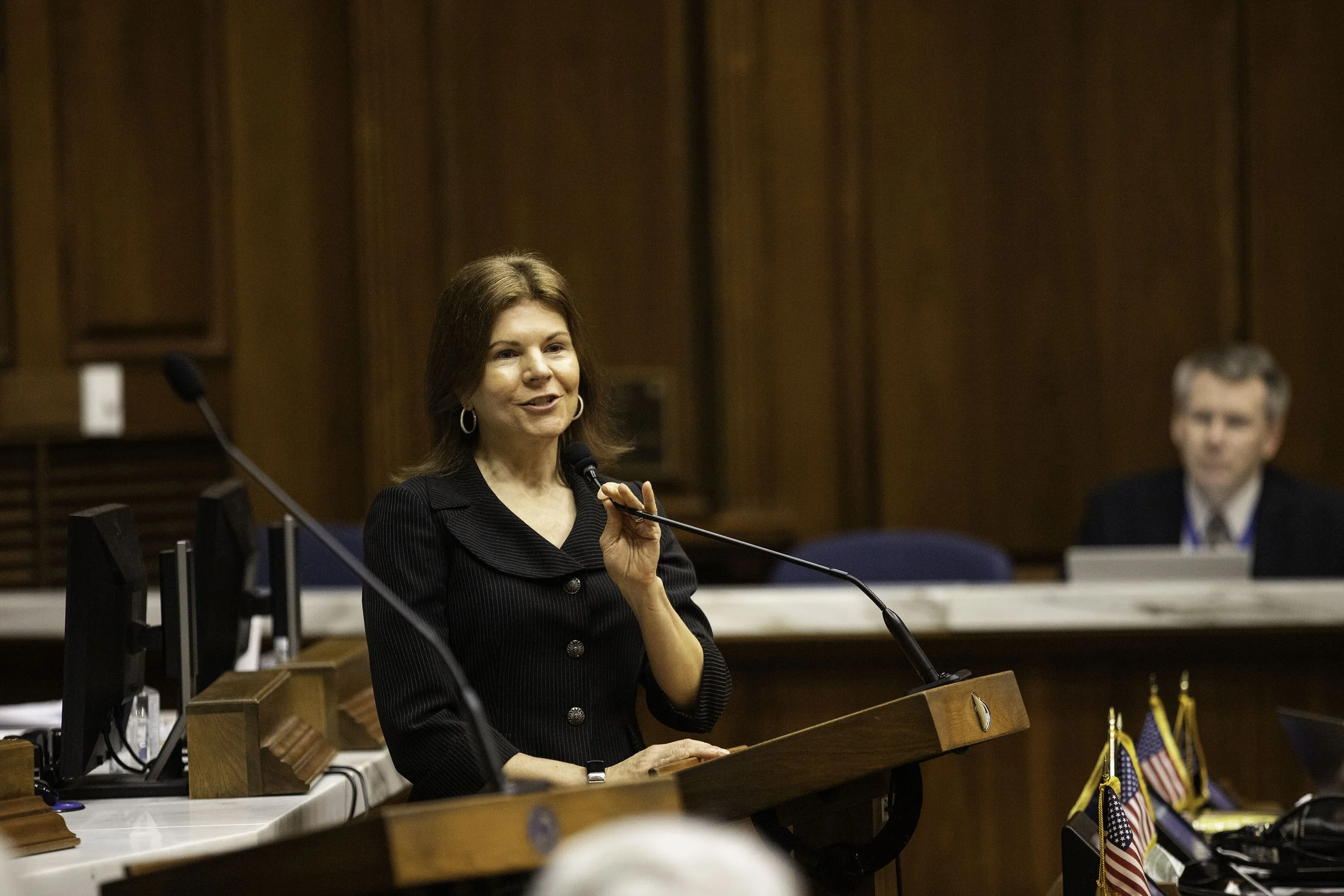
Bill to expand eligibility for advanced testing in cold cases passes committee
Today, Jan. 14, House Bill 1248, which establishes a legal framework to allow for private funding of advanced DNA testing for cold cases, passed out of the House Committee on Courts and Criminal Code unanimously.
INDIANAPOLIS – Today, Jan. 14, House Bill 1248, which establishes a legal framework to allow for private funding of advanced DNA testing for cold cases, passed out of the House Committee on Courts and Criminal Code unanimously. Authored by State Rep. Carey Hamilton (D-Indianapolis), this bill allows eligible family members of victims and other key stakeholders to submit a request for advanced DNA testing in a case that has been unsolved for five or more years.
Two family members of Carmen Hope Van Huss, Pam Francis and Cindy Hoetmer, were at the committee hearing to support the bill. Pam testified about the experience of her family and described how advanced DNA testing led to an arrest in 2024 for the 1993 brutal murder of their 19-year-old sister. That case is set to go to trial later this month. Between the years of 2013 and 2023, the average rate of cases solved per year was 44% in the state of Indiana.
Hamilton released the following statement after the bill's House committee passage:
“There are over 7200 unsolved homicides in the state of Indiana. With advanced technology in DNA testing, many of these cases have the potential to be closed. Every case solved doesn’t just increase the safety of Hoosiers by getting violent offenders off the street, but also brings answers to traumatized families as well as justice to victims.
“Nothing will bring back a lost loved one. However, this bill will help bring perpetrators of violent crimes to justice – allowing families to focus on honoring their loved ones, not remaining paralyzed in their grief with no resolution.
“I am thankful for the support of my co-authors, Chairwoman Wendy McNamara, State Rep. Garrett Bascom and State Rep. Maureen Bauer, as well as all the stakeholders who helped bring this bill forward. I also want to acknowledge the bravery and determination of the family of Carmen Hope Van Huss as they advocate on behalf of their sister and all other victims who have not yet seen justice. I look forward to continuing to work on this bill with my colleagues as it heads to the House floor.”
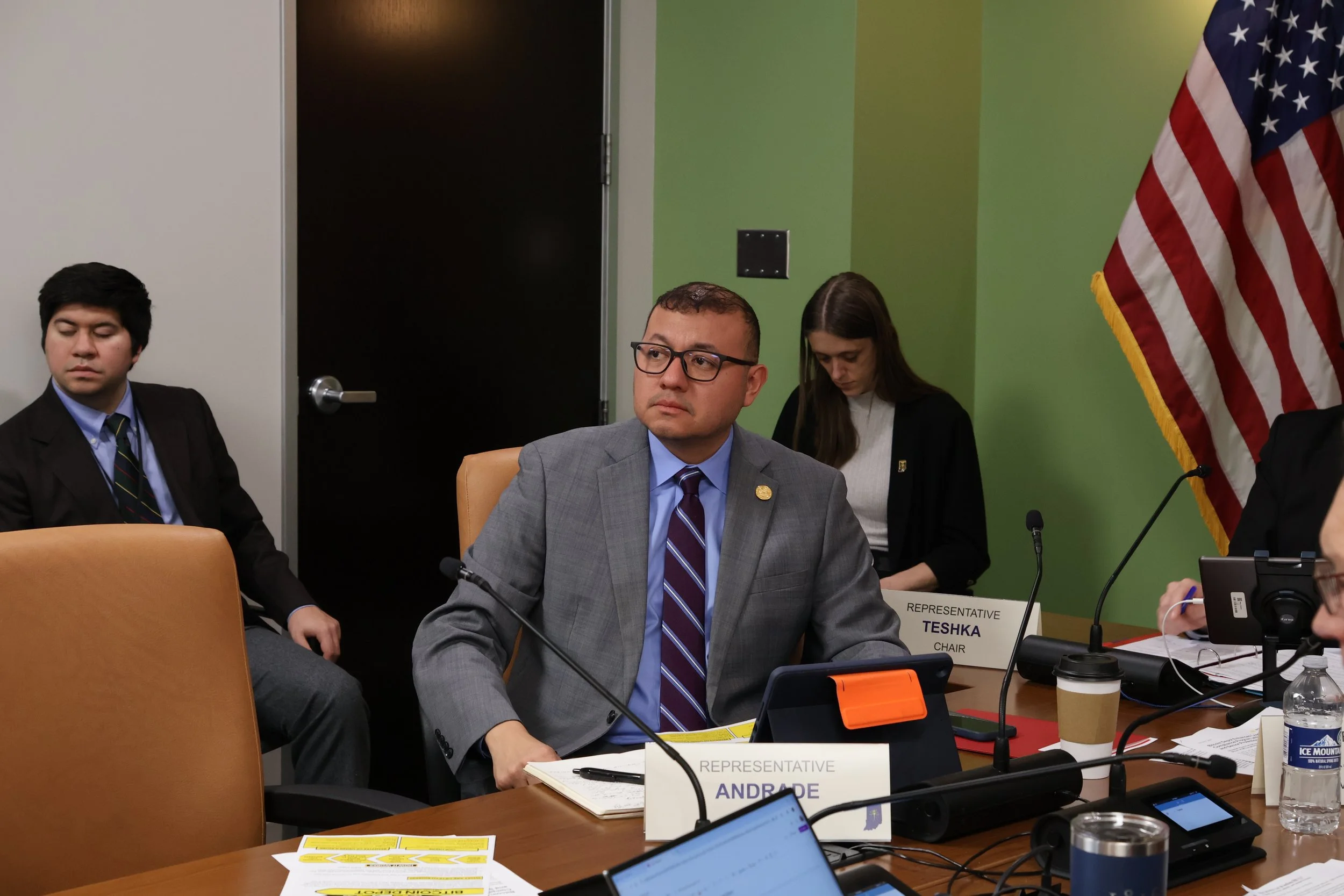
Andrade’s language preventing deceptive consumer sales added to HB 1273
Yesterday, Jan. 13, State Rep. Mike Andrade (D-Munster) strengthened consumer protections for Indiana taxpayers by successfully incorporating key language he authored into House Bill 1273, a bill he co-authored. His language would expand the scope of the Deceptive Consumer Sales Act.
Yesterday, Jan. 13, State Rep. Mike Andrade (D-Munster) strengthened consumer protections for Indiana taxpayers by successfully incorporating key language he authored into House Bill 1273, a bill he co-authored. His language would expand the scope of the Deceptive Consumer Sales Act.
The language expands the definition of a “consumer transaction” to include the provision of goods or services to state and local government agencies. The bill also updates the definition of “supplier” to ensure that entities doing business with state and local governments are held to the same standards as those serving individual consumers. These changes, through the Consumer Protections Division, would give clearer authority for legal action when state and local agencies are treated unfairly or deceptively by vendors.
Andrade released the following statement:
“This is a great step toward protecting taxpayers and ensuring accountability when state and local agencies enter into contracts. We’ve seen situations where public entities are left in limbo with little recourse when something goes wrong. This bipartisan effort makes sure suppliers are held accountable, which ultimately protects everyone involved in a consumer transaction and helps safeguard public dollars.”
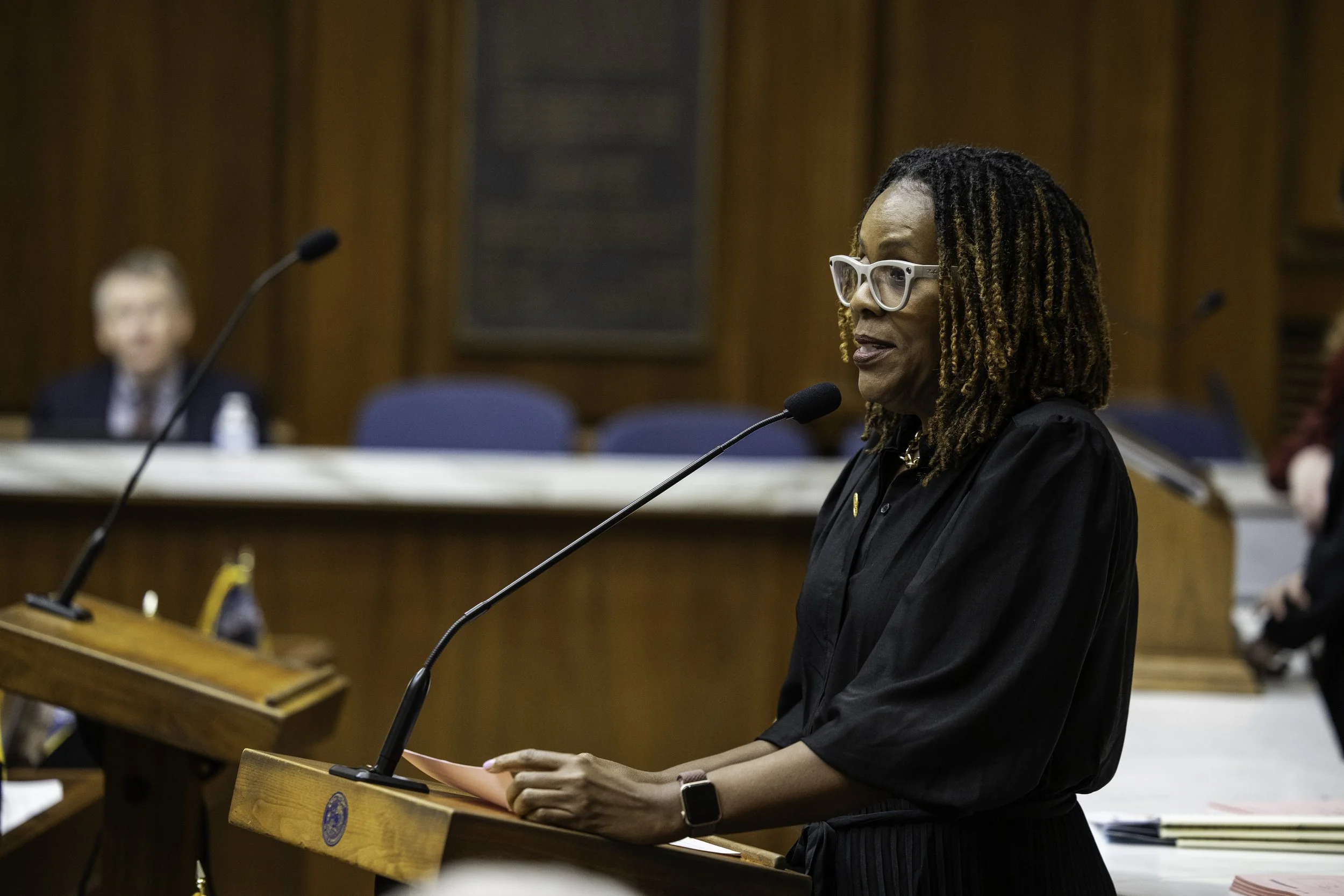
Shackleford criticizes state funding on online gambling advertising compared to public health outreach
Yesterday, State Rep. Robin Shackleford (D-Indianapolis) offered an amendment to House Bill 1078, which would allow the Indiana Lottery to sell lottery tickets online, expanding access to gambling through phones and computers, and reimbursing retailers for advertising online gambling.
Yesterday, State Rep. Robin Shackleford (D-Indianapolis) offered an amendment to House Bill 1078, which would allow the Indiana Lottery to sell lottery tickets online, expanding access to gambling through phones and computers, and reimbursing retailers for advertising online gambling.
Shackleford’s amendment prohibited the lottery commission from adopting rules to compensate retailers for promoting digital lottery games. This amendment would only apply to the new gaming expansion and put guardrails in place for taxpayer dollars.
Shackleford raised concerns about the state’s priorities, noting that Indiana is willing to spend taxpayer dollars to aggressively promote gambling while restricting outreach and public awareness efforts for essential health programs like Medicaid. Shackleford raised the point, the Braun administration recently celebrated that nearly a quarter of a million Hoosiers were losing their health coverage because of the additional red tape and defunding of outreach the legislature put into law last year.
Shackleford highlighted the imbalance between how the state promotes gambling and how it treats public health. The amendment was blocked 63-30.
Shackleford released the following statement on her amendment:
“This amendment was a simple reflection of our values as a state. If the state thinks providing outreach to health insurance is a waste of taxpayer funds, then surely we can agree spending taxpayer money to expand gambling options isn’t a fiscally responsible move. Hoosiers want us here to find ways to solve healthcare costs, lower their utility bills and make life in Indiana better — this amendment does that by protecting taxpayer dollars.”
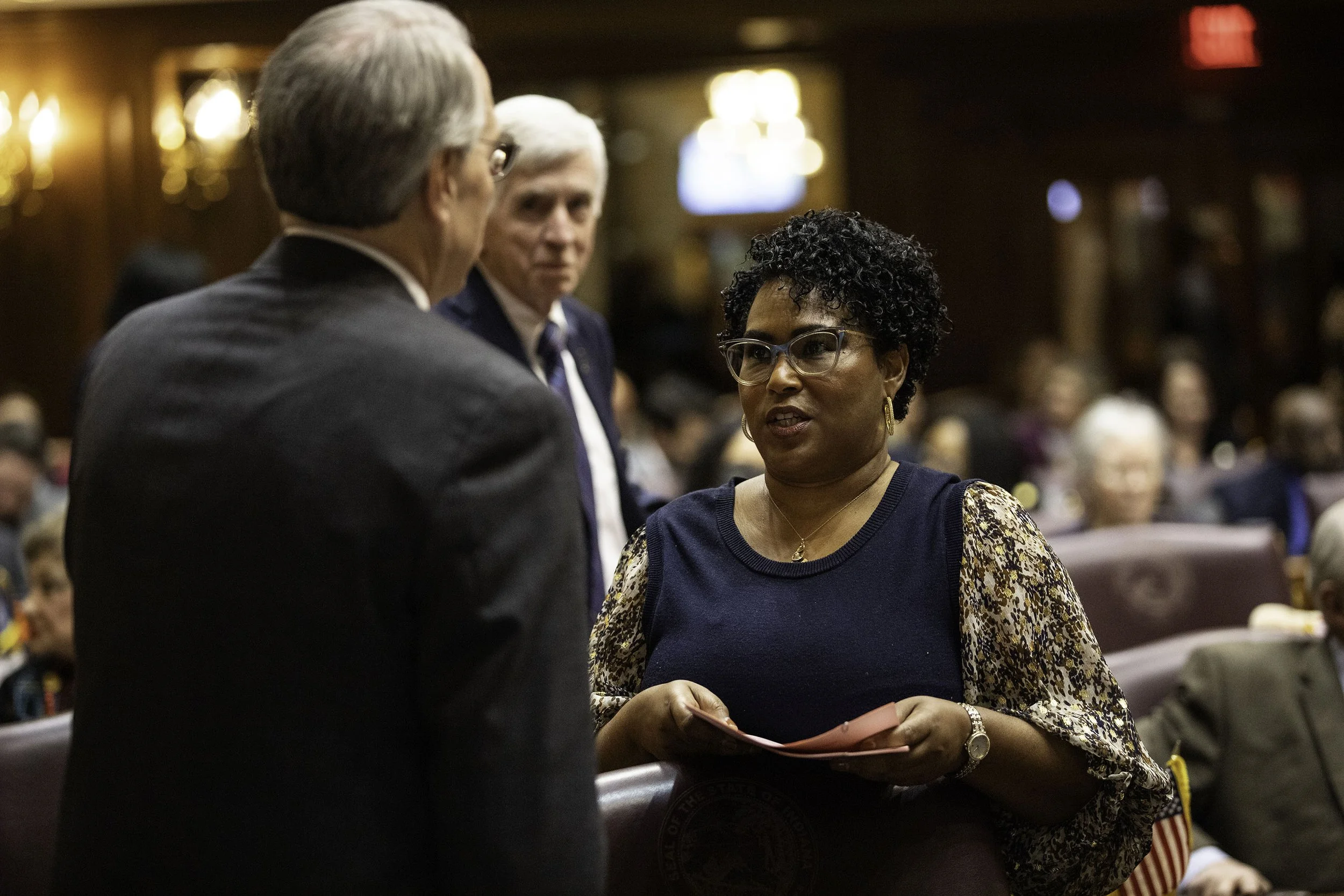
Pryor looks forward to collaboration on utility affordability bill
Today, Jan. 13, the House Committee on Energy, Utilities and Telecommunications heard testimony on House Bill 1002 which addresses utility affordability.
Today, Jan. 13, the House Committee on Energy, Utilities and Telecommunications heard testimony on House Bill 1002 which addresses utility affordability. Bringing down the cost of utilities was a major portion of the House Democrats’ 2026 Working Hoosiers Agenda as Hoosiers across the state face record-high energy costs and rate increases. HB 1002 will be up for amendments and a vote at the next committee meeting.
State Rep. Cherrish Pryor (D-Indianapolis), House Democrat Floor Leader and a member of the House Committee on Energy, Utilities and Telecommunications, issued the following statement:
“I am glad that my colleagues across the aisle have acknowledged the affordability crisis Hoosiers face when it comes to utilities. While House Bill 1002 is a step in the right direction, we have an opportunity here to provide real, substantial relief for ratepayers. We can start by truly holding utilities responsible for the service they provide.
"Eliminating excessive reconnection fees should also be a priority. Reconnects are now done with the push of a button, so there is no need to charge people when service can be reconnected by someone while sitting at their desk. Disconnections should not be allowed to happen when temperatures reach levels that are dangerous to human health.
“Additionally, we should set up an assistance program for vulnerable Hoosiers during the hottest months of the year like we have for the coldest months of the year. This summer, we saw dangerously high temperatures for several weeks at a time in Central Indiana.
“I am glad the bill was held to allow time for amendments. Addressing the rising cost of utilities is a major part of the House Democrats’ Working Hoosiers Agenda, as well as my own legislative priorities. I look forward to continuing to work on this bill in the coming weeks.”

Bauer: PFAS biomonitoring pilot confirms widespread exposure among Indiana firefighters
The results of Indiana’s PFAS Biomonitoring Pilot Program have been released, confirming widespread exposure to toxic “forever chemicals” among firefighters across every Indiana Preparedness District.
The results of Indiana’s PFAS Biomonitoring Pilot Program have been released, confirming widespread exposure to toxic “forever chemicals” among firefighters across every Indiana Preparedness District. The pilot program was authorized through House Bill 1219 (2023), authored by State Representative Maureen Bauer (D-South Bend).
The final report, released by the Indiana Department of Homeland Security, shows that the majority of participating firefighters fall into medium-risk exposure categories, with high-risk PFAS levels identified in multiple districts statewide. No region of Indiana was unaffected.
“These findings confirm what firefighters and their families have been raising alarms about for years,” Bauer said. “PFAS exposure is not isolated. It is systemic, occupational, and statewide. Because of HB 1219, we now have real data instead of unanswered questions.”
PFAS, or per- and polyfluoroalkyl substances, are linked to cancer, thyroid disease, immune dysfunction, and reproductive harm. Firefighters face elevated risk due to repeated exposure through turnout gear, firefighting foam, and contaminated environments.
The PFAS Biomonitoring Pilot Program represents the first statewide effort to collect exposure data among Indiana firefighters. The data will help inform prevention strategies, early medical intervention, and future policy decisions to protect firefighter health.
“Biomonitoring is about prevention and accountability,” Bauer said. “You cannot fix what you do not measure. This program gives us the tools to protect the people who protect us.”
Bauer emphasized that the results highlight the importance of empowering firefighters with information about their own health and exposures, so individuals, families, and policymakers can make informed decisions about prevention, care, and long-term protections.
The full PFAS Biomonitoring Pilot Program Final Report can be found here:
https://www.in.gov/dhs/files/IDHS-PFAS-Final-Report-full-v2.pdf

Summers’ bill to protect Hoosiers in medical debt heard in committee
Today, Jan. 13, House Bill 1051 was heard in the House Financial Institutions Committee. Authored by State Rep. Vanessa Summers (D-Indianapolis), the bill would prohibit health care providers from reporting an individual's medical debt to a consumer reporting agency.
Today, Jan. 13, House Bill 1051 was heard in the House Financial Institutions Committee. Authored by State Rep. Vanessa Summers (D-Indianapolis), the bill would prohibit health care providers from reporting an individual's medical debt to a consumer reporting agency. This would protect Hoosiers from having their credit score impacted by medical debt and is a piece of priority legislation in the Indiana House Democratic Caucus' Working Hoosiers Agenda.
Summers issued the following statement following the committee hearing:
"About one in five Hoosiers have medical debt, with roughly $2.2 billion worth of money owed throughout the state. No one wants to think about it, but a medical emergency could happen to anyone at any time. When you or a family member needs medical care, treating the issue and healing should be your only concern. Hoosiers should not have to worry about their credit score being impacted due to a health issue. A hit on your credit score can take years to overcome, and can bar an individual from receiving loans, impact your housing options and lead to higher insurance premiums. This bill is the first step in making sure that Hoosiers will not be punished for needing medical care. I look forward to furthering these conversations, as well as working to reduce the overall cost of medical care, throughout the remainder of session."
Porter bill increasing education for Alzheimer’s and Dementia passes in committe
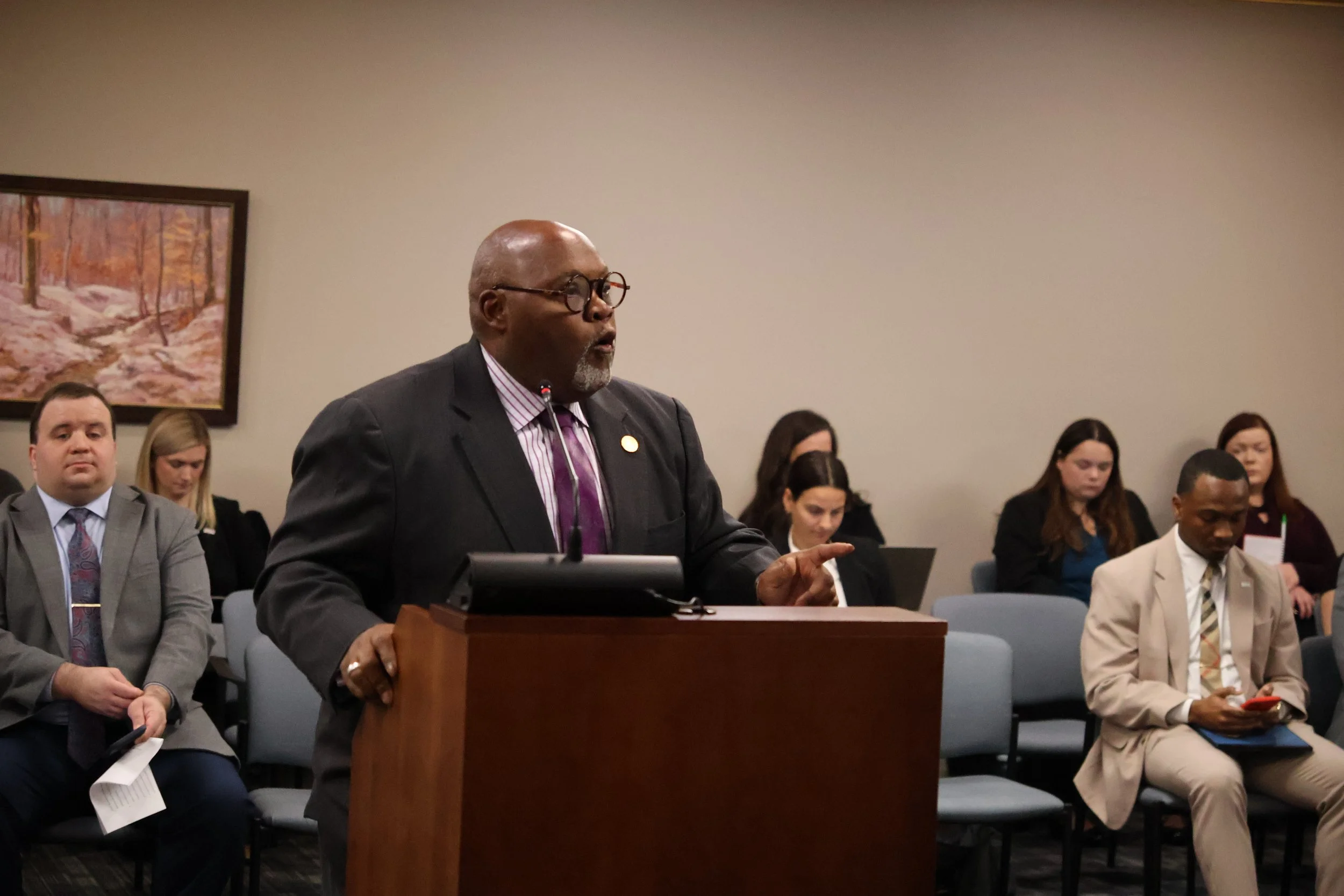
Today, Jan. 13, the House Committee on Public Health passed House Bill 1029 with a vote of 13-0. The bill increases public awareness of Alzheimer’s and dementia through educational outreach. The Indiana Department of Health (IDOH) would need to add information to its website, include the two diseases in its existing public health campaigns and develop training opportunities for health care providers.
Today, Jan. 13, the House Committee on Public Health passed House Bill 1029 with a vote of 13-0. The bill increases public awareness of Alzheimer’s and dementia through educational outreach. The Indiana Department of Health (IDOH) would need to add information to its website, include the two diseases in its existing public health campaigns and develop training opportunities for health care providers.
State Rep. Gregory W. Porter (D-Indianapolis) released the following statement:
“This is a much-needed step forward. Close to 11% of Hoosiers over 65 have Alzheimer's. That’s why these diseases need to be included in Indiana’s public health outreach. People need to know the risk factors, the signs and their treatment options. Better education leads to better prevention and intervention.
“HB 1029 is also a labor of love. I was the caregiver for my late mother, who had Alzheimer’s. You watch your loved one change right before your eyes. I basically had two mothers, one before and one after. Most family members, who provide unpaid care, don’t know how to manage it. That’s another reason why education is essential. Family members gain a deeper understanding of how to provide compassionate, dignified care.
“This bill is in honor of my mother, and I look forward to getting it across the finish line for our seniors.”
Dant Chesser files 2026 bills focused on improving family and community well-being
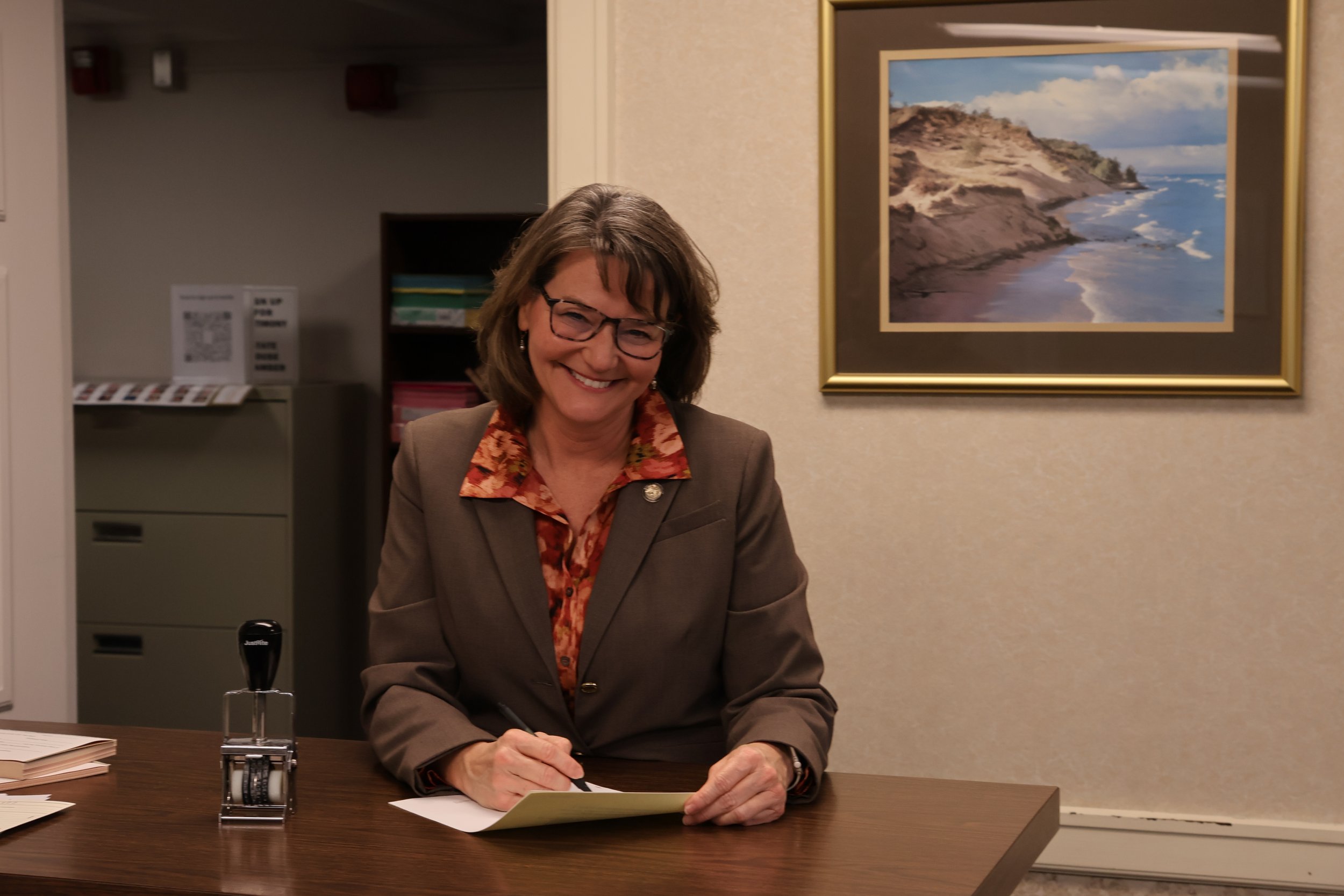
To start the 2026 legislative session, State Rep. Wendy Dant Chesser (D- Jeffersonville) has filed five pieces of legislation to improve family and community well-being.
To start the 2026 legislative session, State Rep. Wendy Dant Chesser (D- Jeffersonville) has filed five pieces of legislation to improve family and community well-being.
Two pieces of Dant Chesser’s legislation aim to improve Indiana’s lack of affordable, quality child care. House Bill 1401 would cut costs for parents by creating the Employee Child Care Assistance Partnership Program. This public-private partnership program would share child care costs between the state, employers and parents. House Bill 1400 would establish a Multiple Employer Welfare Arrangement (MEWA) for Indiana's child care facilities. A MEWA allows multiple small businesses to pool their resources to reduce overhead costs and maximize employee benefits.
“If Indiana is going to be a great place for families, we need to support working parents,” Dant Chesser said. "We’re failing to meet that expectation. Parents are struggling to find affordable, quality child care, and it’s pushing them out of employment. They’re staying home because child care costs can run $1,200 to $1,600 each month. It’s a crisis for many Hoosiers. We need to lower the cost of care and support providers. That’s my goal with HB 1400 and HB 1401.”
Another bill authored by Dant Chesser focuses on the well-being of her community. House Bill 1402 would prevent a vape or smoke shop from opening within 3,520 feet of a school. The ECHO youth group, which is organized by the Community Action of Southern Indiana Agency (CASI), generated the concept and helped craft the bill's language.
“It is estimated that 75% of Indiana teens who vape were exposed to e-cigarettes through ads,” Dant Chesser said. “It’s a huge concern. We know these companies purposefully target teens, and the kids in ECHO want to protect their peers by maximizing the distance between smoke shops and their classrooms. Kids shouldn’t be exposed to predatory ads that promote addictive, harmful substances.”
A full list of Dant Chesser’s legislation is below:
Supporting Indiana’s child care providers by allowing them to pool resources to offer employee benefits (HB 1400).
Creating the Employee Child Care Assistance Partnership Program, allowing the state, the employer and parent to share the cost of child care (HB 1401).
Protecting teens from predatory marketing practices by ensuring smoke shops are a certain distance from schools (HB 1402).
Making homeownership more achievable with the First-Time Homebuyer Savings Program (HB 1403).
Defending individuals from violence or threats of violence from a coworker by allowing courts to issue Workplace Violence Restraining Orders (HB 1404).
“This year I’ll be working across party lines to improve our community,” Dant Chesser said. “I’m focused on cutting costs and supporting Indiana’s families. From reducing child care expenses to protecting teens from addictive substances, these are common-sense bills that will improve people’s lives in Southern Indiana.”
The community can contact the office of State Rep. Wendy Dant Chesser by email at h71@iga.in.gov or by phone at 1-800-382-9848. Members of the community can also subscribe to her newsletter at repwendydantchesser.substack.com.

January is Human Trafficking Awareness Month. We should be focused on it year-round
Since 2007, January has been the official Human Trafficking Awareness Month– a time set aside to consider the impact of the crime on the roughly 27.6 million people trafficked worldwide. From forced labor to sexual violence, it's important that we use this month to think about the victims and work toward solutions to this heinous crime.
Since 2007, January has been the official Human Trafficking Awareness Month– a time set aside to consider the impact of the crime on the roughly 27.6 million people trafficked worldwide. From forced labor to sexual violence, it's important that we use this month to think about the victims and work toward solutions to this heinous crime.
However, this is something we should be doing year-round. Human trafficking is one of the worst imaginable crimes, and it's happening in all 50 states, U.S. territories and throughout the world. As the Crossroads of America, Indiana is a particularly vulnerable state for human trafficking, with traffickers transporting victims through the state via our highways. While reliable data can be difficult to find due to underreporting, roughly 185 victims of human trafficking were identified in Indiana in 2023 alone.
Both of us are active in our respective communities of Indianapolis and Northwest Indiana to raise awareness of human trafficking. Last year, Rep. Bartlett's House Enrolled Act 1416 was signed into law, requiring rest areas, gas stations and welcome centers to display human trafficking awareness information. When individuals are being trafficked, public restrooms are often the only time they are away from their abuser. This information, which includes the number for the National Human Trafficking Hotline, can help victims reach safety.
This session, Rep. Bartlett has filed House Concurrent Resolution 6, recognizing January as National Human Trafficking Prevention Month in Indiana. We want to do everything possible to honor survivors of human trafficking, but we also need to be working hard to prevent the crime from happening in the first place. This starts by raising public awareness of the warning signs of human trafficking and the risk factors for victimization.
Individuals with unstable living situations, facing poverty or addiction or who have previously experienced other forms of violence are more at risk for being trafficked. People of all ages, races, genders and ethnicities are impacted by this crime.
Human trafficking is an abhorrent practice, and the horrifying realities of the crime make it an uncomfortable topic to discuss. We owe it to the victims and survivors, however, to keep talking about human trafficking and working to find solutions that will get more victims to safety and prevent others from becoming victimized in the first place.
We all play a role in keeping our neighbors safe. Knowing the warning signs of human trafficking and looking out for those in your community who may be at risk is a great first start in doing so.
Hamilton offers amendment to give Hoosiers a voice on controversial road project
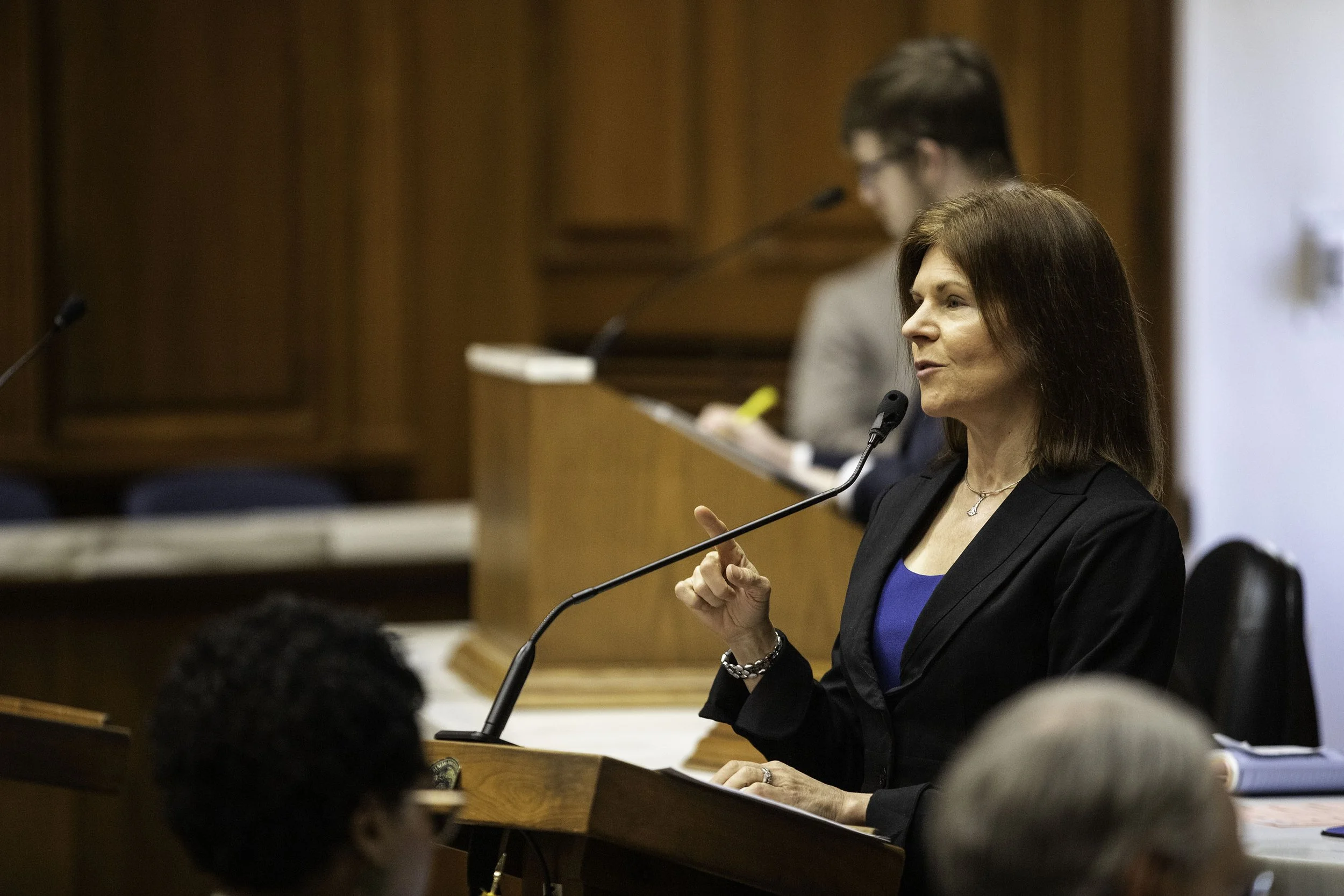
Today, Jan. 12, State Rep. Carey Hamilton (D-Indianapolis) offered an amendment that would require Hoosiers to approve state funding for the Mid-States Corridor Project via public question on the November 2026 general election ballot.
Today, Jan. 12, State Rep. Carey Hamilton (D-Indianapolis) offered an amendment that would require Hoosiers to approve state funding for the Mid-States Corridor Project via public question on the November 2026 general election ballot. This comes after the Indiana Department of Transportation (INDOT) announced last week that they had to cancel over 340 scheduled projects across the state. Meanwhile, the unpopular Mid-States Corridor Project would cost taxpayers over $3.4 billion dollars. The amendment was struck down on procedural grounds.
"Public input is key to our democracy," Hamilton said. "House Bill 1019, the underlying bill, allows Hoosiers to weigh in on judge residency requirements. Why not allow them to weigh in on pricey taxpayer-funded projects?
"INDOT recently canceled over 340 scheduled road projects – projects in our districts that were going to make our communities safer, build better infrastructure and lower costs for Hoosiers. We didn't have enough money for these projects, but we were able to find $3.4 billion for a project that Hoosiers do not want. Public polling has shown that the residents of communities impacted by this new highway are overwhelmingly opposed.
"Given the time-sensitive nature of this issue with INDOT seeming to rush this project through, this is a good way and probably the only way to allow taxpayers to give input on a project that may place a financial burden on their community.
"I believe that we must make investments that will lead to a strong economic future for our state. However, those investments must weigh the cost to communities, property owners and taxpayers against potential economic benefit. It is unclear whether this project will truly benefit the communities and taxpayers that will bear the cost. Before this project gets rushed across the finish line, let's ask the taxpayers directly if they approve of their money being used in this way."
Klinker to focus on education funding and cost of living this session
On Monday, Jan. 5, the Indiana House Democratic Caucus announced its 2026 Working Hoosiers Agenda. The agenda centers on bringing down the cost of living by reducing utility bills, lowering health care costs, creating homeownership opportunities and helping parents fund affordable child care.
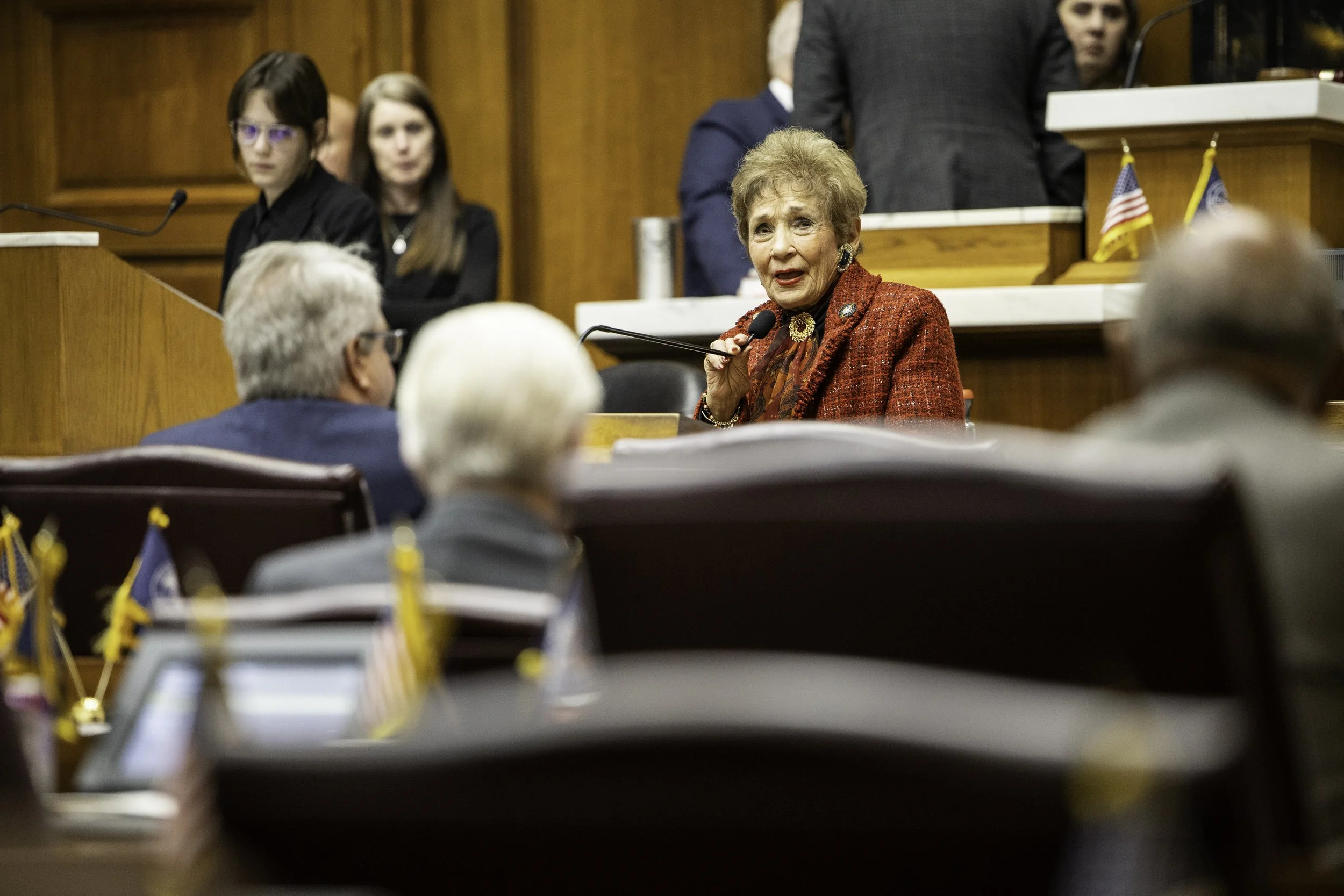
State Rep. Sheila Klinker (D-Lafayette), who represents Indiana House District 27, released the following statement:
On Monday, Jan. 5, the Indiana House Democratic Caucus announced its 2026 Working Hoosiers Agenda. The agenda centers on bringing down the cost of living by reducing utility bills, lowering health care costs, creating homeownership opportunities and helping parents fund affordable child care.
State Rep. Sheila Klinker (D-Lafayette), who represents Indiana House District 27, released the following statement:
“Many of our folks are being priced out of the American dream. The average age of a first-time homebuyer in Indiana is now 40, illustrating the barriers our young people face. Many are rationing their prescriptions to pay bills. We need to lower costs and give folks some much-needed breathing room.”
In addition to the caucus agenda, Klinker filed five pieces of legislation to improve the lives of residents of her community. HB 1170 would strengthen K-12 public education by increasing the minimum starting salary for teachers from $40,000 to $60,000.
“Our teachers are rapidly leaving the profession due to low, uncompetitive pay,” Klinker said. “ Indiana is struggling to attract teachers from out of state, and many of our students are pursuing better-paying jobs. The amount our educators are making is not reflective of the important role they play in our communities. A child’s future starts in the classroom. We need to support our educators and our public schools by increasing the minimum starting salary to $60,000.”
HB 1169 increases the college savings tax credit from $1,500 to $2,500 for the Indiana529 savings plan. Klinker sponsored legislation in 1997 that helped create the savings plan.
“Many of our students who want to earn their degree are being priced out of it,” Klinker said. “Pursuing their dreams results in thousands of dollars in debt. That’s why the state should help families save for the future. We should support families who prepare financially with an Indiana529 plan through an increased tax credit.”
A full list of Klinker’s legislation is below:
Supports Indiana’s veterans, or their surviving spouses, with a property tax deduction of up to $14,000 (HB 1168).
Increases the college savings tax credit from $1,500 to $2,500 to support families who are planning for their child’s future (HB 1169).
Strengthens K-12 public education by increasing starting teacher pay to $60,000 (HB 1170).
Creates the Epilepsy Foundation Trust License Plate (HB 1171). This bill was requested by a member of the Lafayette community.
Take steps to end Indiana’s rape kit backlog by requiring law enforcement to report the total number of untested kits, their testing timeline, etc. (HB 1172).
See the full Working Hoosiers Agenda below:
Priority 1: Provide immediate financial relief on utility bills
Eliminate the sales tax on residential utility use.
Protect Hoosiers from being overcharged by limiting excessive utility company profit margins.
Pause skyrocketing rate hikes.
Get big utilities out of politics by ending the appointment of political friends to consumer watchdog positions and banning spending on political contributions and gifts.
Priority 2: Keep Hoosiers healthy through affordable health coverage and guardrails on medical debt
Cap insurance premiums.
Implement a state health exchange.
Stop medical debt from impacting credit score.
Priority 3: Create generational wealth by empowering more Hoosier homeowners
Help Hoosiers save for their first home by creating tax-free savings accounts for home purchases.
Establish a first-time homebuyer grant program funded by a tax on investor-owned properties.
Institute a property tax credit to deliver real and immediate relief for homeowners.
Priority 4: Deliver accessible, affordable and safe child care for working families
Create a public-private partnership program to split child care costs between employers, the state of Indiana and parents.
Save families money through a child care tax credit.
Fully fund Child Care and Development Fund (CCDF) vouchers to keep daycare centers open and parents at work.
Priority 5: Keep Hoosiers safe in their homes and neighborhoods
Fund the police, fire, and EMS by taking Senate Enrolled Act 1 back to the drawing board and inviting more public input.
Keep violent offenders off the streets.
“It’s an honor to represent Indiana House District 27,” Klinker said. “I’m grateful for every opportunity to represent the Tippecanoe County community. I love living in Lafayette, which is home to my family and my alma mater, Purdue University. This city has been a wonderful home for me and my beloved late husband, Vic, our three children and grandchildren. I want our area to continue to be a great place to live and raise a family.”
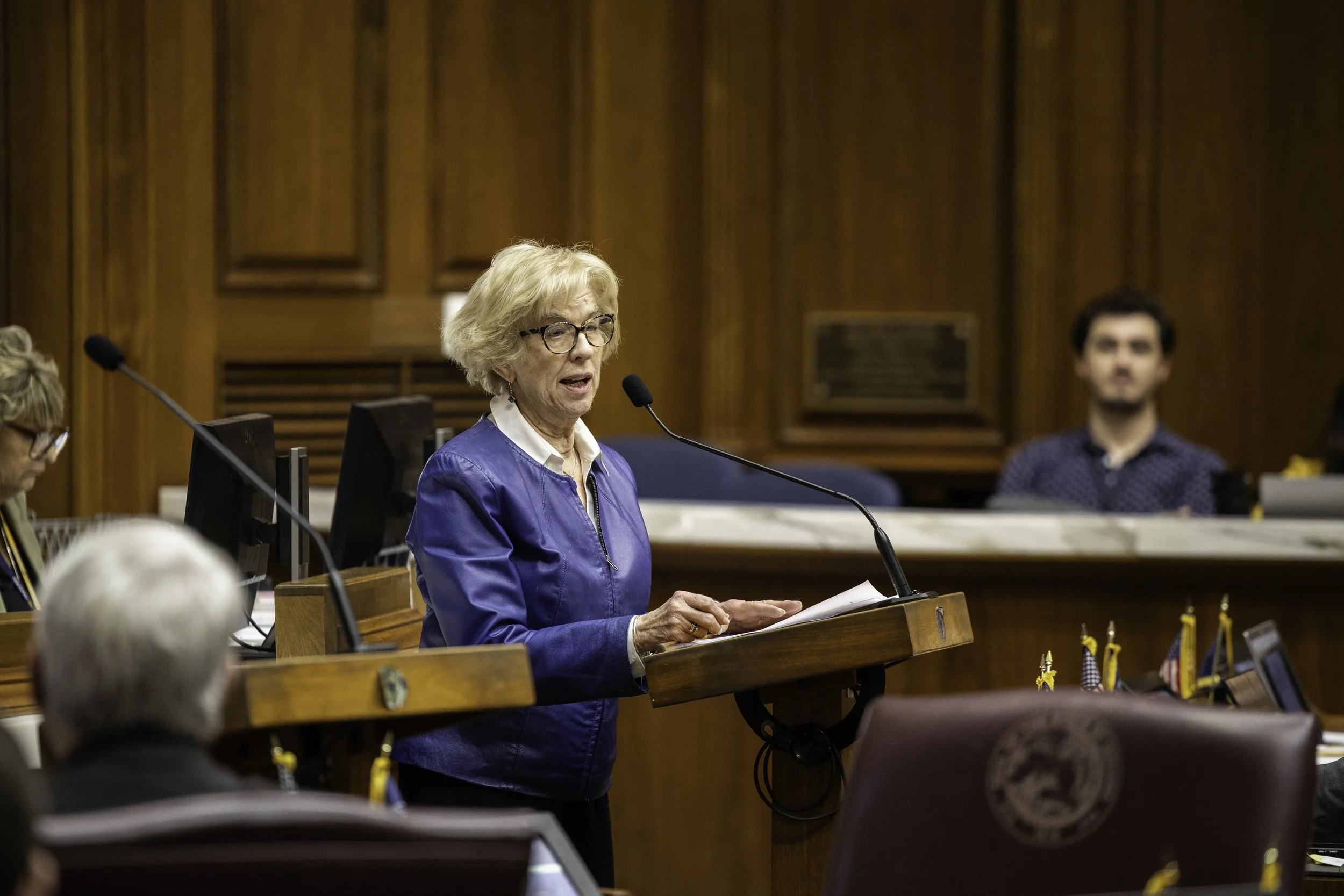
Errington files legislation to support working famililes, public safety and women & infant health
Today, State Rep. Sue Errington (D-Muncie) filed key legislation aimed at advancing the Working Families agenda and addressing public safety and maternal-infant health in communities across Indiana.
Today, State Rep. Sue Errington (D-Muncie) filed key legislation aimed at advancing the Working Families agenda and addressing public safety and maternal-infant health in communities across Indiana.
Errington’s legislative includes:
HB 1030 – Electrology Services: Allows for direct licensure of electrologists, creating a clear and consistent licensing pathway for practitioners while expanding access to safe, regulated personal care services for Hoosiers.
HB 1089 – Authority to Prohibit Firearms in Local Parks: This bill empowers local units of government to prohibit or restrict the possession of firearms in public parks they operate or maintain, giving communities tools to enhance public safety and protect families using shared recreational spaces.
HB 1412 – Coverage for Cognitive Rehabilitation Services: Expands insurance coverage to include cognitive rehabilitation services for individuals with acquired brain injuries, improving access to critical treatment and long-term recovery support for patients and their families.
HB 1413 – Report on Infant and Maternal Care: Directs the Indiana Department of Health to conduct a comprehensive study on the health outcomes for women and infants following the near-total abortion ban. This bill ensures policymakers have evidence-based insights into maternal and infant health trends and can develop targeted solutions that support women and families.
HB 1434 – Utility Votes at RTO meetings: Increases transparency in utility grid decision-making by requiring public utilities to report how they vote at regional transmission organization (RTO) meetings and explain how those votes align with Indiana’s state energy policy.
Errington released the following statement on her legislation:
“Hoosier families deserve laws that protect their health, safety, and economic well-being. From making our parks safer for all families to understanding the real-world impacts of major policy changes on women and infants, this legislation focuses on the challenges everyday Hoosiers face and offers practical, commonsense solutions. I’m committed to advancing policies that help working families thrive here in Indiana.”
Additionally, Errington is a co-author on HB 1378, which creates and expands refundable tax credits to help working families afford child care and encourage employers to invest in child care options for their employees, easing costs and strengthening Indiana’s workforce.
“When families can afford child care, parents can stay in the workforce and kids get the care they deserve. This legislation supports both working families and Indiana’s economy,” Errington said.
Errington’s 2026 legislative priorities align with the broader Working Families agenda supported by House Democrats, which includes efforts to reduce the cost of living, expand access to quality health care and build stronger, healthier communities for all Hoosiers.